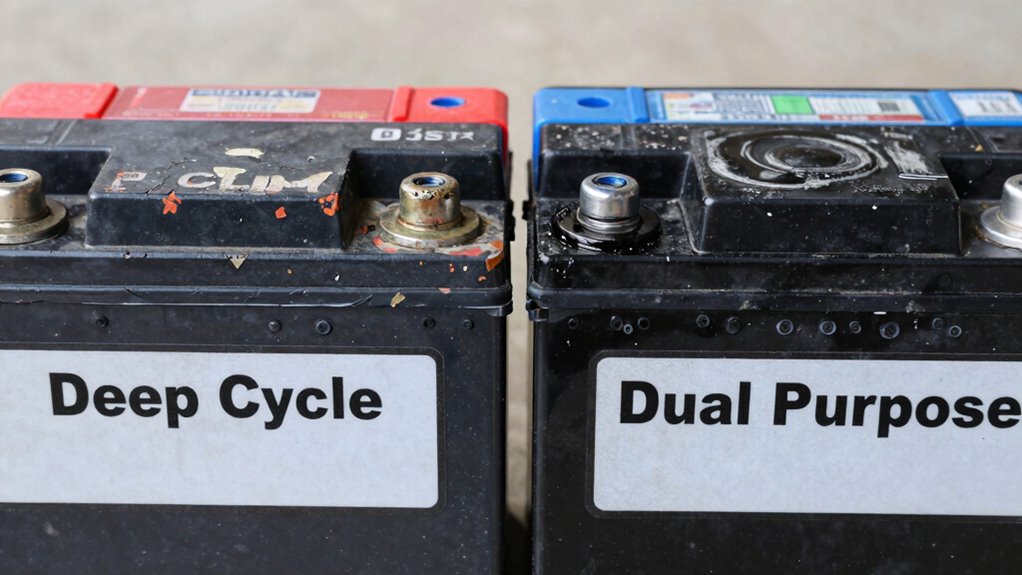

Choosing between deep cycle and dual purpose batteries is vital, as mislabeling can cause premature failure. Deep cycle batteries are designed for regular, heavy discharges, using thicker plates and better materials. Dual purpose batteries handle moderate cycling and quick power needs but aren’t built for deep cycling over time. Using a dual purpose in a deep cycle role can damage it and shorten its lifespan. To avoid costly mistakes and discover how to select the right battery, keep exploring.
Key Takeaways
- Mislabeling dual purpose batteries as deep cycle can lead to improper use and reduced lifespan.
- Deep cycle batteries are designed for frequent, deep discharges, unlike dual purpose types.
- Using dual purpose batteries for deep cycling causes faster plate degradation and capacity loss.
- Relying on deep cycle batteries for starting engines may be inefficient and potentially harmful.
- Correctly matching battery type to usage pattern prevents premature failure and extends battery life.
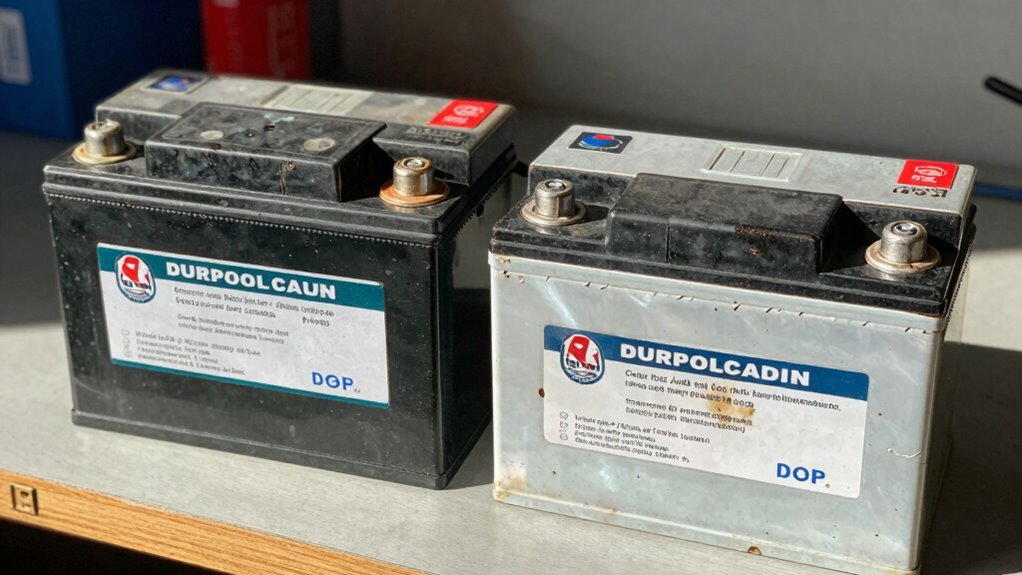
When choosing a battery for your boating, RV, or solar setup, understanding the difference between deep cycle and dual purpose batteries is essential. Many people mistakenly assume these terms are interchangeable, but using the wrong type can lead to premature battery failure. Deep cycle batteries are specifically designed to endure repeated, deep discharges without damaging the cell structure. They’re built with thicker plates and higher quality materials, which extend their battery lifespan, especially when you regularly drain them to a significant degree. In contrast, dual purpose batteries combine features of both starting and deep cycle batteries. While they can handle moderate cycling and provide quick bursts of power, they’re often not optimized for frequent deep discharges. This mislabeling can cause you to overestimate their capacity for long-term deep cycling, leading to reduced battery lifespan over time.
Charging efficiency is another critical factor that differentiates these batteries. Deep cycle batteries tend to accept a charge more efficiently during repeated cycles because they’re designed to handle slow, sustained charging processes. They recover their full capacity more reliably, which means you spend less time waiting for batteries to recharge and get back to work. Dual purpose batteries, however, may not charge as effectively during deeper discharges, especially if the charging system isn’t designed to accommodate their mixed-use nature. This reduced charging efficiency can cause incomplete recharges, which accelerate battery wear and diminish overall lifespan. Proper maintenance and understanding of battery compatibility can further extend their performance life.
If you mistakenly use a dual purpose battery for deep cycling applications, you risk shortening its lifespan and diminishing its performance. Because they’re not engineered for frequent, deep discharges, their plates can degrade faster, and their ability to hold a charge diminishes over time. On the flip side, relying solely on a deep cycle battery for starting engines can be inefficient and might damage the battery, as they aren’t designed to deliver high current surges needed for ignition. The key is selecting the right type based on your usage pattern—deep cycle batteries for consistent, deep discharges, and dual purpose batteries for mixed-use scenarios.
Frequently Asked Questions
How Can I Identify if My Battery Is Deep Cycle or Dual Purpose?
To identify if your battery is deep cycle or dual purpose, start with a visual inspection for battery markings. Look for labels indicating “Deep Cycle,” “Dual Purpose,” or similar terms. If the markings are unclear, check the battery’s design—deep cycle batteries usually have thicker plates and a sturdier build. Clear labeling is your best clue, but always verify with manufacturer details if in doubt.
Do Dual-Purpose Batteries Last as Long as Pure Deep Cycle Ones?
Imagine you’re using a dual-purpose battery for both your RV’s lights and power tools, but it wears out faster than a pure deep cycle. Usually, dual-purpose batteries have a different construction optimized for mixed use, so they often have a shorter lifespan in demanding deep cycle environments. If you need long-term reliability in harsh conditions, a pure deep cycle battery typically lasts longer, thanks to its specialized design.
Are Dual-Purpose Batteries Suitable for High-Current Starting Applications?
Yes, dual-purpose batteries are suitable for high-current starting applications because their construction allows for quick bursts of power. They’re designed with thicker plates and improved charging compatibility, which helps them handle starting loads effectively. However, keep in mind that their primary design balances deep cycle capacity with starting power, so for extended high-current use, a dedicated starting battery might perform better.
What Maintenance Differences Exist Between Deep Cycle and Dual-Purpose Batteries?
You’ll find that maintenance for deep cycle and dual-purpose batteries differs mainly in charging protocols and ventilation needs. Deep cycle batteries require gentle, consistent charging and proper ventilation to prevent gas buildup, while dual-purpose batteries need similar care but can handle slightly more demanding charging. Always check ventilation requirements to avoid damage and ensure longevity. Regular inspections, cleaning terminals, and monitoring water levels (if applicable) help keep both types performing at their best.
Can Dual-Purpose Batteries Be Used Interchangeably With Deep Cycle Batteries?
You can’t always use dual-purpose batteries interchangeably with deep cycle batteries because differences in battery chemistry and charging methods matter. Dual-purpose batteries are designed for both starting and deep cycling, but they might not handle continuous deep discharge as well as true deep cycle batteries. To avoid premature failure, make certain you match your application’s demands with the correct battery type and follow proper charging techniques.
Conclusion
Think of your battery as a loyal steed. If you saddle it for long, steady rides (deep cycling), it thrives. But if you force it into quick chases (dual purpose) without proper care, it wears down prematurely. Mislabeling can leave you stranded, just like a rider on a tired horse. Respect its true role, and it’ll serve you faithfully, powering your adventures without failure. Treat your battery wisely, and it’ll reward your trust.