
A battery tester can lie when you use the wrong device for your battery type, test in extreme temperatures, or lack proper technique, leading to misleading results. Using an inappropriate tester or testing in cold or hot conditions makes batteries appear better or worse than they really are. Poor contact, incorrect settings, or uncalibrated equipment also skew outcomes. Understanding these issues will help you recognize common pitfalls and improve your testing approach. If you keep exploring, you’ll uncover how to avoid these mistakes altogether.
Key Takeaways
- Using an incompatible tester, like a basic handheld for car batteries, can produce false readings.
- Testing in extreme temperatures—cold or hot—can distort voltage results and mislead assessments.
- An aged or heavily used battery may show misleading voltage levels despite reduced capacity.
- Uncalibrated or improperly maintained testing devices generate inaccurate measurements.
- Poor contact, incorrect testing mode, or user error can cause unreliable battery health evaluations.
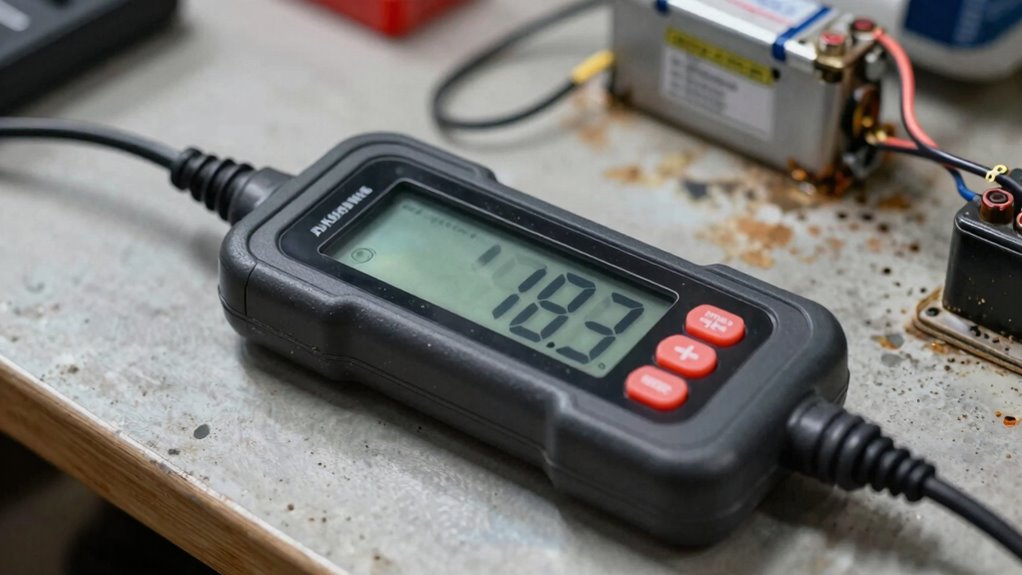
Many battery testers on the market claim to give accurate readings, but in reality, they often deceive consumers. These battery tester lies can lead you to believe your battery is in better shape than it actually is or, conversely, that it’s failing when it still has plenty of life. Testing inaccuracies are common, especially when you’re not aware of the factors that influence the results. You might rely on a quick test, only to find out later that the reading was misleading, causing unnecessary replacements or overlooked problems.
One major reason for testing inaccuracies is that some testers aren’t designed to handle the specific type or age of your batteries. For example, a basic handheld tester might work well for standard AA or AAA batteries but can give false readings with car batteries or deep-cycle batteries. These devices can’t accurately assess the true capacity or health of complex batteries, leading to battery tester lies that skew your understanding of their condition. When you use the wrong type of tester, you’re risking false positives or negatives, which can be costly and frustrating.
Using the wrong tester type can lead to false readings and misjudged battery health.
Another factor that causes testing inaccuracies is temperature. Batteries are sensitive to temperature changes, and if you test them in cold or hot environments, the readings can be way off. Cold batteries tend to show lower voltage, making them appear weaker than they are, while hot batteries might seem healthier than their actual state. If you’re unaware of this, you might discard a perfectly fine battery or hold onto a failing one longer than you should. Many testers don’t account for temperature, further contributing to misleading results.
Additionally, the age and usage history of a battery impact test outcomes. As batteries age, their internal chemistry changes, and their voltage can drop even if they still hold some charge. A tester might read a low voltage and falsely suggest the battery is dead, but in reality, it might just need a proper charge or longer testing time. Conversely, some testers are overly optimistic, giving high readings that hide underlying issues like capacity loss or internal damage.
Furthermore, the type of device used to test batteries can also influence the accuracy of the results. For example, digital testers might provide more reliable readings compared to analog ones, especially if they are calibrated correctly. Proper calibration ensures that the readings reflect the true condition of the batteries, reducing the likelihood of battery tester lies.
Finally, user error plays a part in these testing inaccuracies. If your testing technique isn’t precise—such as poor contact with the terminals or testing in the wrong mode—you’ll get unreliable results. Many consumers fall victim to these battery tester lies simply because they don’t follow the proper procedures or understand the limitations of their testing devices. Recognizing these pitfalls helps you interpret readings better and avoid unnecessary replacements or overlooked issues, saving time and money in the long run.
Frequently Asked Questions
Can Temperature Affect Battery Tester Accuracy?
Yes, temperature affects battery tester accuracy because thermal interference can cause false readings. Environmental factors like extreme heat or cold modify the battery’s performance, leading to misleading results. When you test in such conditions, the tester might show a healthy battery even if it’s weak, or vice versa. To get accurate results, guarantee testing occurs in a stable environment, free from significant thermal interference or temperature fluctuations.
How Often Should I Calibrate My Battery Tester?
You should calibrate your battery tester at least once every six months to guarantee accurate readings. Follow the recommended calibration schedule provided by the manufacturer, especially if you use the tester frequently or in critical testing situations. Regular calibration maintains testing accuracy and reliability. If you notice inconsistent results, consider calibrating more often. Consistent calibration and proper testing frequency help you avoid false readings and extend your tester’s lifespan.
Do Different Brands of Testers Give Consistent Results?
Different brands of testers may not give consistent results due to brand variability and tester reliability issues. You might notice discrepancies between brands, especially if their calibration standards differ. To guarantee accurate readings, it’s crucial to select reputable brands known for reliability and regularly calibrate your tester. Keep in mind that even high-quality testers can vary, so cross-checking with multiple devices or professional assessments can help verify your results.
Can a Weak Battery Still Pass a Test?
About 70% of weak batteries can still pass standard tests, especially if they’re relatively new or tested in a controlled environment. However, a battery’s age and testing conditions can skew results, making it seem healthier than it actually is. You might think it’s good, but in reality, a weak battery often struggles under load, so always consider these factors when interpreting test results to avoid false positives.
What Are Common User Errors When Testing Batteries?
You often make user errors when testing batteries, like not ensuring proper contact between the tester and the battery terminals. If you don’t hold the probes steady or press too lightly, the results can be inaccurate. Additionally, testing a battery while it’s still cold or partially drained can lead to misleading readings. Always double-check your connections and follow the manufacturer’s instructions to avoid improper contact and get reliable results.
Conclusion
Remember, a faulty battery tester can give you misleading results, especially if you’re relying on it to determine your battery’s health. Did you know that up to 30% of battery tests can be inaccurate due to common mistakes? So, next time you check your battery, double-check your testing method and consider professional testing if you’re unsure. Staying vigilant helps prevent unexpected breakdowns and keeps your devices running smoothly.