Sodium-ion batteries use abundant, low-cost sodium as their main charge carrier, making them a promising alternative to lithium systems. They rely on stable electrode materials that can handle larger sodium ions without losing capacity and electrolytes that stay safe and effective across different conditions. Enhancements in chemistry improve safety, longevity, and performance, attracting diverse applications from grid storage to portable devices. Keep exploring to discover how ongoing research is shaping their future potential and real-world use.
Key Takeaways
- Sodium-ion batteries use abundant, cost-effective sodium ions, suitable for large-scale energy storage applications.
- Electrode materials like layered oxides and hard carbon accommodate sodium’s larger ionic size, ensuring capacity and stability.
- Electrolyte stability across voltage ranges is crucial to prevent decomposition, capacity fade, and enhance safety.
- Designing durable electrodes minimizes volume changes and degradation during repeated charge/discharge cycles.
- Advances in electrolyte chemistry and electrode materials improve efficiency, lifespan, and safety of sodium-ion battery systems.
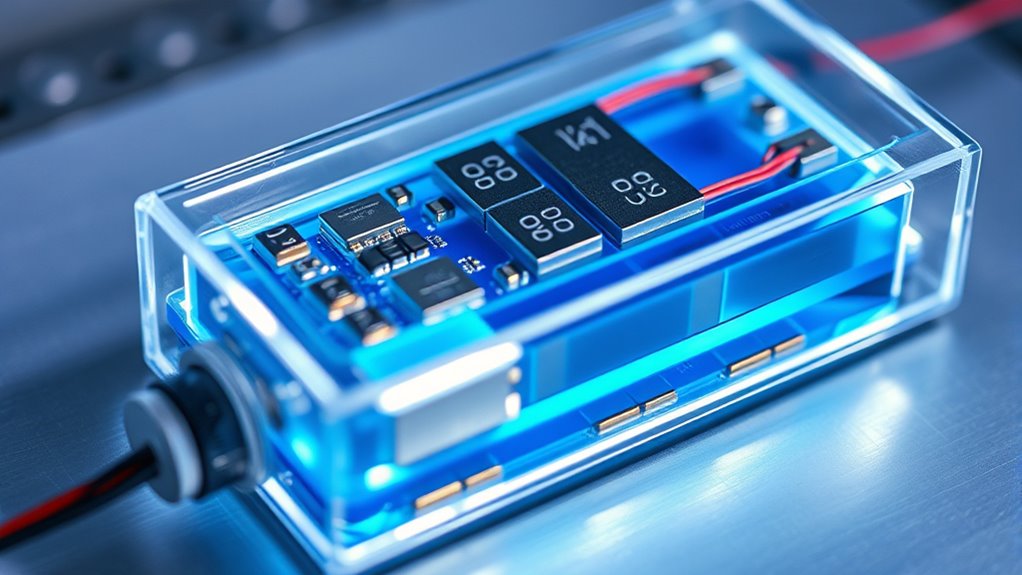
Sodium-ion batteries are emerging as a promising alternative to lithium-ion technology, especially as the demand for affordable and sustainable energy storage grows. One of the key factors in making sodium-ion batteries viable lies in the development of suitable electrode materials. Unlike lithium, sodium is more abundant and cheaper, but its larger ionic radius presents challenges for electrode design. You need electrode materials that can accommodate the bigger sodium ions without degrading or losing capacity over time. Researchers are exploring various options, such as layered transition metal oxides, polyanionic compounds, and hard carbon, to improve the performance and longevity of sodium-ion electrodes. Choosing the right electrode materials is pivotal for ensuring good capacity, fast charging, and cycle stability, all of which are essential for practical applications.
Another critical aspect you should consider is electrolyte stability. For sodium-ion batteries to work efficiently, the electrolyte must remain stable across a wide voltage range and under different operating conditions. If the electrolyte decomposes or reacts with electrode materials, it can cause capacity loss, increased resistance, or safety issues. Many researchers are working on formulating electrolytes that can withstand the corrosive environment within the battery and prevent side reactions. Organic electrolytes, aqueous solutions, and solid-state electrolytes are all being tested to find the optimal balance of ionic conductivity, chemical stability, and safety. Achieving electrolyte stability is essential because it directly influences the battery’s lifespan, safety, and overall performance. Additionally, advances in electrolyte chemistry are helping to improve the compatibility and durability of sodium-ion batteries.
Furthermore, understanding the chemistry involved in these processes helps you optimize battery design. The interactions between electrode materials and the electrolyte determine how well sodium ions can move back and forth during charge and discharge cycles. If these interactions are stable and controlled, you get better capacity retention and fewer issues like dendrite formation, which can cause short circuits. You should also keep in mind that advancements in electrolyte chemistry and electrode material research often go hand-in-hand, improving each other’s performance.
Frequently Asked Questions
How Do Sodium-Ion Batteries Compare Cost-Wise to Lithium-Ion Batteries?
You’ll find sodium-ion batteries are generally cheaper than lithium-ion ones, mainly because of lower raw material prices. The cost comparison favors sodium-ion batteries since sodium is abundant and easier to source than lithium. This makes sodium-ion batteries a more cost-effective option for large-scale energy storage. While they might currently have lower energy density, their affordability makes them attractive for applications where cost savings matter most.
What Are the Environmental Impacts of Sodium-Ion Battery Production?
You might think sodium-ion battery production is straightforward, but it’s more complex. The environmental footprint involves careful resource management, especially since sodium is abundant and easier to source than lithium. However, extraction and manufacturing still pose challenges to resource sustainability, including energy use and waste. If not managed properly, these impacts could undermine their eco-friendly appeal, making it essential to improve production practices for a truly sustainable future.
Can Sodium-Ion Batteries Be Recycled Effectively?
Yes, sodium-ion batteries can be recycled effectively. You’ll find that recycling efficiency is improving as technologies advance, allowing for better material recovery of key components like sodium, cathodes, and anodes. By properly recycling these batteries, you help reduce waste and environmental impact. Efficient recycling processes also make sodium-ion batteries more sustainable and cost-effective, encouraging their wider adoption and supporting a circular economy in energy storage solutions.
What Are the Safety Concerns Associated With Sodium-Ion Batteries?
You might worry about safety risks with sodium-ion batteries, especially the threat of thermal runaway. If the electrolyte isn’t stable, overheating can ignite a chain reaction, causing fires or explosions. While they’re generally safer than lithium-ion batteries, you must handle them carefully, ensuring proper thermal management. Vigilance against electrolyte degradation and temperature control is essential to prevent dangerous failures and keep your devices safe.
How Scalable Are Sodium-Ion Battery Manufacturing Processes?
You’ll find that sodium-ion battery manufacturing processes are quite scalable, but you’ll face manufacturing challenges like ensuring consistent quality and optimizing production methods. To improve production scalability, you’ll need to develop cost-effective, high-throughput techniques and address material sourcing issues. While current processes are promising, scaling up requires overcoming these challenges to meet demand and maintain performance standards across larger production volumes.
Conclusion
You now know that sodium-ion batteries are a promising alternative to lithium-ion ones, especially since sodium is abundant and cheaper. Did you know they can deliver up to 80% of lithium-ion battery performance? That’s impressive! As research continues, these batteries could revolutionize energy storage, making renewable energy more accessible and affordable worldwide. So, stay excited about this technology—it’s shaping a sustainable future, and you’re part of that journey.