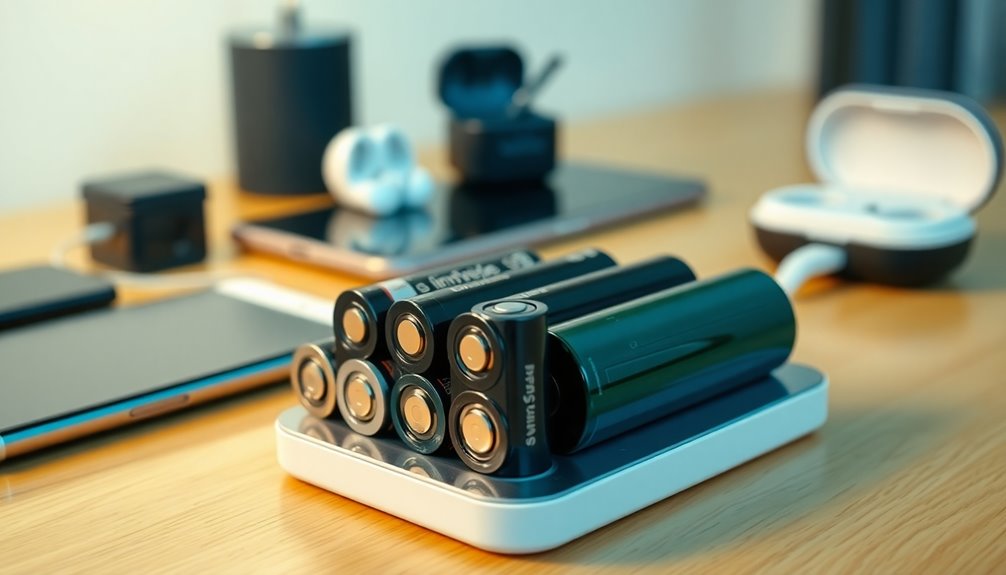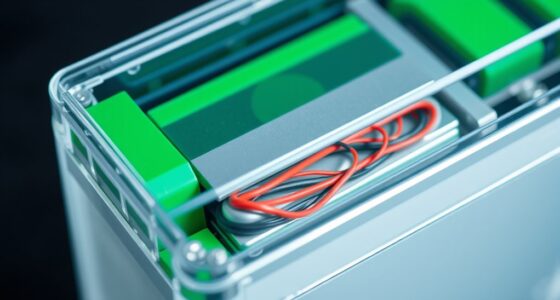
If you’re choosing between AGM and flooded batteries, you’ll find AGM batteries excel in ease of maintenance, installation flexibility, and safety, making them ideal for confined spaces and low-maintenance setups. However, flooded batteries can be more cost-effective and offer better performance in high-demand situations if properly maintained. Still, they need ventilation and regular upkeep. To discover more about these differences and find out where AGM truly shines, keep exploring the details.

Get backup power and energy gear delivered free with Prime
- Fast, free delivery on millions of items
- Prime Video, Amazon Music and more included
- Member-only deals all year
Key Takeaways
- AGM batteries excel in ease of maintenance, installation flexibility, and safety, making them ideal for confined or sensitive environments.
- Flooded batteries are more cost-effective and perform better in high-demand applications with regular maintenance.
- AGM batteries do not require ventilation, suitable for spaces with limited airflow, unlike flooded batteries that need proper ventilation.
- Flooded batteries are less suitable where maintenance access is difficult or neglect is likely, due to their need for water checks and ventilation.
- AGM batteries are less effective in high-demand, long-term use scenarios where cost and performance favor flooded options.
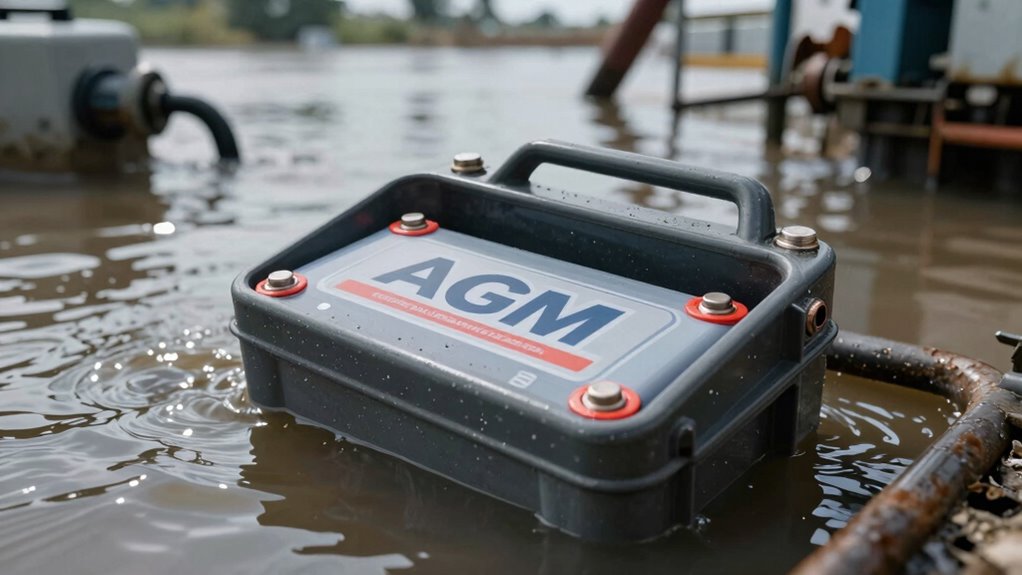
When choosing between AGM and flooded batteries, understanding their specific strengths can make all the difference. If you’re considering which type to install, it’s essential to weigh factors like ease of maintenance, installation challenges, and how you plan to use the battery. AGM batteries are known for their low-maintenance design, whereas flooded batteries typically demand more attention. This difference can influence your decision, especially if you prefer a set-it-and-forget-it approach or are prepared for regular upkeep.
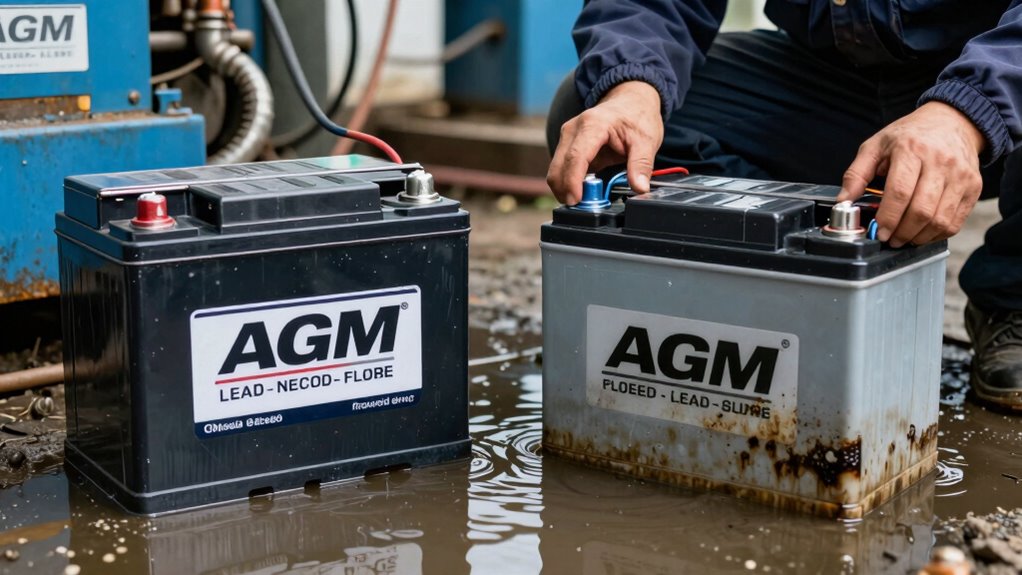
AGM batteries are sealed, maintenance-free, and less prone to spills, making them ideal for applications where space is tight or movement is frequent. They won’t leak acid if tipped or damaged, which reduces installation challenges. You can install AGM batteries in various orientations without worry, and they’re less prone to corrosion or acid fumes. This makes them well-suited for RVs, boats, or backup power systems where safety and convenience matter. Since they don’t need watering or equalization, your battery maintenance routine becomes simpler, and you save time on routine checks. If you’re installing batteries in a confined or sensitive environment, AGM’s sealed design minimizes ventilation concerns and simplifies the process overall. Additionally, their color consistency helps ensure reliable performance across different units.
On the other hand, flooded batteries often require more involved installation procedures. They need proper ventilation because they release hydrogen gas during charging, and their open design necessitates regular checks and watering to maintain ideal electrolyte levels. This means you’ll face installation challenges related to ensuring adequate ventilation and secure placement. Maintenance becomes more demanding, as you’ll need to periodically inspect fluid levels and top off with distilled water. If neglected, flooded batteries can suffer from sulfation or damage, shortening their lifespan. However, flooded batteries tend to be more affordable upfront and can sometimes offer better performance in high-demand situations if properly maintained.
As an affiliate, we earn on qualifying purchases.
Frequently Asked Questions
How Long Do AGM Batteries Typically Last Compared to Flooded Batteries?
You’ll find AGM batteries typically last around 4 to 7 years, while flooded batteries often last 3 to 5 years. AGM batteries tend to have a longer battery lifespan because they’re more resistant to vibration and require less maintenance. Unlike flooded batteries, which need regular water level checks and cleaning, AGM batteries are maintenance-free, making them a more durable and convenient option for long-term use.
Are AGM Batteries More Environmentally Friendly Than Flooded Batteries?
You might think AGM batteries are more eco-friendly, and they often have a lower environmental impact during use because they’re maintenance-free and spill-proof. However, their recycling processes are more complex, which can limit their environmental benefits. While AGM batteries produce fewer emissions during operation, flooded batteries are easier to recycle and have a well-established process. So, overall, flooded batteries can be more environmentally friendly due to simpler recycling.
Can AGM Batteries Be Used in Extreme Weather Conditions?
Yes, AGM batteries are suitable for extreme weather conditions. They offer excellent temperature resilience, performing well across a wide range of temperatures. Plus, they have better freeze tolerance than flooded batteries, reducing the risk of damage in cold climates. This makes AGM batteries reliable for cold winters and hot summers, ensuring your vehicle or equipment stays powered without worry about temperature fluctuations.
What Is the Cost Difference Between AGM and Flooded Batteries?
Coincidentally, if you’re weighing the cost comparison, AGM batteries typically cost more upfront than flooded ones. While flooded batteries usually have a lower initial investment, AGM batteries tend to last longer and require less maintenance, which could save you money over time. So, your choice depends on whether you’re prioritizing lower initial costs or long-term value and durability.
Do AGM Batteries Require Special Maintenance or Charging Procedures?
You don’t need special maintenance protocols for AGM batteries, but you should follow recommended Charging requirements to guarantee longevity. Keep the terminals clean and tight, and avoid deep discharges. Unlike flooded batteries, AGM batteries don’t require watering or venting, making them low-maintenance. Just make sure to use a compatible charger and avoid overcharging, which can damage the battery. Proper care keeps your AGM performing at its best longer.
Conclusion
So, if you’re powering a backup system for your home or a luxury boat, AGM batteries often come out on top thanks to their durability and maintenance-free design. Imagine a homeowner relying on AGM batteries during a blackout, knowing they’ll deliver consistent power without fuss. However, for deep-cycle needs like off-grid solar setups, flooded batteries might still be the better choice. Choose wisely based on your specific use-case to keep your energy flowing smoothly.
Halloween Picks
halloween
As an affiliate, we earn on qualifying purchases.