When comparing NiCd and NiMH batteries, you’ll find that NiCd batteries are prone to the memory effect, which can reduce capacity if not fully discharged regularly, while NiMH batteries resist this issue, making them more convenient for partial recharges. In terms of lifespan, NiCd batteries typically last longer with up to 1,000 cycles, whereas NiMH may support around 500 to 1000 cycles. Environmentally, NiMH is safer since it lacks toxic cadmium, but learning more can help you choose the best option for your needs.
Key Takeaways
- NiCd batteries are more prone to memory effect, requiring full discharges to maintain capacity, unlike NiMH which resist this issue.
- NiCd batteries generally offer a longer cycle life, supporting over 1,000 cycles, whereas NiMH typically last around 500 to 1,000 cycles.
- NiMH batteries are environmentally friendlier, containing no toxic cadmium, unlike NiCd which pose disposal and recycling challenges.
- NiCd’s durability suits demanding applications, but environmental concerns and memory effect make NiMH preferable for casual or eco-conscious use.
- Charging rates differ, with NiCd supporting faster charges, while NiMH require slower, controlled charging to maximize lifespan.
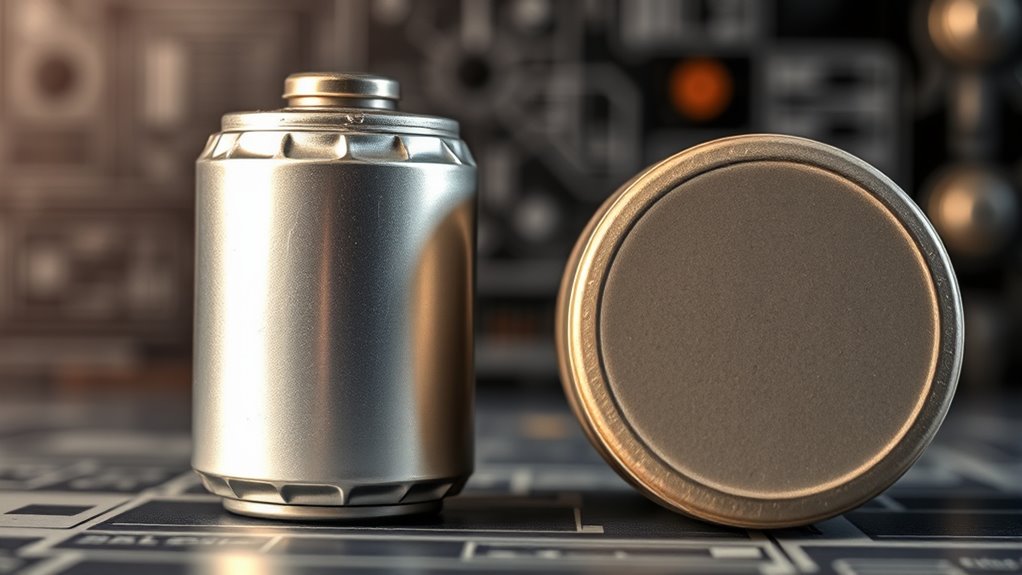
When choosing between NiCd and NiMH batteries, understanding their differences can help you make an informed decision. One of the key aspects to weigh is how each type handles charging rates and manufacturing costs. NiCd batteries typically allow for faster charging due to their robust chemical makeup, which makes them suitable for applications needing quick turnaround times. However, they often come with higher manufacturing costs because of the complex materials involved and more intensive production processes. In contrast, NiMH batteries usually require slower, more controlled charging to maximize their lifespan, but they tend to be cheaper to produce, thanks to simpler manufacturing methods and more abundant materials.
Memory effect is another important factor that influences your choice. NiCd batteries are notorious for developing a memory effect if they’re not fully discharged before recharging. This means they can lose capacity over time if not properly maintained, which might lead you to cycle them more carefully or frequently fully discharge and recharge them to prevent capacity loss. On the other hand, NiMH batteries are less prone to memory effect, making them more user-friendly for everyday use where full discharges aren’t always practical. This advantage means you can top off a NiMH battery without worrying about diminishing its capacity, which often results in longer overall usability with less maintenance.
Cycle life is also a vital consideration. NiCd batteries generally offer a longer cycle life – sometimes up to 1,000 or more charge-discharge cycles – making them highly durable in demanding environments. They’re often chosen for professional tools or emergency equipment that requires reliable performance over many years. NiMH batteries, while more sensitive to overcharging and requiring careful management, typically have a shorter cycle life, around 500 to 1,000 cycles, but improvements in technology are closing this gap. For everyday devices, this difference might not be significant, but if longevity is your priority, NiCd could be the better choice. Additionally, NiCd batteries are often favored in high-drain applications due to their ability to deliver quick bursts of power.
Environmental impact plays a growing role in your decision, too. NiCd batteries contain cadmium, a toxic heavy metal that poses environmental hazards if not disposed of properly. This makes recycling and disposal more critical, and many regions have strict regulations regarding their use. NiMH batteries, however, do not contain cadmium and are considered more environmentally friendly, making them a better choice for eco-conscious consumers. While both types can be recycled, NiMH batteries generally have a lower environmental footprint throughout their lifecycle.
Frequently Asked Questions
Which Battery Type Is More Cost-Effective Long-Term?
You’ll find that NIMH batteries are more cost-effective long-term due to their lower initial cost and fewer maintenance needs. Their longevity analysis shows they can last many cycles without significant capacity loss, making them a better investment over time. While NiCd batteries may have a lower upfront price, their shorter cycle life and environmental concerns can lead to higher costs eventually. Overall, NIMH batteries provide better value for your money.
How Do Temperature Extremes Affect Each Battery’s Performance?
Temperature extremes can substantially impact both batteries’ performance. Nicd batteries generally handle temperature fluctuations better due to their superior temperature resilience, making them suitable for harsh environments. Nimh batteries are more sensitive to heat, which can reduce their cycle life and efficiency. Proper thermal management is essential for both types, especially in extreme conditions, to maintain ideal performance and prevent damage. Always keep batteries within recommended temperature ranges for longevity.
Can Nicd or Nimh Batteries Be Recycled Easily?
You can recycle NiCd and NiMH batteries, but the process has recycling challenges. Battery disposal requires special handling because they contain hazardous materials like cadmium in NiCd and other chemicals in NiMH. Recycling facilities must carefully extract these components to prevent environmental damage. While recycling is possible, it’s not always easy or convenient, so you should seek authorized collection points or programs to guarantee proper disposal and reduce environmental impact.
Which Battery Type Has Faster Charging Times?
Nimh batteries typically charge faster than NiCd batteries because they have better charging speed and power output. You’ll notice shorter charging times with nimh, making them convenient for quick use. NiCd batteries, while reliable, tend to take longer to charge, partly due to their lower power output. If you want faster charging times, nimh batteries are your best choice, especially for devices requiring quick power replenishment.
Are There Safety Concerns Unique to Nicd or Nimh?
Just as Icarus warned against overconfidence, safety concerns with NiCd and NiMH batteries require caution. NiCd batteries pose a risk of cadmium leakage, which is toxic and demands strict safety protocols. NiMH batteries are generally safer but can overheat or leak if damaged or improperly handled. Always follow proper charging and disposal procedures to mitigate risk factors. While both have safety concerns, NiCd’s are more hazardous if mishandled.
Conclusion
So, as you weigh your options, remember that NiCd’s memory effect is like a whisper of the past, while NiMH offers a greener, longer-lasting dance partner. NiCd’s cycle life may be sturdy but leaves a lingering trail of environmental worries, unlike NiMH’s more gentle footprint. Choose wisely, balancing your needs like a skilled conductor leading a symphony—each battery singing its tune in harmony with your goals and the planet.