
Li-ion polymer batteries use flexible packaging and solid electrolytes, making them safer and more adaptable for your devices. Their thin, moldable design allows for slimmer smartphones, wearables, and curved gadgets. Manufacturing challenges include ensuring consistent quality and stable electrolytes, but ongoing advances improve safety and performance. As technology evolves, these batteries are becoming more affordable and widespread. Keep exploring to discover how ongoing developments are shaping innovative, flexible energy solutions for your everyday electronics.
Key Takeaways
- Li-ion polymer batteries use solid or gel-like electrolytes, enabling flexible and lightweight packaging.
- Flexible packaging allows for slim, curved, and ergonomic device designs.
- These batteries are ideal for portable, wearable, and custom-shaped electronic products.
- Manufacturing challenges include ensuring electrolyte uniformity and scaling production processes.
- Advances in solid electrolyte tech improve safety, performance, and affordability of flexible Li-ion polymer batteries.
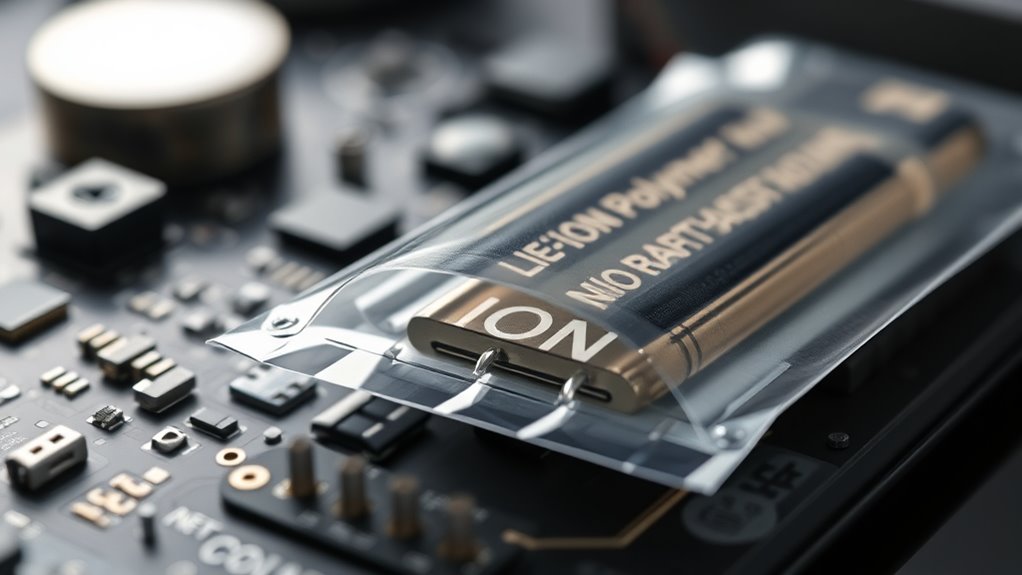
Have you ever wondered how modern portable devices manage to stay lightweight and reliable? The secret lies in the advanced design and manufacturing of Li-ion polymer batteries. Unlike traditional batteries, these power sources utilize a solid state design, which replaces the liquid electrolyte with a solid or gel-like substance. This innovation allows for thinner, more flexible packaging, making it possible to fit into sleek, compact devices without sacrificing performance. The solid state design also enhances safety by reducing the risk of leaks or spills, which are common concerns with liquid electrolytes in conventional batteries. Since the electrolyte is solid or gel-based, it’s less prone to damage from impacts or temperature fluctuations, giving your devices a longer lifespan and more reliable operation.
However, developing and manufacturing these batteries present unique challenges. Manufacturing challenges in solid state design include ensuring uniformity and consistency across each cell. Producing a solid electrolyte that conducts ions efficiently while maintaining stability isn’t straightforward. It requires precise control over materials and production processes, often involving complex layering and sealing techniques. Any imperfections in the solid electrolyte can lead to decreased performance or even safety issues, which means manufacturers need to invest heavily in quality control and testing. Additionally, integrating solid electrolytes with other battery components demands meticulous engineering to optimize ion flow and prevent issues like dendrite formation—tiny, needle-like structures that can cause short circuits. Overcoming these manufacturing challenges is essential for scaling production and making Li-ion polymer batteries more affordable and accessible. Advances in solid electrolyte technology are also critical for improving overall performance and safety.
The flexibility of the packaging is another advantage of these batteries, opening the door to innovative product designs. Manufacturers can mold or shape the batteries to fit into curved or irregular spaces, enabling slimmer smartphones, wearable gadgets, and even flexible screens. This adaptability not only enhances aesthetic appeal but also improves ergonomics and user comfort. Despite the hurdles in manufacturing, ongoing research and development are steadily refining the processes, allowing for more efficient production and higher-quality batteries. As a result, you’re likely to see more devices that are not only lighter and more portable but also safer and more durable, thanks to the unique solid state design of Li-ion polymer batteries.
Frequently Asked Questions
How Long Do Li‑Ion Polymer Batteries Typically Last?
Li-ion polymer batteries typically last between 2 to 3 years, but their lifespan can vary based on usage. You might notice degradation factors like reduced capacity or shorter run times over time. To extend their battery lifespan, avoid overcharging, keep them cool, and use proper charging practices. Proper maintenance helps minimize degradation factors, ensuring your battery performs well for as long as possible.
Are Li‑Ion Polymer Batteries Environmentally Friendly?
Li-ion polymer batteries aren’t entirely eco-friendly due to recyclability concerns and the use of potentially harmful materials. While they contain recyclable components, improper disposal can cause environmental issues. By choosing batteries with eco-friendly materials and supporting proper recycling programs, you can reduce their environmental impact. It’s important to stay informed about advances in sustainable battery technology to help protect the environment.
Can Li‑Ion Polymer Batteries Be Recycled Easily?
You can recycle Li-ion polymer batteries, but the process isn’t always simple. Battery recycling requires specialized facilities to safely handle toxic materials, which isn’t available everywhere. To support eco-friendly practices, you should look for certified recycling programs that follow proper procedures. While recycling is possible, improving battery design and expanding recycling infrastructure will make it easier and more efficient, helping reduce environmental impact and promote sustainability.
What Safety Measures Are in Place for Li‑Ion Polymer Batteries?
You’re holding a fragile, yet powerful energy source, so safety measures are essential. Battery containment is designed to prevent leaks or damage, while fire suppression systems activate instantly if a malfunction occurs. These batteries also have built-in safeguards like thermal cut-offs and pressure vents to prevent overheating or explosions. Together, these safety features make sure you’re protected, even if the battery’s power seems unstoppable.
How Do Temperature Changes Affect Li‑Ion Polymer Battery Performance?
Temperature changes markedly impact your Li-ion polymer battery’s performance by affecting its thermal stability and operational efficiency. When temperatures rise too high, the battery risks overheating, reducing lifespan, or even causing safety issues. Conversely, cold temperatures can slow down chemical reactions, decreasing capacity and efficiency. To maintain ideal performance, keep your battery within recommended temperature ranges, ensuring it remains thermally stable and operates efficiently under various conditions.
Conclusion
Think of Li-ion polymer batteries as the flexible backbone of modern tech, bending and adapting to your needs. Their innovative packaging makes them lightweight and versatile, like a dancer moving seamlessly through different routines. As you integrate these batteries into your devices, you’re fueling a future that’s more adaptable and resilient. Embrace their potential, because in the world of energy storage, Li-polymer batteries are the flexible threads weaving innovation into everyday life.