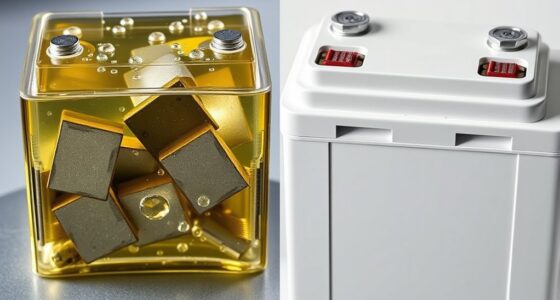
Lead-acid batteries are reliable power sources that convert chemical energy into electrical energy through their construction, which includes lead plates and sulfuric acid electrolyte. They come in various types like flooded, sealed, and AGM, suited for different applications such as vehicles, backup power, and industrial use. Their design affects performance, maintenance, and lifespan. If you want to understand more about their features and uses, keep exploring the details behind these common batteries.
Key Takeaways
- Lead-acid batteries consist of lead plates immersed in sulfuric acid electrolyte, converting chemical energy to electrical energy.
- They come in various types, including flooded, sealed (AGM, gel), each suited for specific applications.
- Construction features include positive and negative lead plates, separators, and a durable casing to contain the electrolyte.
- Widely used in automotive, backup power, and renewable energy systems due to their reliability and cost-effectiveness.
- Proper maintenance, such as electrolyte management and regular inspections, extends their lifespan and ensures optimal performance.

Lead-acid batteries are a common and dependable power source found in many vehicles and backup systems. They operate by converting chemical energy into electrical energy through a chemical reaction between lead plates and an electrolyte solution. The electrolyte composition is essential for the battery’s performance, stability, and lifespan. It typically consists of sulfuric acid diluted with water, creating an electrolyte that facilitates ion transfer between the positive and negative plates. Maintaining the correct electrolyte level and concentration is critical; too low, and the plates can be exposed, leading to damage, while too high can cause overflow and corrosion. Regular checks of electrolyte levels are necessary, especially in flooded lead-acid batteries where you can access the liquid directly. Proper battery maintenance can significantly extend the service life of your lead-acid cell. When it comes to maintenance procedures, keeping your lead-acid battery in ideal condition is straightforward but requires attention. You should routinely inspect the electrolyte levels, topping them off with distilled water if needed, particularly in flooded lead-acid batteries. During these checks, look for signs of corrosion around the terminals, which can impede electrical flow. Cleaning the terminals with a mixture of baking soda and water can remove corrosion, ensuring a good connection. Tightening terminal connections is equally important; loose connections increase resistance and can cause starting problems. If you notice any swelling, cracking, or leaks, it’s best to replace the battery promptly to prevent damage or failure. Charging your lead-acid battery correctly is another key maintenance step. Overcharging can cause excessive gassing and water loss, damaging the plates, while undercharging reduces the battery’s capacity over time. Use a charger compatible with lead-acid batteries and follow manufacturer instructions for best charging rates. After charging, ensure the battery is stored in a cool, dry place to prevent self-discharge and degradation of the electrolyte. If your battery is sealed, check the voltage periodically with a multimeter; a reading of around 12.6 volts indicates a healthy, fully charged battery.
Frequently Asked Questions
How Long Do Lead-Acid Batteries Typically Last?
Lead-acid batteries typically last between 3 to 5 years, depending on usage and maintenance. You can prolong their battery lifespan by keeping them properly charged and avoiding deep discharges. Regular inspections and timely replacements help prevent unexpected failures, with replacement intervals often recommended around 3 to 4 years for peak performance. Proper care ensures your battery remains reliable and efficient throughout its service life.
Are Lead-Acid Batteries Environmentally Friendly?
You might think lead-acid batteries are a double-edged sword when it comes to the environment. They do have a notable environmental impact due to their lead and acid content, but recycling processes are well-established, helping to reduce waste. Proper disposal and recycling can make these batteries more eco-friendly. Still, you should be mindful of their potential harm and guarantee they’re recycled responsibly to keep Mother Earth happy.
Can Lead-Acid Batteries Be Recycled?
Yes, you can recycle lead-acid batteries. Battery recycling helps reduce environmental impact by safely recovering lead and sulfuric acid, preventing harmful materials from contaminating the environment. When you recycle, you’re supporting responsible disposal and reducing waste. Proper recycling processes guarantee that valuable materials are reused, making lead-acid batteries a more sustainable choice. Always take your used batteries to authorized recycling centers to ensure eco-friendly disposal.
What Are Common Safety Concerns With Lead-Acid Batteries?
Think of lead-acid batteries as ticking time bombs if not handled properly. You face safety concerns like battery acid leaks, which can cause burns and environmental damage, and electrical shock hazards that could be dangerous. Always wear protective gear, avoid sparks near the battery, and keep it upright to prevent leaks. Proper maintenance and careful handling are your best defenses against these risks.
How Do Temperature Variations Affect Lead-Acid Battery Performance?
Temperature effects markedly impact your lead-acid battery’s performance. At high temperatures, the battery’s efficiency drops as it speeds up chemical reactions, increasing the risk of overheating and reduced lifespan. Conversely, cold temperatures slow down chemical activity, decreasing capacity and making it harder to deliver power. To maintain ideal battery efficiency, keep your lead-acid batteries within recommended temperature ranges and avoid extreme heat or cold.
Conclusion
Now that you understand the construction, types, and applications of lead-acid batteries, you can appreciate their enduring relevance. These reliable power sources continue to serve in various industries, thanks to their affordability and proven performance. But isn’t it remarkable how such a simple design can still meet modern energy needs? As technology advances, lead-acid batteries remain a essential part of our energy landscape—proof that sometimes, classic solutions stand the test of time.