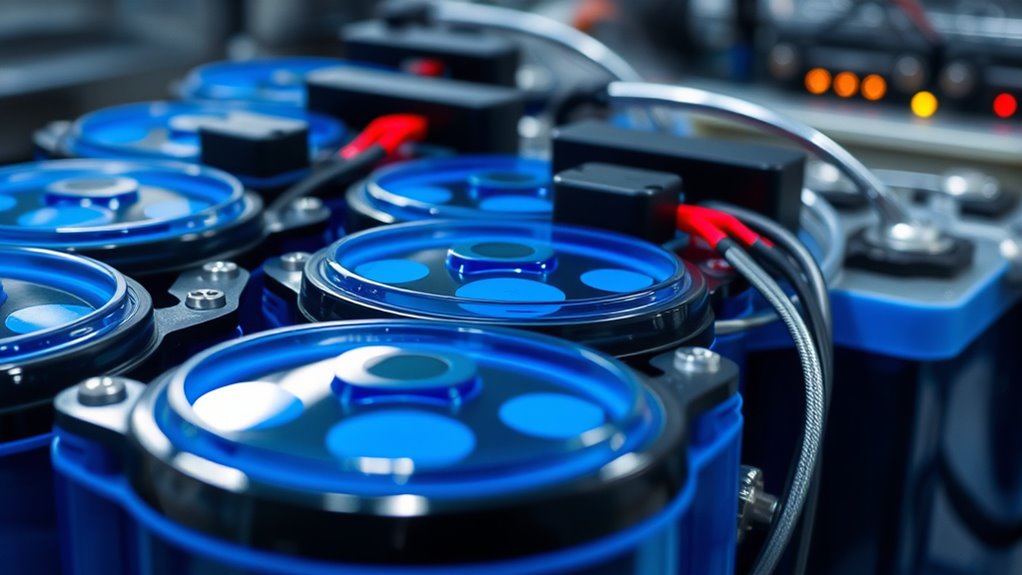

Gel cell batteries are sealed, maintenance-free power sources that use a stable gel electrolyte, making them spill-proof and safe for confined spaces. They don’t produce hydrogen gas during normal use, but proper ventilation helps prevent gas buildup during overcharging or faults. Regular checks for swelling, odors, or corrosion improve longevity. Their reliable, low-maintenance design suits backup systems and renewable energy setups. Continue exploring to discover the best tips for keeping your gel batteries in top shape.
Key Takeaways
- Gel cell batteries use a silica-based gel electrolyte, offering stable, leak-proof operation and minimal maintenance needs.
- They are designed to prevent electrolyte spillage and are safe for enclosed or mobile applications.
- Proper ventilation during charging prevents hydrogen gas buildup, ensuring safety and extending battery life.
- Regular inspection for swelling, odors, or terminal corrosion helps maintain optimal performance.
- Correct installation in well-ventilated areas and adherence to manufacturer guidelines maximize lifespan and safety.
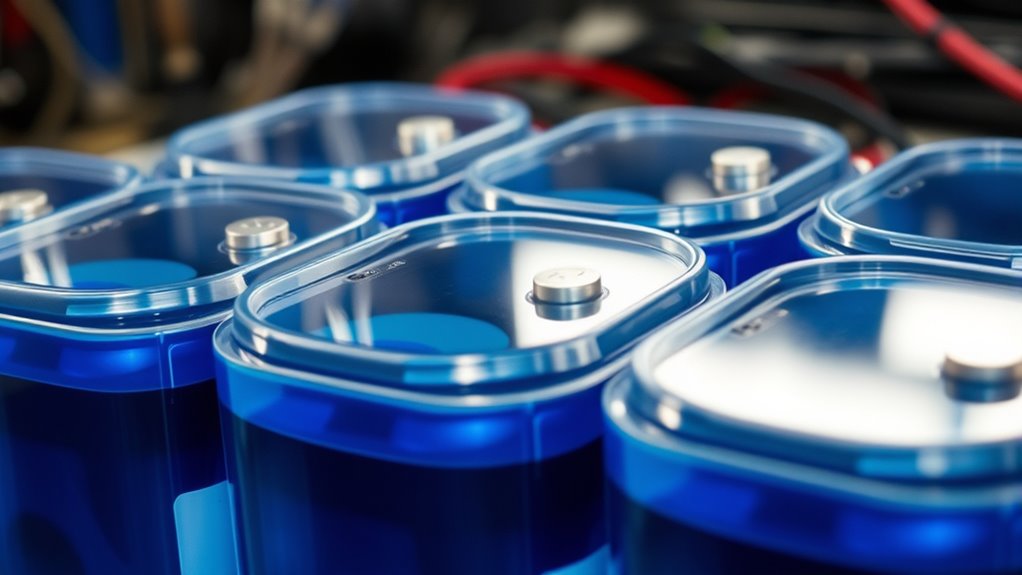
Gel cell batteries are a popular choice for those seeking reliable and maintenance-free power sources. They are sealed, valve-regulated lead-acid batteries that use a gel electrolyte instead of liquid acid. This design offers many advantages, especially in applications where safety and convenience matter. One key feature that makes gel cell batteries stand out is their excellent electrolyte stability. The gel electrolyte is immobilized within a silica-based substance, preventing spillage and reducing the risk of acid leaks. This stability means you don’t need to worry about tipping or tilting the battery, making them ideal for use in mobile or confined spaces. The gel’s consistency also minimizes evaporation of water, which is a common maintenance concern with traditional flooded lead-acid batteries. Because the electrolyte remains stable over time, gel cell batteries typically require less maintenance, allowing you to focus on other priorities.
However, even with their sealed design, gel cell batteries still have specific ventilation requirements. Unlike traditional flooded batteries, they don’t release hydrogen gas during normal operation, but during overcharging or faults, they can produce some gases. Proper ventilation is essential to prevent the buildup of any hydrogen that might escape, especially in enclosed environments. While they don’t need active ventilation systems like vented lead-acid batteries, ensuring good airflow around the battery helps maintain safety and ideal performance. Many gel cell batteries are designed to be maintenance-free, but you should still periodically check for any signs of swelling, unusual odors, or corrosion near terminals, which could indicate venting issues. Proper ventilation also helps dissipate heat generated during charging, preventing overheating that could compromise the battery’s lifespan. Additionally, advancements in AI security are contributing to smarter monitoring systems that can alert users to potential safety issues with batteries and other equipment.
When installing a gel cell battery, pay attention to the manufacturer’s guidelines regarding ventilation. Even though these batteries are sealed, ensuring they are placed in well-ventilated areas reduces the risk of gas buildup in case of malfunctions. Additionally, avoid sealing the battery in an airtight compartment, as some minimal gas release might occur during abnormal conditions. Proper ventilation not only enhances safety but also contributes to the best of the battery. Overall, gel cell batteries deliver a combination of reliable electrolyte stability and manageable ventilation requirements, making them suitable for various applications from renewable energy systems to backup power setups. Their low-maintenance nature and safety features make them a smart choice for anyone seeking hassle-free, dependable energy storage. Just remember to follow installation and maintenance recommendations closely to maximize their performance and safety over the long term.
Frequently Asked Questions
How Long Do Gel Cell Batteries Typically Last?
Gel cell batteries typically last between 8 to 15 years with proper maintenance. Your battery lifespan depends on regular maintenance tips like keeping the terminals clean, ensuring proper charging, and avoiding deep discharges. To maximize longevity, check the electrolyte levels and store the battery in a cool, dry place. By following these tips, you can guarantee your gel cell battery performs well and lasts as long as possible.
Can Gel Cell Batteries Be Recycled Easily?
Yes, you can recycle gel cell batteries easily through specialized recycling processes. These batteries contain valuable materials like lead and glass that can be recovered and reused, reducing environmental impact. By recycling, you prevent hazardous substances from contaminating the environment and help conserve resources. Always take your gel cell batteries to authorized recycling centers or collection points to guarantee they’re disposed of responsibly and sustainably.
Are Gel Cell Batteries Safe for Outdoor Use?
You’ll find gel cell batteries are quite safe for outdoor use, thanks to their excellent weather resistance. When you’re out in the elements, their outdoor durability protects against vibrations, temperature swings, and moisture. This coincidence of safety and resilience means you can rely on them for long-term outdoor applications. Just guarantee proper venting and handling, and you’ll enjoy their reliable performance without worry, even in challenging weather conditions.
What Are Common Signs of Gel Cell Battery Failure?
You’ll notice your gel cell battery is failing if its battery lifespan shortens or if charging indicators show inconsistent or slow charging. Swelling, leaks, or a foul smell also signal trouble. Keep an eye on its performance; if it doesn’t hold a charge well or if you see physical damage, it’s time to replace it. Regular maintenance helps catch issues early, ensuring your battery stays reliable longer.
How Do Temperature Variations Affect Gel Cell Performance?
A wise person once said, “A chain is only as strong as its weakest link,” and temperature swings can weaken your gel cell battery. Extreme heat reduces thermal stability, causing voltage fluctuation and faster degradation, while cold temperatures slow chemical reactions, decreasing capacity. To keep your battery reliable, avoid rapid temperature changes, store it in a stable environment, and monitor performance—this helps maintain consistent voltage and prolongs its lifespan.
Conclusion
Now that you know the key features and maintenance tips for gel cell batteries, are you ready to maximize their lifespan and performance? With proper care, these batteries can serve you reliably for years, saving you time and money. Just remember to keep them clean, monitor their charge, and avoid over-discharge. Isn’t it worth investing a little effort now to enjoy the long-lasting power and peace of mind gel cell batteries can provide?