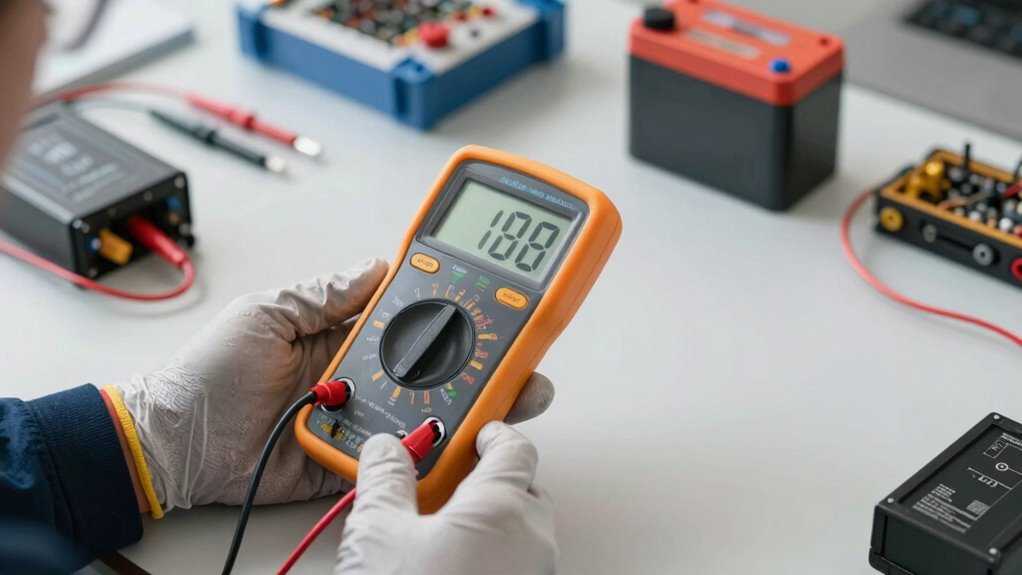

The first step in serious battery diagnostics is performing a thorough visual inspection. You should check for obvious signs of damage, corrosion, or loose connections. Look for swollen cases, cracks, or leaks that indicate internal issues. Also, verify all cables and terminals are clean and secure. Addressing these visual signs early can prevent unnecessary testing and catch critical problems. Keep exploring to learn the next steps in accurately diagnosing your battery’s health.

Get backup power and energy gear delivered free with Prime
- Fast, free delivery on millions of items
- Prime Video, Amazon Music and more included
- Member-only deals all year
Key Takeaways
- Perform a thorough visual inspection for physical damage, corrosion, and loose connections.
- Check the battery terminals and surrounding cables for cleanliness and secure attachment.
- Measure the static voltage with a digital multimeter to assess initial charge status.
- Look for signs of swelling, cracks, leaks, or corrosion as indicators of potential failure.
- Ensure the battery is isolated from the vehicle to obtain an accurate voltage reading before further testing.
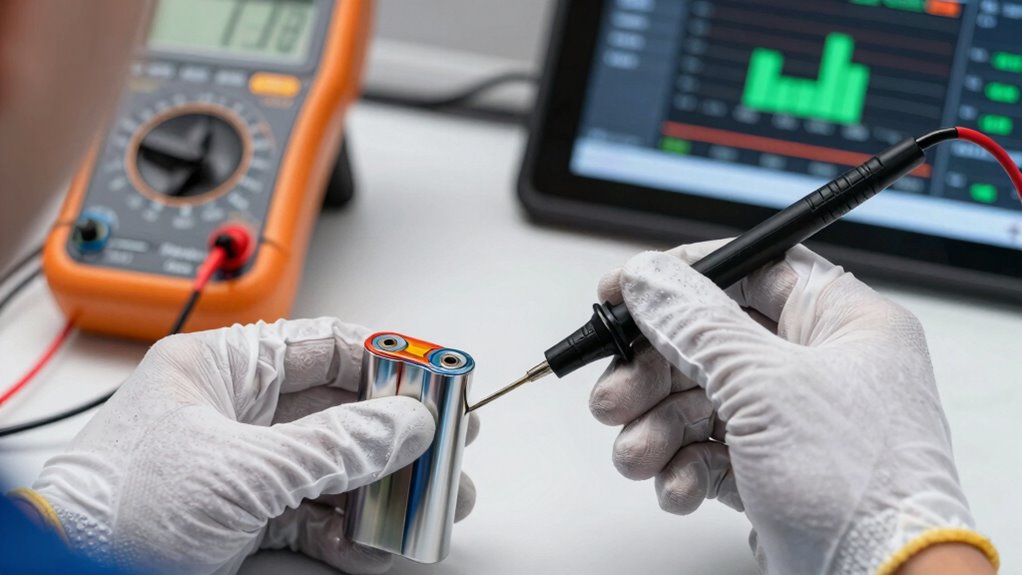
When diagnosing a battery, the first step is to perform a thorough visual inspection. You want to look for obvious signs of damage or wear that might indicate underlying issues. Check the battery terminals for corrosion, corrosion buildup can impede electrical flow, leading to poor performance or failure. Look for loose or broken connections, bulging cases, cracks, or leaks. If the battery case appears swollen or cracked, it’s a clear sign it’s compromised and needs replacement. Also, inspect the surrounding cables and connectors, ensuring they’re secure and free of corrosion or dirt. Sometimes, debris or corrosion can be mistaken for a failing battery, so cleaning the terminals with a wire brush can sometimes restore proper contact. This initial visual step is crucial because it helps you identify problems that don’t require testing but could be easily remedied. Additionally, understanding battery health indicators can help you interpret the visual signs more accurately. It’s also beneficial to familiarize yourself with signs of battery failure, which can often be identified during this inspection phase. Performing a visual inspection thoroughly can save time by identifying obvious issues early, preventing unnecessary testing or replacement. Regularly checking for corrosion buildup and other physical damages can prevent unexpected breakdowns and extend the lifespan of your battery. Keep in mind that environmental conditions such as heat or moisture can accelerate battery deterioration, making early detection even more important. Once you’ve completed the visual inspection, you should proceed to battery testing, which involves voltage analysis. Using a digital multimeter, you can measure the battery’s voltage to evaluate its charge level and overall health. A healthy, fully charged 12-volt car battery typically reads around 12.6 volts or slightly higher. If your readings are significantly lower, say around 11.5 volts or less, it indicates the battery is discharged or may be failing. Be sure to perform this voltage analysis with the engine off to get an accurate reading of the static voltage. If you’re testing a battery in a different application, such as a deep-cycle or marine battery, refer to the manufacturer’s specifications to determine what voltage range signifies a healthy state.
Battery testing doesn’t end with a simple voltage check. For a more comprehensive diagnosis, you might perform a load test to see how the battery performs under stress. This involves applying a load to the battery that simulates real-world use and observing if the voltage holds steady or dips significantly. If it drops below a certain threshold during testing, it suggests the battery can’t supply sufficient power and should be replaced. Voltage analysis is a vital part of this process because it provides immediate insight into the battery’s state of charge, but it’s not always conclusive on its own. Combining visual inspection with voltage analysis gives you a clearer picture of the battery’s health, helping you determine whether it needs to be charged, repaired, or replaced. This methodical approach ensures you’re making informed decisions early in the diagnostic process.
car battery visual inspection tools
As an affiliate, we earn on qualifying purchases.
As an affiliate, we earn on qualifying purchases.
Frequently Asked Questions
What Tools Are Essential for Initial Battery Diagnostics?
You’ll need a reliable battery tester and diagnostic tools as essential initial equipment. A battery tester helps you quickly assess voltage, state of charge, and overall health, while diagnostic tools can identify underlying issues like faulty connections or parasitic drains. These tools enable you to pinpoint problems efficiently, saving time and preventing unnecessary replacements. Always verify your diagnostic tools are calibrated and suitable for the specific battery type you’re testing.
How Do Environmental Conditions Affect Battery Test Results?
Environmental impact and testing conditions greatly influence your battery test results. Extreme temperatures, humidity, and vibration can cause inaccurate readings, making it seem like your battery is weaker or stronger than it truly is. To guarantee precise diagnostics, you need to control testing conditions carefully. By minimizing environmental impact, you get a true assessment of your battery’s health, helping you make better decisions about maintenance or replacement.
Can Battery Age Influence Diagnostic Accuracy?
Isn’t it true that aging can skew your battery diagnostics? As batteries age, their lifespan shortens, and internal components degrade, which can reduce diagnostic reliability. Older batteries may appear weaker or faulty even if they’re still functional, leading to inaccurate assessments. Consequently, understanding a battery’s age is essential for accurate diagnostics, ensuring you don’t replace a healthy battery prematurely or overlook a failing one.
What Safety Precautions Are Necessary During Testing?
During testing, you should wear personal protective equipment like gloves and safety goggles to prevent chemical exposure or sparks. Confirm proper ventilation requirements are met, such as working in a well-ventilated area or using exhaust systems, to avoid inhaling harmful fumes. Always follow safety protocols, handle batteries carefully, and keep a fire extinguisher nearby, as batteries can pose fire or explosion risks if mishandled.
How Often Should Battery Diagnostics Be Performed?
You should perform battery diagnostics regularly, ideally every 3 to 6 months, to monitor your battery’s health. Frequent testing helps identify issues early, extending its lifespan and tracking charging cycles that can affect performance. Consistent diagnostics ensure you catch declining capacity or potential failures before they become serious problems, keeping your device or vehicle reliable and maintaining ideal battery performance over time.
Conclusion
Remember, starting with a thorough check is essential—it’s like diagnosing a car before a long trip. Did you know that over 60% of battery failures can be traced back to simple, overlooked issues? By taking that first step carefully, you prevent costly replacements and guarantee your battery’s health. So, don’t skip the basics; it’s your best chance to catch problems early and keep everything running smoothly.
Halloween Picks
halloween
As an affiliate, we earn on qualifying purchases.