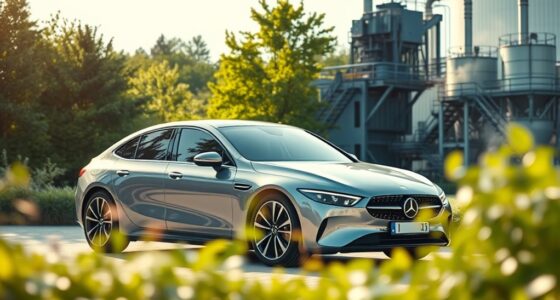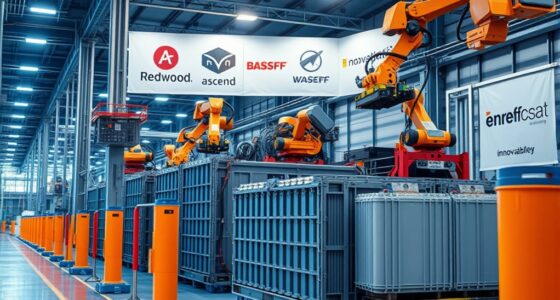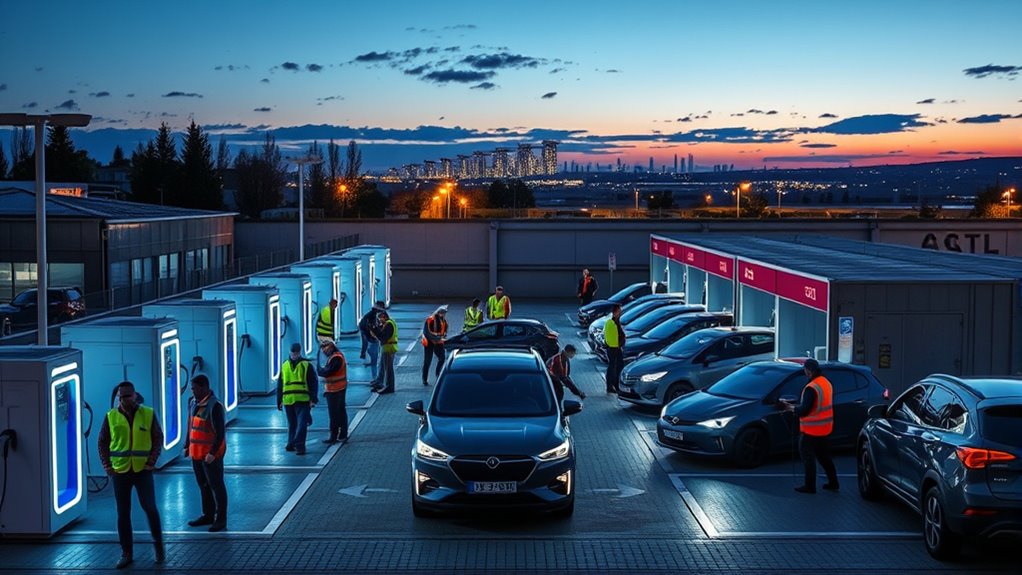

Nio is leading the charge in Europe’s battery swap expansion, investing in quick, efficient stations designed for fast in-car replacements that boost convenience. Meanwhile, CATL focuses on developing standardized, scalable batteries and partnering with automakers to integrate swap stations across the continent. Both companies aim to make EVs more accessible and practical, but their approaches differ—Nio emphasizes speed, while CATL targets broader interoperability. If you continue exploring, you’ll discover how these strategies shape Europe’s electric future.

Get backup power and energy gear delivered free with Prime
- Fast, free delivery on millions of items
- Prime Video, Amazon Music and more included
- Member-only deals all year
Key Takeaways
- Nio is expanding its dedicated battery swap stations across Europe, emphasizing quick and efficient in-car battery replacements.
- CATL focuses on standardizing batteries and partnering with automakers to enable interoperability in European swap networks.
- Nio’s swap stations are designed for rapid deployment, targeting regions with limited charging infrastructure.
- CATL develops scalable, advanced batteries to support flexible swap station deployment and broader EV compatibility.
- Both companies aim to accelerate EV adoption in Europe through infrastructure expansion, with Nio leading in direct swap stations and CATL in battery supply and standardization.
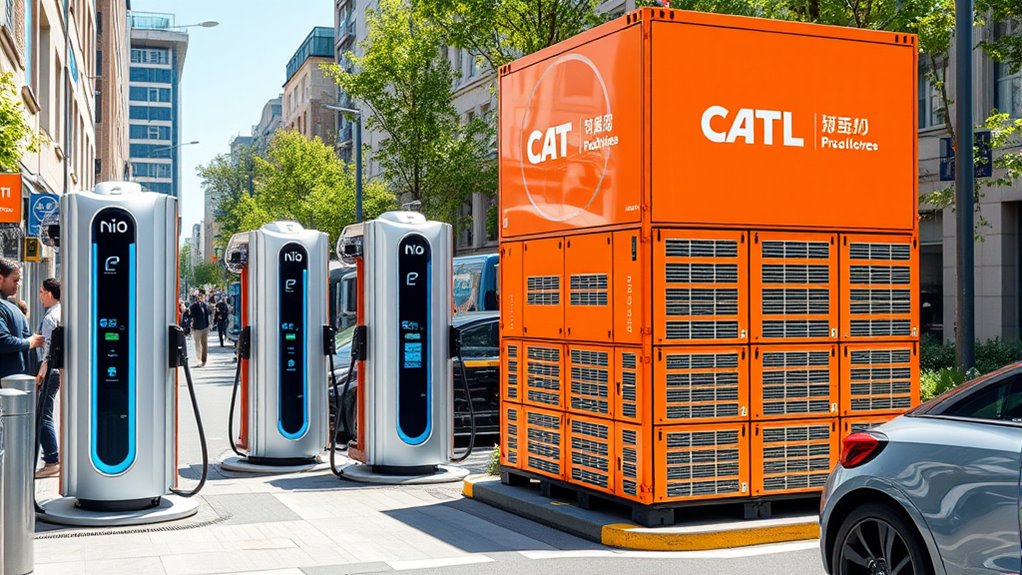
Have you ever wondered how Europe is accelerating its shift to electric mobility? One of the key strategies fueling this transition is the rapid expansion of battery swap stations, which complements existing charging networks and helps overcome some of the limitations of traditional charging. As electric vehicle adoption grows, so does the need for robust battery infrastructure that supports quick, convenient battery swaps. This approach allows drivers to replace depleted batteries with fully charged ones in a matter of minutes, reducing downtime and eliminating the long waits associated with standard charging stations. Countries across Europe are investing heavily in these swap stations, aiming to create a seamless ecosystem that encourages more people to choose electric vehicles.
Europe accelerates electric mobility with rapid battery swap stations, reducing wait times and expanding charging options for a greener future.
In this landscape, two major players are competing fiercely—Nio and CATL. Nio, a Chinese electric vehicle manufacturer, has pioneered battery swap technology with its extensive network of swap stations, primarily in China but now expanding into Europe. Their stations are designed for speed and efficiency, allowing drivers to swap batteries without leaving their cars. This not only speeds up the process but also alleviates concerns about charging infrastructure scarcity, which remains a significant barrier in many parts of Europe. The presence of such swap stations enhances the overall battery infrastructure by providing an alternative to charging networks, especially in areas where installing traditional chargers is challenging or time-consuming.
Meanwhile, CATL, one of the world’s largest battery manufacturers, is pursuing its own expansion strategy, partnering with various automakers and infrastructure providers. Rather than directly deploying swap stations, CATL focuses on producing advanced, scalable batteries that can be used across different EV models, promoting interoperability within the charging and swapping ecosystem. Their approach aims to bolster the battery infrastructure indirectly, ensuring that the batteries are compatible with multiple swap station systems, which can be deployed more flexibly across Europe’s diverse landscape. By integrating their batteries into existing charging networks and developing their own swap stations, CATL is working to create a thorough, interconnected network that makes electric mobility more accessible. Additionally, leveraging expert voice actors in communications can help promote awareness and understanding of these technological advancements to the broader public.
Both companies recognize that expanding battery infrastructure and charging networks is essential for the widespread adoption of EVs. They understand that consumers want quick, easy, and reliable options to keep their vehicles moving. Nio’s focus on fast, dedicated swap stations offers a compelling alternative to traditional charging, particularly for drivers who value speed. CATL’s emphasis on battery standardization and strategic partnerships aims to make this technology more scalable and versatile across Europe’s varied markets. Together, their efforts are transforming the landscape of electric mobility, making it more convenient and appealing for everyday drivers. As Europe continues to push for greener transportation, the growth of battery swap stations and the enhancement of battery infrastructure will play a vital role in shaping the future of electric mobility.
electric vehicle battery swap station
As an affiliate, we earn on qualifying purchases.
As an affiliate, we earn on qualifying purchases.
Frequently Asked Questions
How Do Battery Swap Costs Compare Between Nio and CATL?
You’ll find that Nio generally offers lower battery swap costs compared to CATL, thanks to its focus on cost efficiency in battery technology. Nio’s swap stations are designed to reduce expenses over time, making it more affordable for users. CATL’s costs can be higher due to different battery tech and scaling strategies. Overall, Nio’s approach prioritizes cost efficiency, giving you a more economical battery swap experience.
What Are the Environmental Impacts of Battery Swapping in Europe?
Did you know that over 95% of EV batteries can be recycled? Battery swapping in Europe helps reduce manufacturing emissions but raises recycling challenges, like managing battery life cycles and hazardous materials. It also influences grid integration, as swapping stations can support energy balancing. Your adoption of swapping technology can lessen environmental impacts, but addressing recycling and grid compatibility remains vital for sustainable growth.
How Will Regulations Influence Battery Swap Station Deployment?
Regulations will notably influence how you can deploy battery swap stations, as regulatory hurdles may slow down or complicate your plans. You’ll need to navigate safety standards, environmental rules, and licensing processes, which could delay expansion. However, market incentives like subsidies or tax breaks can motivate you to accelerate deployment. Staying informed and adaptable to evolving regulations will help you maximize benefits and ensure smooth, compliant station deployment.
What Safety Standards Are in Place for Swapped Batteries?
You should know that safety standards for swapped batteries focus on battery safety and swap regulations. These standards require regular inspections, proper handling, and secure storage to prevent accidents. Swap regulations ensure batteries are tested and certified before deployment, minimizing risks. By following these guidelines, you can confidently use swap stations, knowing that safety measures are in place to protect you and maintain battery integrity during the swapping process.
How Does Battery Lifespan Affect Swapping Frequency and Costs?
Your battery lifespan considerably impacts swapping frequency and costs. As battery degradation occurs, you’ll need more frequent swaps, increasing expenses. To minimize this, focusing on lifespan optimization helps extend battery longevity, reducing the number of swaps needed over time. Proper maintenance, quality cell management, and advanced cooling systems are essential. By improving battery durability, you can lower overall costs and enjoy more reliable performance, making swapping a more economical and efficient option.
Conclusion
As you watch the race between NIO and CATL in expanding battery swaps across Europe, it’s like two sprinters vying for the finish line. NIO’s innovative approach and rapid deployment could give it an edge, while CATL’s extensive experience and supply chain strength make it a formidable rival. Whichever accelerates faster, the real winner is the European driver, who benefits from more convenient, efficient, and sustainable EV charging options. The future of battery swaps is unfolding quickly—stay tuned!
Halloween Picks
halloween
As an affiliate, we earn on qualifying purchases.