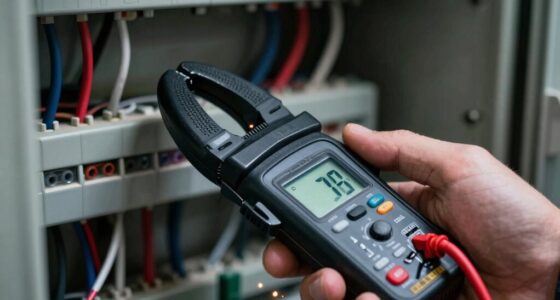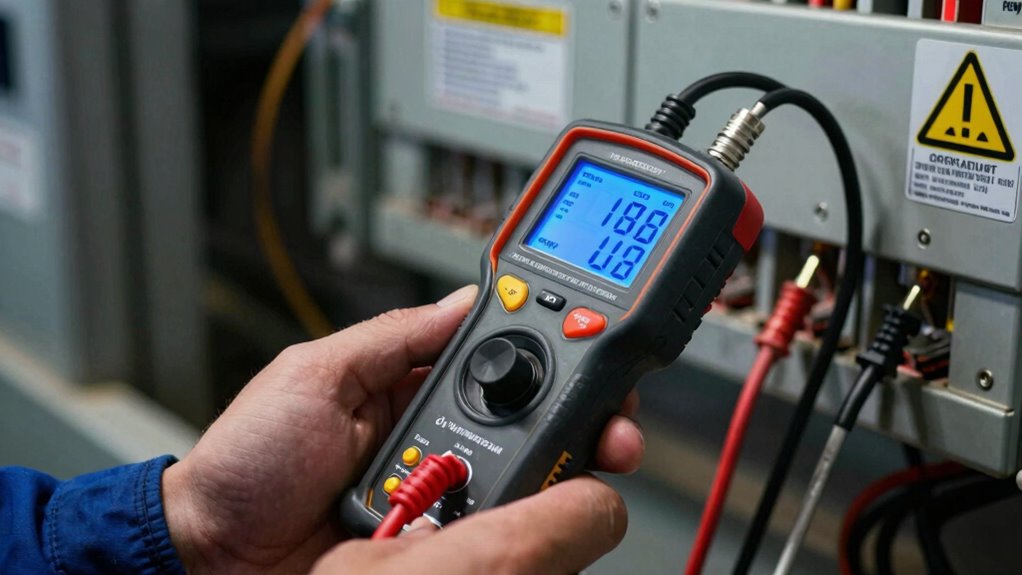

Insulation resistance testing quickly checks the integrity of your equipment’s insulation by applying a high-voltage DC signal and measuring resistance levels. If resistance drops below acceptable values, it’s a sign of potential issues like moisture, dirt, or deterioration that could lead to high-voltage failures or safety hazards. This test helps you spot hidden problems early, preventing costly damage. To learn how to interpret results and make certain of safe operation, keep exploring.

Get backup power and energy gear delivered free with Prime
- Fast, free delivery on millions of items
- Prime Video, Amazon Music and more included
- Member-only deals all year
Key Takeaways
- Insulation resistance testing quickly assesses the integrity of electrical insulation to detect hidden high-voltage issues.
- It measures resistance values to identify potential insulation deterioration before failures occur.
- High resistance indicates good insulation; low resistance reveals possible contamination or damage.
- Regular testing helps uncover concealed problems that could lead to dielectric breakdown or system failure.
- The test provides a rapid, reliable snapshot of insulation health, preventing costly electrical hazards.
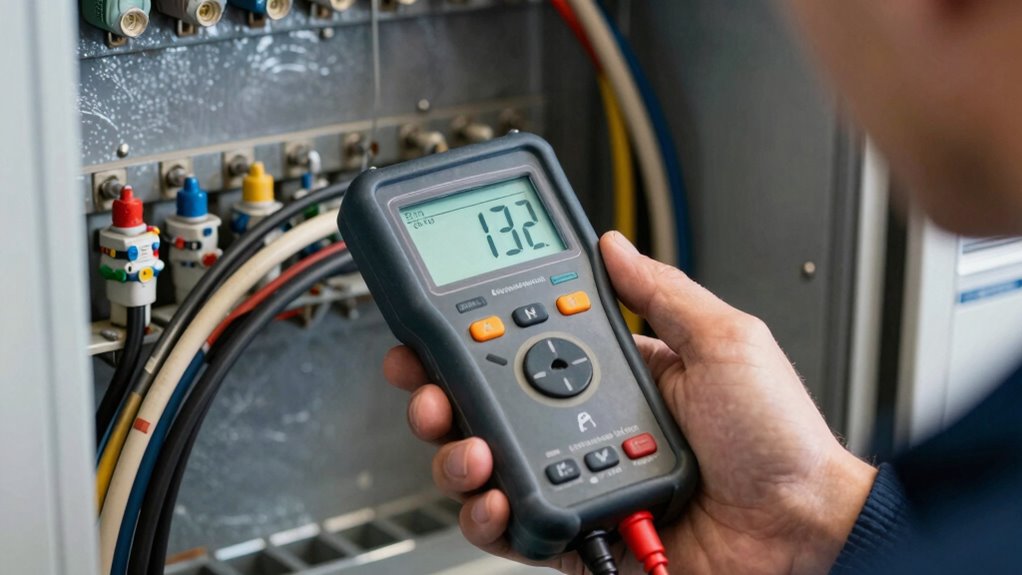
Insulation resistance testing is a crucial procedure used to assess the integrity of electrical insulation in equipment and systems. When you perform this test, you’re fundamentally measuring how well the insulation materials can resist the flow of electrical current. This helps you identify potential issues before they turn into costly failures. One critical aspect of insulation performance is its ability to withstand dielectric breakdown, a sudden failure where the insulating material suddenly becomes conductive due to excessive voltage. Understanding how insulation materials respond to high voltages is key to preventing such failures, which can cause equipment damage, electrical fires, or power outages.
During the testing process, you apply a high-voltage DC signal to the insulation and measure the resistance. High resistance values indicate good insulation, while low readings suggest potential problems, such as deterioration or contamination. It’s important to recognize that insulation resistance isn’t just about the material itself but also about how well it maintains its properties over time and under different conditions. Factors like moisture, dirt, temperature fluctuations, and aging can compromise insulation materials, reducing their ability to withstand electrical stress. That’s why regular testing is essential—so you can catch these issues early and take corrective action before a failure occurs.
Applying high voltage and monitoring resistance reveals insulation health and potential issues over time.
You should be aware that dielectric breakdown isn’t always immediately visible or detectable through simple inspection. That’s where insulation resistance testing shines; it provides a quick, reliable way to detect hidden problems that could lead to dielectric breakdown if left unaddressed. When resistance drops below acceptable levels, it signals that the insulation may be compromised. This could be due to damaged insulation materials, exposure to harsh environmental conditions, or manufacturing defects. By catching these issues early, you prevent more severe failures, equipment downtime, and safety hazards. Additionally, understanding insulation material responses helps in selecting the right materials for specific applications, ensuring better long-term performance.
It’s also worth noting that different insulation materials respond differently to electrical stress. Some materials are more resistant to dielectric breakdown, offering better long-term performance, while others may degrade faster. Knowing the specifications and properties of the insulation materials used in your equipment helps you interpret test results accurately. Properly performed insulation resistance testing provides a snapshot of your system’s health, allowing you to plan maintenance and replacements proactively. Ultimately, this simple yet effective test helps ensure safety, reliability, and longevity of your electrical systems.
As an affiliate, we earn on qualifying purchases.
Frequently Asked Questions
How Often Should Insulation Resistance Testing Be Performed?
You should perform insulation resistance testing regularly, typically following your equipment’s maintenance schedule. Testing intervals depend on factors like the type of equipment, operating environment, and usage. For most systems, annual or semi-annual checks are recommended to catch hidden HV problems early. Regular testing helps guarantee safety and reliability, so adjust your maintenance frequency based on manufacturer guidelines and your operational conditions to prevent unexpected failures.
What Equipment Is Needed for Insulation Resistance Testing?
You need a reliable insulation resistance tester, often called a megohmmeter, to perform the test. Make sure you also have test leads, alligator clips, and a multimeter for safety checks. Before starting, follow safety precautions like disconnecting power and wearing PPE. Properly calibrate your test equipment, and double-check connections to avoid false readings or hazards. Always prioritize safety to protect yourself and ensure accurate results.
Can Insulation Resistance Testing Damage Electrical Equipment?
Insulation resistance testing generally won’t damage your equipment if you follow proper testing procedures and prioritize equipment safety. However, applying excessively high voltage or testing on energized equipment can cause harm. Always make certain your testing procedures are correct, use the right equipment, and disconnect power sources before testing. This approach minimizes risks, preserves your equipment, and ensures accurate results without causing damage.
What Are Typical Insulation Resistance Values for Different Systems?
Think of insulation resistance as a health report for your electrical system. For motors and transformers, you want resistance above 1 megaohm, signaling good insulation. Wiring should have even higher resistance benchmarks, often over 10 megaohms. If resistance drops below these levels, it indicates insulation degradation, risking failure. Regular testing guarantees your equipment stays healthy, catching issues early before they become costly problems.
How Do Environmental Factors Affect Test Results?
Environmental influences like temperature, humidity, and moisture can substantially impact your testing accuracy. High humidity or water exposure lowers insulation resistance readings, making systems seem less effective. Conversely, extreme temperatures can skew results, either overstating or understating insulation quality. To guarantee reliable results, you should control environmental factors as much as possible, perform tests in stable conditions, and interpret your readings with these influences in mind.
Conclusion
Insulation resistance testing might seem simple, but it’s your first line of defense against hidden HV problems. Skipping this quick check could leave you vulnerable to costly failures and dangerous faults. Think of it as a shield protecting your equipment and safety. Don’t wait for disaster to strike—trust this small step for peace of mind. Because sometimes, the most essential safety measure is the one you overlook. Stay proactive, stay protected.
Columbus Day / Indigenous Peoples' Day Picks
long weekend sales
As an affiliate, we earn on qualifying purchases.