Software-based reconditioning for EV batteries involves recalibrating your BMS to address aging-related inaccuracies. By using diagnostic tools and controlled charge/discharge cycles, you can reset the BMS algorithms to better reflect your battery’s true capacity. This process improves range estimates, charging efficiency, and overall performance without invasive repairs. Regular reconditioning helps extend your battery’s lifespan and maintains your vehicle’s reliability—if you want to discover how to optimize your battery health, keep exploring this topic further.
Key Takeaways
- Software-based reconditioning realigns the BMS to accurately measure battery capacity and state of charge.
- It uses controlled charge/discharge cycles via diagnostic tools to recalibrate BMS algorithms.
- Routine recalibration via software extends battery lifespan and maintains optimal vehicle performance.
- This method prevents capacity decline and improves energy management without physical repairs.
- Advances in calibration techniques enable EV owners to preserve battery health through regular software updates.

As electric vehicle (EV) batteries age, their capacity and performance often decline, but recent advancements in software-based reconditioning offer a promising solution. Over time, the battery’s ability to hold charge diminishes, leading to reduced driving range and overall efficiency. This is where Battery Management System (BMS) recalibration comes into play, using sophisticated calibration techniques to restore and enhance battery function. Instead of costly replacements, you can now leverage these software-driven methods to extend your battery’s lifespan, saving money and reducing environmental impact.
The core idea behind BMS recalibration is to realign the system’s understanding of the battery’s actual state of charge and capacity. As batteries age, their internal chemistry shifts, which can cause the BMS to provide inaccurate readings. This misreporting results in premature cut-offs or overestimations of remaining range. Calibration techniques address this by resetting the BMS to accurately reflect the battery’s true condition, effectively giving you a more reliable picture of your vehicle’s energy reserves. These techniques involve running controlled charge and discharge cycles, during which the BMS gathers precise data to recalibrate its algorithms.
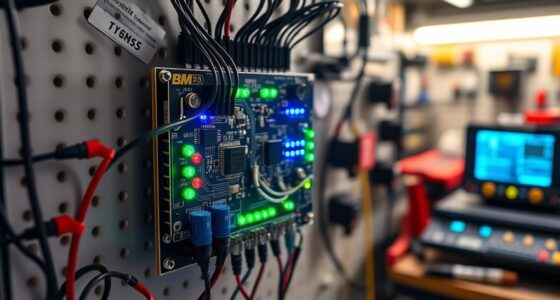
Software-based reconditioning doesn’t require invasive procedures or physical repairs; instead, it uses diagnostic tools to communicate with the BMS and perform recalibration routines. Many modern EVs and aftermarket services now offer software updates or calibration modules designed specifically for this purpose. By routinely recalibrating the BMS, you can help maintain ideal battery performance, preventing the gradual decline in capacity that typically comes with age. This process not only improves your current driving experience but also prolongs the overall battery lifespan, delaying the need for replacement.
It’s essential to understand that calibration techniques are most effective when performed regularly, especially as your battery ages or shows signs of capacity loss. Some manufacturers recommend periodic recalibration to keep the BMS aligned with the battery’s actual condition. By doing so, you ensure that the vehicle’s energy management system remains precise, which can translate into better range estimation, improved charging efficiency, and more consistent performance. As software-based reconditioning continues to evolve, it becomes easier for EV owners to maintain their batteries at peak health without extensive repairs or replacements. Additionally, understanding battery chemistry can help owners make informed decisions about maintenance and longevity strategies.
Frequently Asked Questions
How Long Does the Recalibration Process Typically Take?
The recalibration process usually takes about one to three hours, depending on your EV’s battery condition. During this time, you’ll notice improvements in battery longevity and recalibration accuracy. You should avoid using the vehicle excessively during this period to make certain the process completes smoothly. Proper recalibration helps optimize performance, extend battery life, and ensure your EV’s BMS accurately reflects the battery’s current state, leading to better overall reliability.
Is Software Reconditioning Suitable for All EV Battery Types?
You might think software reconditioning suits all EV batteries, but it varies with battery chemistry and charging cycles. Some chemistries respond well to recalibration, restoring capacity and performance, while others may not benefit as much. If your battery has undergone numerous charging cycles or uses a different chemistry, check with experts to guarantee software reconditioning is appropriate. This approach isn’t a one-size-fits-all solution, so assess your specific battery type first.
What Are the Costs Associated With Software-Based Reconditioning?
The costs for software-based reconditioning include a cost analysis of the service and potential maintenance expenses afterward. You might pay for specialized calibration tools, software updates, or professional assistance, which can vary widely. While initial costs could be moderate, ongoing maintenance expenses may arise if your battery needs periodic recalibration. Overall, it’s a cost-effective option to extend your EV battery’s lifespan, but always weigh these expenses against replacement costs.
Can This Method Restore Lost Battery Capacity Fully?
Software-based reconditioning can substantially improve your EV battery’s longevity but may not fully restore lost capacity. It optimizes charging protocols and balances cell health, extending life and performance. However, if the battery has experienced severe degradation, some capacity loss might remain. Regular recalibration helps maintain ideal function, but for complete restoration, physical repairs or replacements could be necessary. Stay consistent with proper charging habits to maximize benefits.
Are There Risks of Damaging the Battery During Reconditioning?
You might wonder if reconditioning risks damaging your EV battery. While software recalibration is generally safe, it’s important to take into account battery safety and software limitations. If done improperly, it could lead to issues like incorrect voltage readings or overheating. Always ensure the process is performed by qualified technicians or trusted tools. Proper calibration minimizes risks, but understanding software limits helps protect your battery’s longevity and safety.
Conclusion
By recalibrating your EV battery’s BMS through software, you breathe new life into aging cells, much like tuning a finely crafted instrument. This method offers a cost-effective, eco-friendly solution that extends your battery’s lifespan and restores performance. Embrace this digital reconditioning, and watch your battery regain its energy—proof that sometimes, the key to renewal lies in a simple click rather than costly replacements. Your EV’s future just got a lot brighter.