
TL;DR

Get backup power and energy gear delivered free — and shop member deals
- Fast, free delivery on millions of items
- Access to Prime Big Deal Days deals on October 6–7
- Prime Video, Amazon Music and more included
Online interest in quieting heat-recovery ventilator (HRV) return ducts has spiked, according to search and coverage signals. Long-established ventilation principles offer several plausible noise-reduction approaches, but the reason for the current surge in interest is unconfirmed.
Search interest in advice for reducing sound from HRV return ducts is spiking, according to online search and coverage signals, pointing to a surge of homeowners troubleshooting noise from their heat-recovery ventilators. The trigger for the increased attention is not confirmed, but the topic sits within well-established ventilation practice, where return-duct noise is a long-recognized issue with several documented mitigation strategies.
Heat-recovery ventilators, also known as HRVs or heat exchangers in residential contexts, are mechanical ventilation devices that exchange stale indoor air with fresh outdoor air while transferring heat between the two streams. They are common in tightly built, well-insulated homes, particularly in colder climates where continuous ventilation is needed without excessive heat loss. Because an HRV runs its fans continuously or on long schedules, any noise generated by the unit or transmitted through its ductwork tends to be a persistent rather than occasional annoyance.
The return duct — the duct that carries stale air from living spaces back to the HRV unit — is a frequent source of complaints. Long-established causes include high air velocity in undersized ducts, turbulence at bends and transitions, fan vibration transmitted through duct walls, and rigid duct materials acting as sound conduits between rooms. These are standard findings in HVAC guidance from manufacturers and building-science organizations, and they form the basis of most published troubleshooting advice.
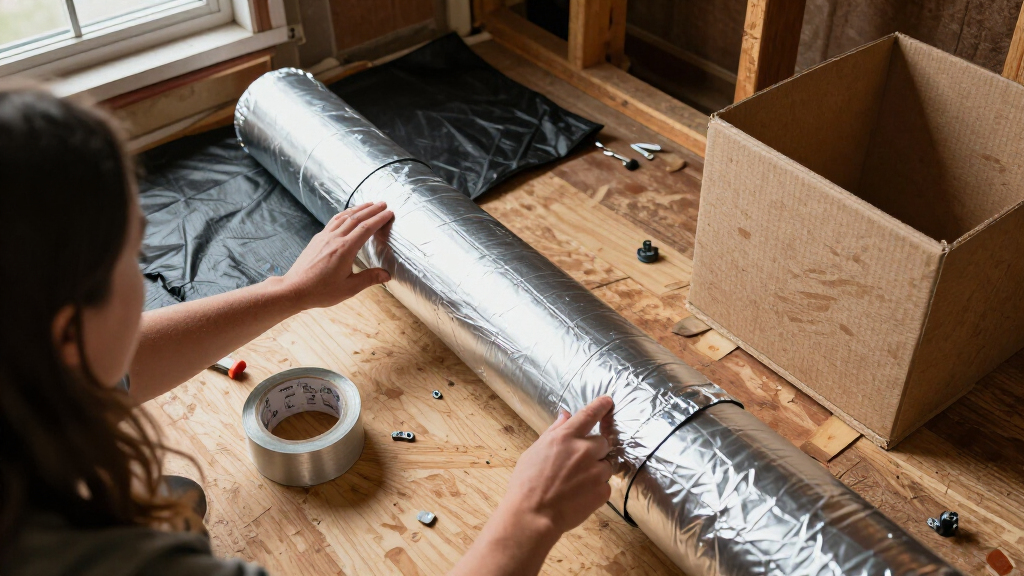
Commonly recommended fixes, as found in manufacturer documentation and industry guidance, fall into a few categories: reducing fan speed where ventilation targets allow, installing flexible duct connectors or acoustic lining to break vibration paths, adding bends or length to duct runs to attenuate sound, enlarging ducts to lower air velocity, and sealing gaps at grilles and registers that can whistle under pressure. Some guidance also recommends isolating the unit itself with anti-vibration mounts. No single fix is universally effective; the appropriate remedy depends on whether the noise is characterized as rumbling, humming, whistling, or airborne fan noise.
Why Quiet HRV Ducts Matter
The spike in interest matters because noise is one of the most common reasons homeowners disable or reduce use of their ventilation systems. In airtight homes, an HRV that is switched off because it is annoying stops delivering the fresh-air exchange the building was designed around, which can affect indoor humidity, odors, and indoor air quality over time. Practical noise advice therefore has a direct link to whether ventilation systems actually get used as intended.
It also matters financially. Some noise remedies, such as adjusting fan settings or resealing a grille, are near-zero cost, while others — resizing ducts or adding acoustic treatment — can require professional work. Homeowners searching for this advice are often trying to distinguish between a simple fix and one that needs an HVAC technician, and accurate, source-grounded guidance helps prevent both wasted spending on unnecessary work and delay on problems that genuinely need a contractor.
A Recognized Issue in Tight Homes
HRVs became standard equipment in energy-efficient construction over recent decades as building envelopes tightened and natural infiltration alone could no longer provide adequate fresh air. With that adoption came a familiar set of complaints, and return-duct noise has featured in manufacturer installation manuals and building-science resources for years — typically addressed through duct-sizing tables, recommended maximum air velocities, and guidance on flexible connections at the unit. The current search spike appears to reflect renewed homeowner attention to this established issue rather than a new product or policy development, though that cannot be verified from available signals.What the Search Spike Doesn’t Tell Us
The cause of the current surge in interest is unconfirmed. It is not clear whether it stems from a seasonal pattern — for example, homeowners running HRVs longer as heating or cooling seasons begin — a specific product issue, a viral article or video, or ordinary variation in search behavior. No manufacturer notice, recall, or expert commentary tied to this spike has been identified.
Also unclear is which specific symptoms searchers are experiencing. Return-duct noise has multiple distinct causes, and without knowing whether the dominant complaints involve vibration, airflow whistle, or fan noise carried through ducts, it is impossible to say which remedies are most relevant to the people currently searching. Readers should treat individual fix recommendations as plausible options grounded in established HVAC practice, not as verified solutions to a confirmed shared problem.
Steps for Homeowners Investigating the Noise
Homeowners troubleshooting HRV return-duct noise can take a staged approach: first identify the noise type and whether it changes with fan speed; then check low-cost items such as loose grilles, unsealed joints, and the unit’s vibration mounts; and finally consult an HVAC professional if the noise persists, particularly where duct resizing or acoustic lining may be involved. Duct modifications and any work affecting whole-house ventilation should be done by a qualified HVAC contractor, and changes to ventilation rates should keep the system within the home’s designed air-exchange targets. If the search spike reflects a broader or product-specific issue, further coverage from manufacturers or building-science publications would be the place to watch for confirmation.
Key Questions
Why is my HRV return duct noisy?
Established HVAC guidance lists several common causes: high air velocity in undersized ducts, turbulence at bends, vibration from the unit transmitted through rigid ductwork, and air leaking at grilles or joints. Identifying which of these applies usually starts with noting whether the noise is a hum, whistle, or rumble and whether it changes with fan speed.
Can I reduce the noise myself?
Some steps are homeowner-friendly, such as lowering fan speed where ventilation targets allow, tightening loose grilles, and sealing small gaps at registers. Work involving duct modifications, acoustic lining, or the unit’s mounting is generally best left to a licensed HVAC contractor.
Is the current spike in interest linked to a specific product problem?
That is not confirmed. The spike is a search and coverage signal only. No manufacturer notice, recall, or named expert statement connected to it has been identified.
Should I just turn the HRV off if it’s annoying?
In airtight homes, an HRV provides the fresh-air exchange the building design depends on. Running it too little can affect humidity, odors, and indoor air quality. Addressing the noise, rather than disabling the system, is the approach recommended in general building-science guidance.
What does a professional fix usually involve?
Depending on the diagnosis, a contractor may resize ducts to lower air velocity, add flexible connectors or acoustic duct lining, install anti-vibration mounts, or reroute duct runs. The right fix depends on the noise source, so diagnosis comes first.
Source: rss
Fall Picks
fall essentials
As an affiliate, we earn on qualifying purchases.