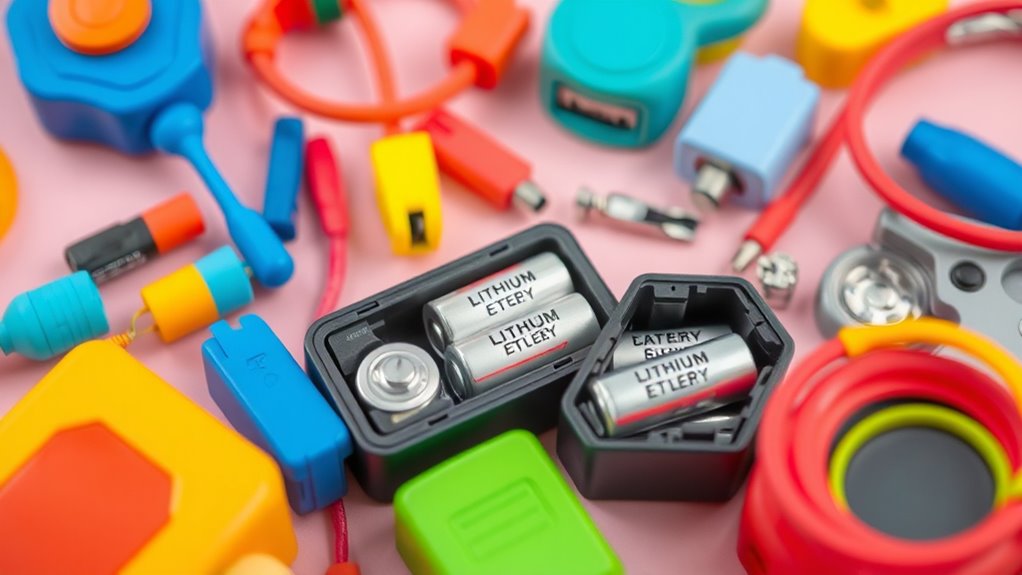

To keep children safe from toy and gadget batteries, always supervise their use and check for damage like swelling or leaks. Store batteries out of reach and use only the correct chargers. Dispose of damaged batteries properly at recycling centers to prevent fires and environmental harm. Educate kids about battery dangers and encourage responsible handling. By staying vigilant, you help prevent accidents—keep going to learn more about safe practices and tips.
Key Takeaways
- Always supervise children during toy use and check for battery damage or leakage regularly.
- Keep batteries out of children’s reach, especially small button batteries that pose ingestion risks.
- Use only manufacturer-approved chargers and avoid overcharging to prevent overheating or fires.
- Properly dispose of damaged, old, or used batteries at designated recycling centers.
- Educate children about the dangers of batteries and encourage safe handling and storage practices.
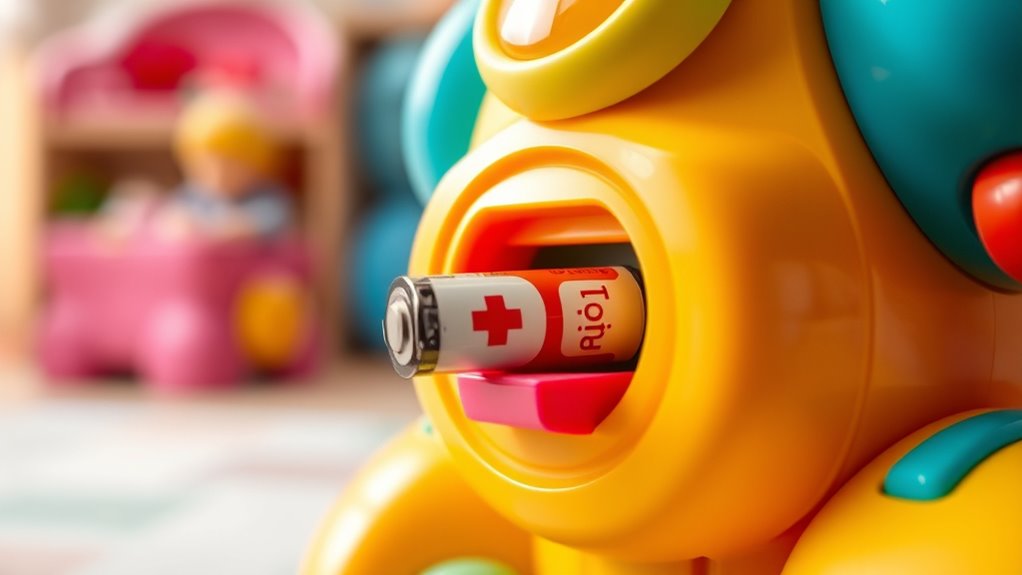
Batteries power many of the toys and gadgets children enjoy, but they can pose serious safety risks if not handled properly. As a parent or caregiver, understanding how to manage batteries safely is vital to protect your children from potential harm. One key aspect is being aware of lithium battery hazards, which are especially common in modern devices. Lithium batteries are powerful and lightweight, but if they become damaged, punctured, or improperly disposed of, they can overheat, catch fire, or even explode. This makes it essential to keep an eye on devices that use these batteries and guarantee they’re stored and used correctly.
Proper battery recycling is another critical step in maintaining safety. When batteries reach the end of their life, they shouldn’t be thrown in regular trash. Instead, you should take them to designated recycling centers that handle electronic waste safely. Recycling batteries prevents environmental contamination and reduces the risk of fires caused by leaking or damaged batteries in landfills. It also helps keep hazardous materials out of the hands of children, who might otherwise find and tamper with discarded batteries, risking ingestion or injury. Educating yourself about local battery recycling programs guarantees that you dispose of used batteries responsibly, minimizing potential hazards at home and in your community.
Recycle batteries properly to prevent environmental hazards and protect children from tampering and injuries.
Handling batteries with care can greatly reduce risks. Always check for damage before inserting batteries into toys or gadgets. If a battery shows signs of swelling, corrosion, or leakage, it’s best to dispose of it immediately and replace it with a new one. Keep batteries out of reach of children, especially small button batteries, which are tempting for little hands and can be swallowed accidentally. If a child does swallow a battery, seek emergency medical attention right away—prompt action can prevent serious internal burns or other injuries. Additionally, avoid mixing old and new batteries or different types within the same device, as this can cause leakage or overheating.
Being aware of battery safety guidelines is essential for preventing accidents and ensuring your child’s safety. When charging devices, use chargers specifically designed for the batteries in question. Overcharging or using incompatible chargers can increase the risk of battery failure or fire. Store spare batteries in a cool, dry place away from direct sunlight and heat sources. This not only prolongs their lifespan but also reduces the chance of accidental damage or leaks. Educate children about the dangers of batteries and teach them not to tamper with devices or try to open batteries, which could expose them to corrosive materials or electrical hazards. Staying vigilant about proper handling, disposal, and storage practices helps guarantee that batteries remain safe and that your children can enjoy their toys without unnecessary risks.
Frequently Asked Questions
How Can I Tell if a Battery Is Damaged or Leaking?
You can tell if a battery is damaged or leaking by inspecting it closely. Look for signs like battery corrosion, which appears as a white or bluish-green residue around the terminals. Also, check for battery swelling or bulging, as these indicate internal damage. If the battery looks damaged, leaking, or swollen, avoid using it and dispose of it properly to prevent harm or further damage.
Are Rechargeable Batteries Safer Than Disposable Ones?
Rechargeable batteries are generally safer than disposable ones because they have a longer lifespan and better charging safety features. You can monitor their condition more easily, reducing the risk of leaks or damage. Always follow charging instructions to prevent accidents. Rechargeables also minimize waste and environmental impact. By maintaining proper charging habits, you guarantee their safety, lifespan, and ideal performance, making them a more reliable and safer choice overall.
What Should I Do if a Child Swallows a Battery?
If a child swallows a battery, you should act immediately. Call emergency services or go to the nearest emergency room. Do not try to induce vomiting or remove the battery yourself. Your priority is to prevent further injury by ensuring professional battery removal and prompt emergency response. Keep the child calm and avoid giving them anything to eat or drink until medical experts take over.
How Can I Prevent Children From Accessing Battery Compartments?
Think of your child’s curiosity as a little explorer enthusiastic to uncover secrets. To keep them safe, use childproofing techniques like installing battery compartment locks on toys and gadgets. These locks act like strong gates, preventing tiny hands from sneaking in. Regularly check and tighten these locks, making sure no hidden openings tempt your little adventurer. With these simple steps, you create a fortress of safety around your child’s playful discoveries.
What Are the Signs of Battery Overheating or Fire Risk?
If you notice battery swelling or see unusual odors coming from a device, it’s a sign of overheating or fire risk. Swollen batteries indicate gas buildup, and strange smells signal chemical leakage. Stop using the device immediately, disconnect it from power, and carefully remove the battery if possible. Dispose of the battery safely at a designated recycling center, and replace it to prevent potential hazards. Always stay alert to these warning signs to keep everyone safe.
Conclusion
Keeping batteries safe in children’s toys and gadgets is essential to prevent accidents. Did you know that nearly 17,000 children visit the emergency room each year due to battery-related injuries? By always checking for secure battery compartments, using the correct batteries, and keeping devices out of reach, you can substantially reduce risks. Stay vigilant and prioritize safety to ensure your child’s playtime remains fun and injury-free. Your proactive steps make all the difference.