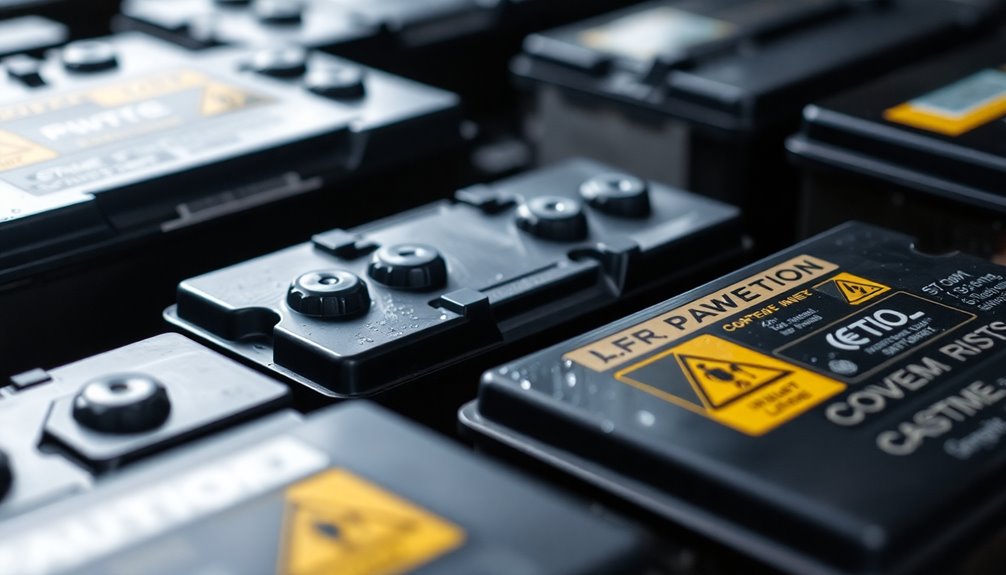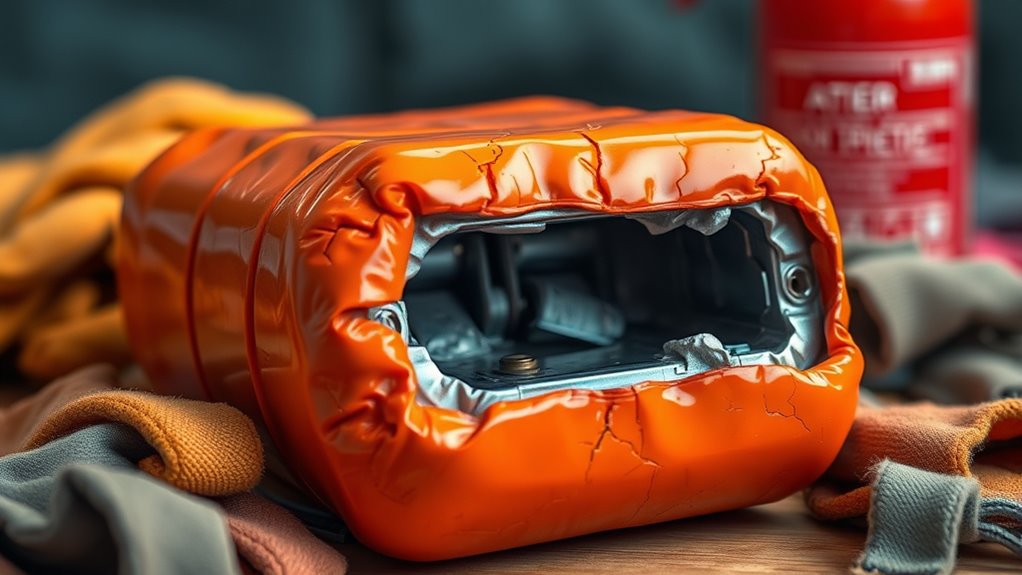

If you notice a swollen battery, power down your device immediately and disconnect it from any power source. Avoid using or charging it further and don’t puncture or press on the swollen area. Handle the device carefully, wearing gloves if possible, and keep it away from flammable materials. Dispose of the battery properly at a recycling center or authorized disposal site. Staying informed about these hazards helps protect you—learn more to guarantee safety.
Key Takeaways
- Power down the device carefully and disconnect it from any power source immediately.
- Avoid using, charging, or puncturing the swollen battery to prevent hazards.
- Handle the device with gloves and keep it away from flammable materials.
- Do not attempt to repair or modify the battery; seek professional disposal.
- Take the device to a designated recycling center or contact local waste authorities for proper disposal.
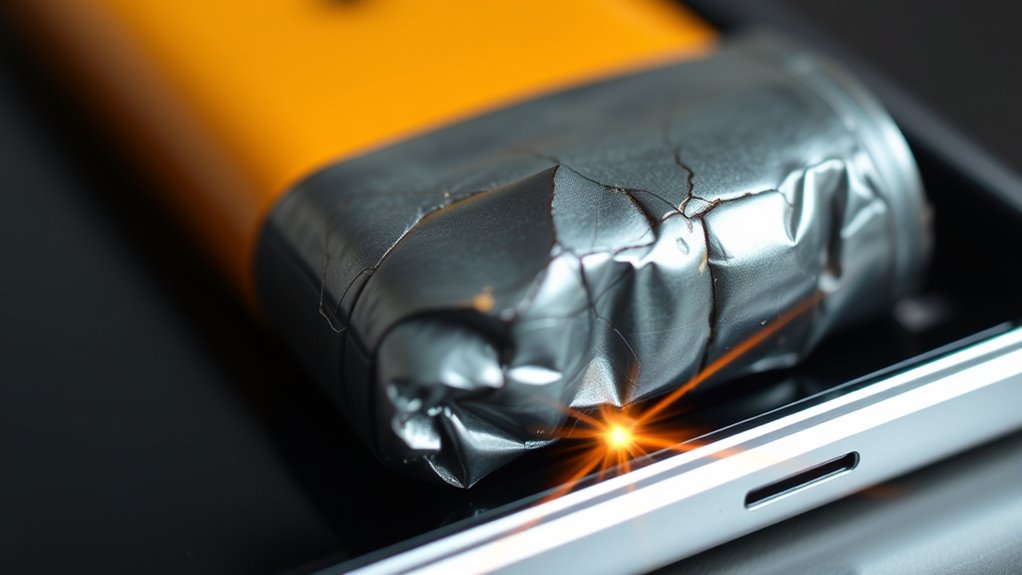
A swollen battery is more than just an annoyance; it’s a serious hazard that can lead to fires, leaks, or explosions. When you notice your device’s battery puffing up, it’s vital to act quickly and carefully. The first step is recognizing the warning signs. Typically, a swollen battery appears bloated or rounded, causing your device to feel unusually heavy or look deformed. You might also notice the device overheating even during light use, or the battery swelling might cause the screen or casing to crack or bulge. These are clear indicators that the battery is compromised and needs immediate attention.
Once you identify these warning signs, don’t attempt to use or charge the device further. Continuing to operate it risks damaging internal components or, worse, triggering a dangerous fire. The safest move is to power down the device carefully and disconnect it from any power source. Avoid puncturing or pressing on the swollen battery, as this can cause leaks of hazardous chemicals or even lead to a fire. Instead, handle it with care, preferably using gloves to prevent skin contact with any leaked substances.
Proper battery disposal is essential once you’ve identified a swollen battery. You should never throw it in the trash or attempt to dispose of it with regular household waste. Instead, look for designated battery recycling centers or contact your local waste management authorities to find out the proper disposal guidelines. Many electronics stores or recycling facilities accept damaged batteries, ensuring they are disposed of safely and in accordance with environmental regulations. Handling battery disposal responsibly prevents chemical leaks into the environment and reduces fire risks.
Additionally, staying informed about AI security vulnerabilities can help prevent potential hazards related to electronic devices and batteries.
Frequently Asked Questions
Can a Swollen Battery Explode Spontaneously?
A swollen battery can potentially rupture, but spontaneous explosion is less common. When a battery swells, it indicates internal damage or overheating, increasing the risk of rupture. While spontaneous explosion isn’t guaranteed, the danger is real, and you should handle the swollen battery carefully. Avoid puncturing or exposing it to heat. Always dispose of it properly and seek professional advice, as a rupture could lead to fire or chemical leaks.
Is It Safe to Continue Using a Device With a Swollen Battery?
Is it safe to keep using your device with a swollen battery? Absolutely not. Think of that swollen battery as a ticking time bomb threatening your device safety. Continuing to use it risks fire, explosion, or further damage. You must stop, turn off your device, and seek a professional for battery replacement. Don’t gamble with safety; swapping out the battery is your best move for peace of mind.
How Long Does It Take for a Swollen Battery to Fully Deflate?
A swollen battery’s deflation timeline varies, but it can take days to weeks for full deflation. You might notice the swelling gradually decrease over time, but don’t wait for complete deflation before replacing the battery. Swelling indicates damage, so monitor it closely and get a professional assessment. Remember, don’t attempt to puncture or force the battery open, as this could cause a dangerous leak or fire.
Are There Specific Storage Tips for Swollen Batteries?
You should avoid storing swollen batteries altogether, but if you must, guarantee safe storage by keeping them in a cool, dry, ventilated area away from flammable materials. Proper disposal is vital—never throw them in regular trash. Instead, take them to a certified recycling or hazardous waste facility. Always handle swollen batteries carefully, using gloves and eye protection, to prevent leaks or fires.
What Are the Long-Term Health Effects of Exposure to Battery Chemicals?
Exposure to battery chemicals can pose long-term health risks, including respiratory issues from inhaling fumes or dust. You might experience ongoing irritation, chronic cough, or even more severe lung problems with prolonged exposure. To safeguard yourself, avoid inhaling chemical vapors and wear protective gear. If you suspect chemical exposure, seek medical advice promptly to minimize potential health effects and ensure proper treatment.
Conclusion
If you notice a swollen battery, don’t ignore it or delay action. Handle it carefully, follow safety guidelines, and dispose of it properly. Remember, a problem shared is a problem halved—addressing the issue promptly can prevent a small problem from turning into a big disaster. Your safety depends on quick, responsible steps. Stay vigilant, stay safe, and don’t let a swollen battery catch you off guard. Better to be safe than sorry when it comes to battery hazards.