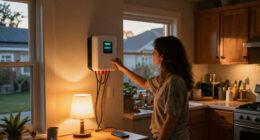
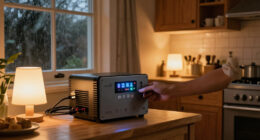
This checklist is for homeowners planning for outages and looking at home energy resilience options. It covers portable solar power, a dual-fuel generator, a transfer switch, outdoor placement, propane storage, and a power cord.

Get backup power and energy gear delivered free with Prime
- Fast, free delivery on millions of items
- Prime Video, Amazon Music and more included
- Member-only deals all year
The sections follow those equipment slots, with product picks where provided and practical advice where no pick was named. Each section focuses on fit and compatibility questions to consider before choosing equipment for your home.
Use the checklist to identify your needs first, then confirm the product details and installation requirements with the manufacturer or a qualified professional. Pay particular attention to electrical connections, fuel arrangements, and safe outdoor placement.
Portable Solar Generator
A portable solar generator can be one part of an outage plan, so first list the devices you want to keep powered and how you expect to recharge the unit. The named pick is the Jackery HomePower 3600 Plus Portable Power Station with Two 200W Solar. Check the product documentation for its output, capacity, charging connections, and operating limits, then compare those details with your intended loads.
A common mistake is choosing a station based on its name or included panels without checking whether the outlets and charging options suit your equipment. Make a list of device plugs, any required adapters, and the expected simultaneous load. Confirm that the included solar components can be arranged where they will receive sun, and that their cables can reach the station without creating a trip hazard. Check the full setup before relying on it.
Consider where the station will be stored and used, and review manufacturer guidance on ventilation, temperature, and keeping the equipment dry. Confirm the product’s dimensions and weight against your available storage space and how you plan to move it. A clear plan for recharging and load priorities makes it easier to decide whether this pick fits your household.
What to look for:
- Output and capacity matched to intended devices
- Outlets and charging ports that fit your equipment
- Solar panel and cable compatibility
- Documented operating and storage conditions
- Dimensions and weight suited to your storage plan
Jackery HomePower 3600 Plus Portable Power Station with Two 200W Solar Panels

This portable power station has a 3,584Wh capacity, 3,600W output, and supports expansion up to 21kWh per unit. It offers AC, solar, gas generator, and hybrid charging, with wheels and a telescopic handle for easier transport.
Pros:
- High 3,600W output and expandable capacity
- Supports four charging methods
- Wheels and telescopic handle aid transport
- Includes two 200W solar panels
Cons:
- Power station and panels may arrive in separate packages
- At 77.2 lbs, it may be heavy to lift
Best for: Households considering a portable station with included solar panels
Not ideal for: Anyone who has not checked load and charging compatibility
Bottom line: Confirm the station’s documented capabilities and connections against the devices you plan to power.
Dual Fuel Inverter Generator
A dual-fuel generator may suit an outage plan that calls for a portable generator, but the right choice depends on your intended loads and fuel setup. The named pick is the DuroMax XP11000iH 11,000-Watt Dual-Fuel Portable Inverter Generator. Treat the model name as a starting point: check the manufacturer specifications for supported fuels, output, outlets, and operating requirements before deciding what it can run.
A common buying mistake is assuming the stated wattage automatically covers every appliance or startup demand in the home. List the devices you might use together and check their running and startup requirements against the generator documentation. Also confirm that available fuel containers, connectors, and storage arrangements are compatible with the product. Verify fuel and outlet details rather than relying on a general label.
Plan where the generator will operate and how cords will reach the loads without entering the living space. Follow the manual and local requirements for outdoor operation, clearances, grounding, and connection to household circuits. A transfer switch or other approved connection method may require professional installation. Check the unit’s dimensions and handling needs against your storage location and the route you would use to move it.
What to look for:
- Documented output for planned simultaneous loads
- Fuel types and approved connections
- Outlet types and circuit compatibility
- Manufacturer guidance for operation and placement
- Dimensions, weight, and storage requirements
DuroMax XP11000iH 11,000-Watt Dual-Fuel Portable Inverter Generator

This portable inverter generator runs on gasoline or propane and delivers 11,000 peak watts and 9,000 running watts for home backup, jobsites, or RV use. It includes remote electric start, a carbon monoxide sensor that shuts the generator off when unsafe levels are detected, and inverter technology for stable power to sensitive electronics.
Pros:
- Runs on gasoline or propane
- Provides 9,000 running watts
- Inverter technology supplies stable power for sensitive electronics
- Includes remote start and carbon monoxide shutoff sensor
Cons:
- Heavy at 216 pounds
- Listed runtime is 9 hours
Best for: Households comparing a portable generator with dual-fuel operation
Not ideal for: Anyone without a confirmed fuel and connection plan
Bottom line: Match the generator’s documented outputs, fuels, and connections to your outage plan.
Whole House Transfer Switch
A transfer switch is part of the connection plan between a generator and household circuits, so compatibility and installation deserve careful attention. The named pick is the GenerLink 30-Amp Automatic Transfer Switch with Surge Protection. Check its product documentation and your home’s electrical setup to determine whether the service arrangement, amperage, and generator connection are compatible.
One common mistake is assuming that a transfer switch can be fitted to every home’s meter or electrical service. Before selecting it, have a qualified electrician review the panel, meter configuration, generator, and circuits you want to support. Confirm what installation steps are required and whether local utility or code requirements apply. Professional compatibility review helps avoid buying equipment that cannot be used with your setup.
Also distinguish between the circuits you want available and the total load the generator can support. Write down priority circuits and discuss their combined demand with the electrician. Ask how the automatic transfer function works, what the surge protection covers according to the documentation, and what maintenance or inspection is recommended. The 30-amp designation is a key detail to verify against the generator and service requirements, not an assurance that every household load will be supported.
What to look for:
- Compatibility with the home’s meter and service configuration
- Amperage match for generator and electrical setup
- Installation requirements reviewed by a qualified electrician
- Priority circuits and combined load plan
- Documented transfer and surge protection details
GenerLink 30-Amp Automatic Transfer Switch with Surge Protection

This outdoor, meter-mounted transfer switch connects a compatible portable generator to a home’s electrical panel and supports residential electrical service up to 200 amps. It includes a 20-foot power cable, 75kA surge protection, and an audible surge alarm; installation is handled by local utility personnel or a licensed electrician.
Pros:
- Transfers generator power to the home’s breaker panel without extension cords or manual rewiring.
- Includes 75kA surge protection and an audible surge alarm.
- Weather-resistant design for outdoor use.
- Supports the whole breaker panel with no stated circuit limit.
Cons:
- Installation requires local utility personnel or a licensed electrician.
- Limited to 30 A and compatible generators below 8,500 W.
Best for: Homeowners whose electrician confirms system compatibility
Not ideal for: Homes with an unverified meter or generator setup
Bottom line: Have a qualified electrician confirm compatibility before choosing this transfer switch.
Outdoor Generator Enclosure
An outdoor enclosure can affect how a generator is placed and accessed, so treat the generator manufacturer’s clearances and operating instructions as the starting point. No product pick was provided for this slot. Look for an enclosure explicitly intended for your generator model and its operating conditions, and verify that it supports the ventilation and access the manual requires. Model-specific fit matters more than a generic size label.
A common mistake is choosing an enclosure based only on weather coverage or appearance. An enclosure must not interfere with exhaust flow, cooling, controls, or required clearance from structures and openings. Confirm whether it is designed for use while the generator is operating, and check the manufacturer’s instructions for installation and maintenance. Do not assume a storage cover is suitable as an operating enclosure. Ventilation and exhaust clearance are essential points to verify.
Measure the generator and the intended placement area, including room for access, cables, and any required clearance. Check the enclosure’s materials and installation guidance against local conditions and requirements. If you are uncertain about safe placement, consult a qualified professional and follow the generator manual. Choose only after confirming the enclosure fits the actual equipment and does not compromise safe operation.
What to look for:
- Explicit compatibility with the generator model
- Ventilation and exhaust provisions documented for operation
- Clearances consistent with generator instructions
- Access to controls and maintenance points
- Dimensions that fit the placement area and required spacing
Propane Storage Tank
Fuel storage should match the equipment that will use it, and the named product needs careful verification before treating it as a storage tank pick. The provided name is Propane Heater 30-36,000 BTU 3 Settings 2-Burner Tank Top with USB Lig, which describes a heater rather than clearly identifying a propane storage tank. Confirm the complete product identity and intended use in its documentation before purchasing for a storage role.
A common mistake is treating a heater, its tank connection, and a separate storage tank as interchangeable items. Check what container the product is designed to connect to, whether the connection is included, and which propane containers are approved by the manufacturer. Follow the heater and container instructions for use, storage, and transport, and confirm applicable local requirements. Verify the product category before making it part of an emergency fuel plan.
For any separate propane container, confirm its capacity, connection type, condition, and suitability for the intended equipment with the manufacturer or a qualified supplier. Plan a storage location that meets applicable requirements, away from ignition sources and where the container can be kept as directed. Do not infer compatibility from the heater’s BTU range or a partial product name. Fuel-system compatibility should be established from complete documentation.
What to look for:
- Complete product identity and intended use
- Approved container types and connection details
- Manufacturer instructions for storage and transport
- Compatibility with the specific heater or appliance
- Applicable local requirements for fuel storage
Propane Heater 30-36,000 BTU 3 Settings 2-Burner Tank Top with USB Lighter, Shut

This dual‑burner propane heater delivers up to 36,000 BTU of radiant heat with three adjustable settings, making it ideal for patios, garages, campsites and other outdoor spaces. Built with a tip‑over shut‑off switch, automatic valve, and protective mesh guard, it offers strong safety features while the rugged metal housing ensures durability in harsh weather.
Pros:
- High‑output dual‑burner provides up to 36,000 BTU for fast heating.
- Three adjustable settings allow precise temperature control.
- Multiple safety features including tip‑over shut‑off switch and auto valve.
- Durable metal construction with aluminum reflector withstands outdoor conditions.
Cons:
- Propane tank not included; must purchase separately.
- Designed for outdoor use only – cannot be used indoors.
Best for: Shoppers confirming whether this listing fits a fuel plan
Not ideal for: Anyone seeking a clearly identified storage tank
Bottom line: The provided name identifies a heater, so verify its intended use and approved propane container before purchase.
Emergency Power Cord
An emergency power cord must fit the generator, the connection method, and the equipment you intend to power. No product pick was provided for this slot. Start by identifying the generator outlet and the inlet or device connection at the other end, then confirm the required cord type with the equipment documentation or a qualified electrician. Connection compatibility is the first requirement.
A common mistake is choosing a cord based only on length or plug appearance. Check the documented voltage, amperage, conductor size, and intended use, and make sure the cord is rated for the conditions where it will be used. For a household connection, use an approved inlet and transfer equipment installed as required; do not connect a generator to household wiring through an improvised cord. Use an approved connection method suited to the generator and home.
Measure the route from the generator’s planned outdoor location to the connection point, allowing enough reach without routing the cord through doors or windows. Confirm the cord’s outdoor rating and inspect it for damage before use, following manufacturer instructions. Keep the generator outdoors as directed and plan cord placement to avoid trip hazards and exposure to water. A qualified electrician can help verify cord and inlet specifications for a household setup.
What to look for:
- Plugs matching the generator and approved inlet
- Voltage and amperage ratings suited to the equipment
- Conductor size specified for the intended load and length
- Outdoor rating for the planned route and conditions
- Length that reaches without unsafe routing
Build the plan in a practical order: identify priority loads and connection needs, then confirm generator or portable station compatibility, and next review any transfer switch and cord requirements with a qualified electrician. Clarify fuel arrangements and safe outdoor placement alongside those choices. Compatibility comes first for every part of the setup.
You do not need to settle every equipment choice at once. Work through the checklist, verify product documentation, and ask a professional about installation or fuel questions that affect your home. A clear, well-matched plan is a useful step toward greater outage readiness.