

To safely charge lithium batteries, always use the manufacturer-approved charger and avoid overcharging or fully discharging the battery. Keep the battery within safe temperature ranges (0°C to 45°C) and charge in a moderate environment away from direct sunlight. Don’t leave devices plugged in after reaching 100%, and prevent exposure to extreme heat. Proper thermal management and cycle control can extend battery life and guarantee safety. Continue exploring these practices to optimize your battery’s performance and longevity.
Key Takeaways
- Always use manufacturer-approved chargers and cables to ensure proper power regulation.
- Keep battery temperature within 0°C to 45°C during charging to prevent overheating or cold-related inefficiencies.
- Unplug the device once it reaches 100% to avoid heat buildup and overcharging.
- Avoid charging in extreme environments like direct sunlight or high-temperature areas.
- Manage charging cycles by avoiding deep discharges and recharging before 20% for longevity.
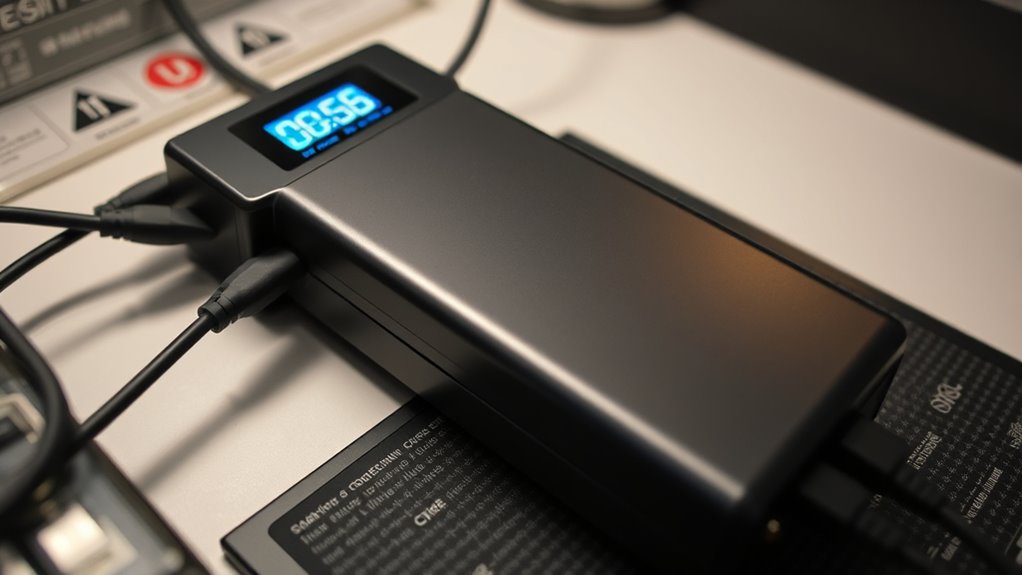
Lithium batteries are widely used in everything from smartphones to electric vehicles, but safe charging habits are essential to prevent accidents and prolong their lifespan. One of the most critical factors to monitor during charging is battery temperature. When you’re charging your lithium battery, ensure it stays within the recommended temperature range, typically between 0°C and 45°C. Excessive heat can accelerate chemical reactions inside the battery, leading to overheating, capacity loss, or even thermal runaway—an unsafe condition that could cause fires. Cold temperatures, on the other hand, can slow down the charging process and reduce overall battery efficiency. To keep your battery safe, avoid exposing it to extreme temperatures during charging, and always use chargers and cables that are compatible with your device. Proper thermal management is vital for maintaining battery health and safety during charging cycles.
Monitor battery temperature during charging; keep it between 0°C and 45°C to ensure safety and longevity.
Understanding the charging cycle is equally crucial. Each time you charge and discharge your lithium battery, you’re completing a charging cycle. Over time, repeated cycles cause the battery’s capacity to diminish gradually. To extend the lifespan of your battery, it’s best to keep your charging cycles as shallow as possible—meaning, try to recharge before the battery drops below 20% and unplug once it reaches around 80%. Avoid letting your battery fully discharge or stay at a full charge for extended periods, as this stresses the battery and accelerates degradation. Using smart chargers that automatically stop charging at a certain level can help you manage these cycles more effectively, reducing unnecessary wear.
When you’re charging your lithium battery, don’t ignore the importance of proper equipment. Always use the manufacturer-approved charger and avoid third-party chargers that may not regulate power properly. Overcharging—leaving your device plugged in after reaching 100%—can cause the battery to heat up and degrade faster. Similarly, don’t use damaged cables or chargers, as these can create electrical faults or produce excess heat, risking damage or safety hazards. It’s also wise to avoid charging your device in environments with high ambient temperatures or direct sunlight, as this can markedly increase battery temperature and compromise safety.
Finally, don’t forget to give your battery regular breaks. Continuous charging without allowing the battery to rest can generate heat and stress the cells. If you notice your device or battery getting unusually warm during charging, disconnect it immediately and let it cool down. By paying attention to battery temperature, managing your charging cycles wisely, and using the right equipment, you’ll guarantee your lithium battery stays safe, performs well, and lasts longer. Good charging habits aren’t just about safety—they’re about maximizing the value and lifespan of your device’s power source.
Frequently Asked Questions
Can Lithium Batteries Be Charged With Wireless Chargers Safely?
Yes, you can charge lithium batteries with wireless chargers safely, but only if your device is compatible with wireless charging. Always verify for compatibility issues beforehand, as not all lithium batteries or devices support this method. Using a certified wireless charger ensures proper power delivery and reduces risks like overheating. Avoid cheap or incompatible chargers, and follow manufacturer guidelines to keep your lithium batteries safe during wireless charging.
How Do Temperature Fluctuations Affect Lithium Battery Charging Safety?
Temperature fluctuations can markedly impact your lithium battery’s charging safety. When temperatures rise or fall abruptly, thermal stability is compromised, increasing the risk of overheating or thermal runaway. Proper temperature management is essential; avoid charging in extreme heat or cold to maintain safe thermal stability. Keeping your device in a stable environment ensures ideal charging conditions, reduces safety hazards, and prolongs battery life. Always monitor temperature conditions during charging for safe use.
Are There Specific Brands Known for Safer Lithium Battery Chargers?
Yes, you should look for brands with a strong reputation for safety and quality. Reputable brands often have charger certifications like UL, CE, or FCC, ensuring they meet safety standards. These certifications indicate that the charger has undergone rigorous testing, reducing risks like overheating or short-circuiting. Choosing well-known brands with proper certifications helps you charge your lithium batteries safely and reliably, giving you peace of mind.
What Are Signs of a Lithium Battery Charging Malfunction?
Like spotting a flashing neon sign in a dark alley, signs of a charging malfunction include battery overheating and charging irregularities. If you notice the device getting unusually hot, swelling, or the charge slowing down unexpectedly, stop immediately. Unusual smells, flickering indicators, or erratic charging behavior are red flags. These signs indicate potential hazards, and ignoring them could lead to battery damage or safety risks, so always stay vigilant.
Can Lithium Batteries Be Safely Charged in Extreme Weather Conditions?
You can generally safely charge lithium batteries in extreme weather if you pay attention to temperature limits and weather considerations. Avoid charging in temperatures below freezing or above 45°C, as this can damage the battery or cause safety issues. Always check the manufacturer’s recommended temperature range, and consider using a temperature-controlled environment or charger to prevent overheating or freezing during extreme weather conditions.
Conclusion
By following these safe charging practices, you’re guiding your lithium batteries through a delicate dance—one where caution and care keep them dancing smoothly without missing a beat. Think of each proper step as a steady hand on the wheel, steering clear of potential pitfalls. When you respect the do’s and don’ts, you’re not just charging a battery; you’re nurturing a tiny sleeping giant, ensuring it stays vibrant and safe, ready to power your world without a hitch.