
Battery quality standards like UN38.3, IEC 62133, and NFPA guidelines guarantee your batteries are safe, dependable, and handled properly. UN38.3 confirms batteries can withstand transportation risks, while IEC 62133 focuses on safety in design and usage. NFPA offers fire safety tips for storage and disposal. Together, these standards create an extensive safety framework. Keep exploring to discover how these guidelines protect you and your devices at every step.
Key Takeaways
- UN38.3 ensures lithium batteries pass rigorous transportation safety tests to prevent hazards during shipping.
- IEC 62133 verifies the safety and design quality of rechargeable batteries for portable device use.
- NFPA provides fire safety guidelines for proper storage, handling, and disposal of batteries.
- All three standards collectively ensure batteries are safe, reliable, and compliant throughout their lifecycle.
- Compliance with these standards reduces risks of accidents, fires, and transportation incidents involving batteries.
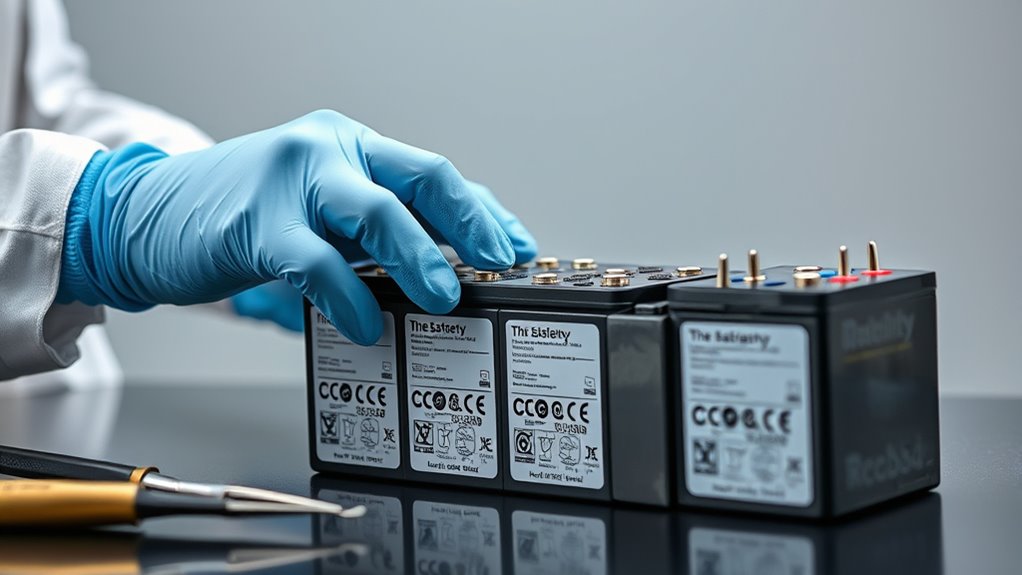
Have you ever wondered how batteries are guaranteed to be safe for transportation and use? The answer lies in strict standards and thorough safety regulations that manufacturers must follow. These standards, like UN38.3, IEC 62133, and NFPA guidelines, serve as the backbone for ensuring battery safety and manufacturing compliance. When you handle or purchase batteries, you’re relying on these protocols to minimize risks like overheating, short circuits, or explosions. They set detailed testing procedures and performance benchmarks, making sure that batteries can withstand real-world conditions without compromising safety.
UN38.3 is a critical international standard specifically focused on the safe transportation of lithium batteries. It mandates rigorous testing, including altitude simulation, thermal testing, vibration, shock, and short circuit assessments. This extensive testing ensures that batteries won’t pose hazards during air, sea, or land shipping. If a battery passes UN38.3, it indicates that it meets strict safety criteria, reducing the risk of incidents during transit. As a consumer or business, you can trust that batteries compliant with UN38.3 are prepared for safe handling throughout their journey.
UN38.3 ensures lithium batteries are safely tested for hazards during transportation worldwide.
IEC 62133 builds on these safety assurances by addressing the design and manufacturing of rechargeable batteries, particularly lithium-ion types. It specifies safety requirements for batteries used in portable devices, ensuring they are manufactured with safety in mind from the start. When a battery manufacturer adheres to IEC 62133, they demonstrate compliance with established safety protocols, including protective circuit design, internal safety mechanisms, and materials that prevent overheating or thermal runaway. This standard is essential for ensuring that batteries are safe during everyday use, not just transport. For you, it means your devices are powered by batteries that have been thoroughly tested and designed to prevent hazards.
NFPA guidelines, especially those from the National Fire Protection Association, focus more broadly on fire safety related to batteries. They provide recommendations for safe storage, handling, and disposal, emphasizing the importance of preventing fires caused by battery failure. These guidelines help facilities and consumers understand proper procedures to mitigate risks associated with damaged or improperly stored batteries. Following NFPA recommendations ensures that both manufacturers and users are proactive in maintaining safety standards, reducing the likelihood of fire incidents.
In essence, these standards—UN38.3, IEC 62133, and NFPA—work together to create a detailed safety framework. They ensure that batteries are manufactured with safety at the forefront, tested thoroughly, and handled responsibly throughout their lifecycle. Additionally, battery testing procedures are crucial for verifying that batteries meet all safety requirements before reaching consumers. When you see batteries labeled with these standards, you can feel confident knowing they meet the rigorous criteria designed to protect users, transporters, and the environment. These regulations aren’t just bureaucratic hoops; they’re essential safeguards that keep you safe every day.
Frequently Asked Questions
How Often Are Battery Standards Updated?
You should stay aware that battery standards undergo regular reviews, often every few years, to accommodate technological advances and safety concerns. Regulatory updates happen periodically, prompting authorities to adapt requirements to ensure safety and performance. By keeping track of these updates, you can ensure compliance and maintain high safety standards. Typically, organizations review and revise standards every 3 to 5 years, but this can vary depending on industry developments.
Are These Standards Mandatory Worldwide?
Over 90% of manufacturers worldwide follow mandatory standards like UN38.3, IEC 62133, and NFPA guidelines to guarantee regulatory compliance and obtain safety certifications. These standards are generally recognized internationally, but their enforcement varies by country. While not universally mandated everywhere, adopting these standards helps protect consumers and reduces liability. You should always verify regional requirements to ensure your batteries meet local safety and compliance regulations.
Do These Standards Cover Lithium-Ion and Lithium-Polymer Batteries?
Yes, these standards cover lithium-ion and lithium-polymer batteries to make certain battery safety and regulatory compliance. They specify testing, design, and manufacturing requirements that help prevent hazards like fire or explosion. By adhering to these guidelines, you can improve the safety and reliability of your batteries, meet international regulations, and reduce risks during transportation, storage, and use. Following these standards is essential for maintaining safety and compliance worldwide.
What Are the Penalties for Non-Compliance?
If you don’t comply with these standards, you risk severe legal penalties and compliance consequences. Authorities can impose fines, revoke certifications, or even halt your operations. Non-compliance may also lead to product recalls, damage to your reputation, and potential lawsuits if safety issues arise. It’s vital that you adhere to these standards to avoid legal penalties and guarantee your batteries meet safety and quality requirements.
How Do These Standards Influence Battery Recycling Policies?
These standards shape your recycling policies by ensuring batteries meet safety and quality benchmarks, which helps you comply with recycling regulations. They encourage proper handling and disposal, reducing environmental impact. By adhering to these guidelines, you prevent hazardous incidents, promote responsible recycling, and support sustainable practices. Ultimately, they guide you in creating effective recycling programs that protect both people and the environment.
Conclusion
By understanding these battery standards—UN38.3, IEC 62133, and NFPA guidelines—you hold the key to safer, more reliable batteries. Think of these standards as the blueprint for a solid foundation, ensuring your batteries perform and protect like a fortress. Staying informed helps you navigate the complex landscape of battery safety, so you can keep your devices running smoothly and avoid potential hazards. Remember, adhering to these guidelines is your best shield against battery mishaps.