
Monitoring systems for early detection of battery faults are vital for keeping your batteries safe and reliable. These systems track key parameters like voltage, current, temperature, and internal resistance continuously. By analyzing this data, you can identify signs of issues such as overheating or cell damage early on. Advanced tools using machine learning can even predict faults before they happen. Keep exploring to discover how these technologies can help you maintain safe, efficient battery performance over time.
Key Takeaways
- Continuous real-time tracking of voltage, current, temperature, and internal resistance detects early deviations indicating potential faults.
- Advanced algorithms and machine learning enable predictive fault detection before symptoms manifest.
- Fault diagnostics identify fault types and severity, supporting targeted maintenance and early intervention.
- Monitoring systems proactively analyze data to prevent safety hazards like thermal runaway and system failures.
- Implementing comprehensive systems extends battery lifespan, reduces downtime, and enhances overall safety and reliability.
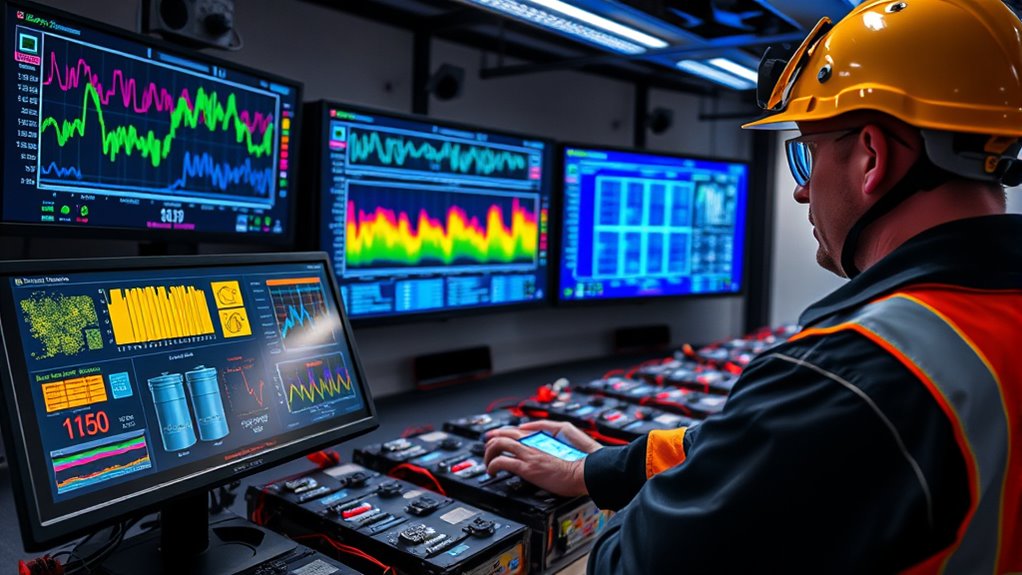
Monitoring systems play a essential role in identifying battery faults before they lead to safety hazards or system failures. When you rely on batteries for critical applications—whether in electric vehicles, renewable energy storage, or portable devices—early detection of issues becomes necessary. These systems continuously analyze various parameters, guaranteeing that potential problems are caught early, preventing costly damage and dangerous situations. By focusing on fault diagnostics, you gain a clearer understanding of how and when a fault occurs, allowing you to intervene proactively. This approach keeps your systems safer and more reliable over time.
Early fault detection in battery systems ensures safety, reliability, and cost-effective maintenance over time.
When it comes to battery safety, monitoring systems are your first line of defense. They track key indicators such as voltage, current, temperature, and internal resistance. Deviations from normal ranges signal that something might be wrong. For example, a sudden spike in temperature could indicate overheating, which might lead to thermal runaway if left unchecked. Monitoring these parameters in real-time allows you to respond swiftly, whether by shutting down the system, balancing cells, or triggering alerts. This proactive stance helps prevent accidents, fires, or explosions, safeguarding both your equipment and personnel.
Fault diagnostics is a essential feature of advanced monitoring systems. They don’t just identify that a fault exists—they analyze the data to determine its nature and severity. This capability enables you to pinpoint whether the issue stems from a damaged cell, a connection problem, or a deeper internal fault. With detailed diagnostics, you can prioritize maintenance tasks more effectively, focusing on the most essential issues first. Additionally, fault diagnostics help extend battery life by enabling targeted interventions that repair or mitigate problems before they escalate.
Modern monitoring solutions often incorporate intelligent algorithms and machine learning to enhance fault detection accuracy. These systems learn from historical data, recognizing subtle patterns that precede failures. As a result, they can predict potential faults before symptoms become apparent, giving you a valuable window for preventative action. This predictive capability enhances battery safety by reducing unexpected failures and helps you optimize maintenance schedules, saving time and costs.
Implementing comprehensive monitoring systems also promotes preventative maintenance, which can significantly reduce downtime and repair costs over the lifespan of the battery. In essence, employing comprehensive monitoring systems for early fault detection empowers you to maintain safer, more reliable batteries. By continuously observing and diagnosing faults, you minimize risks, extend system lifespan, and guarantee optimal performance. Whether you’re managing a large-scale energy storage system or a fleet of electric vehicles, integrating these technologies is essential for responsible, efficient, and safe battery operation.
Frequently Asked Questions
How Do Environmental Factors Influence Battery Fault Detection Accuracy?
Environmental variability can considerably impact your battery fault detection accuracy by causing fluctuations in temperature, humidity, and other conditions. These changes may lead to sensor calibration issues, making it harder for your system to distinguish between normal variations and actual faults. To maintain accuracy, you should regularly calibrate sensors and account for environmental factors, ensuring your monitoring system adapts to changing conditions and reliably detects faults early.
Can Existing Monitoring Systems Adapt to Different Battery Chemistries?
Absolutely, your monitoring system can adapt to different battery chemistries—if you’re willing to tinker endlessly. Battery chemistry varies wildly, so one-size-fits-all monitoring adaptability is a myth. You’ll need to tweak sensors and algorithms to match each chemistry’s quirks. While some systems boast flexibility, expect a fair share of trial and error. So, yes—adaptability is possible, but only if you’re ready for a constant upgrade dance.
What Are the Cost Implications of Implementing Advanced Monitoring Systems?
Implementing advanced monitoring systems involves significant costs, but a thorough cost analysis helps you understand the long-term savings through early fault detection. Your investment strategies should focus on balancing upfront expenses with potential reductions in maintenance and replacement costs. While initial setup may be pricey, the improved safety and reliability offered by these systems can justify the investment by minimizing downtime and preventing costly battery failures.
How Do User Errors Affect the Reliability of Fault Detection?
User errors can critically impact the reliability of fault detection in monitoring systems. Poor user behavior, like neglecting regular sensor calibration or misinterpreting alerts, causes false positives or missed faults. When you ignore calibration schedules or mishandle system settings, the sensors may provide inaccurate data, reducing detection accuracy. To guarantee reliable fault detection, it’s essential that you follow proper procedures and maintain consistent sensor calibration, minimizing errors and enhancing system effectiveness.
Are There Industry Standards for Monitoring System Performance?
Yes, industry standards exist for monitoring system performance, ensuring you meet industry compliance and maintain reliability. These benchmarks help you evaluate system accuracy, responsiveness, and durability. By adhering to established standards, you can optimize fault detection, reduce false alarms, and improve safety. Regularly testing your system against these benchmarks guarantees consistent performance, giving you confidence in early fault detection and prolonging your battery system’s lifespan.
Conclusion
Think of battery monitoring systems as vigilant guardians, always on the lookout for signs of trouble before disaster strikes. By catching faults early, you can prevent catastrophic failures and extend your battery’s lifespan. Implementing these systems is like installing a security alarm—it keeps you one step ahead. Stay proactive, stay safe, and guarantee your energy source remains reliable, just like a well-trained sentinel watching over your power needs.