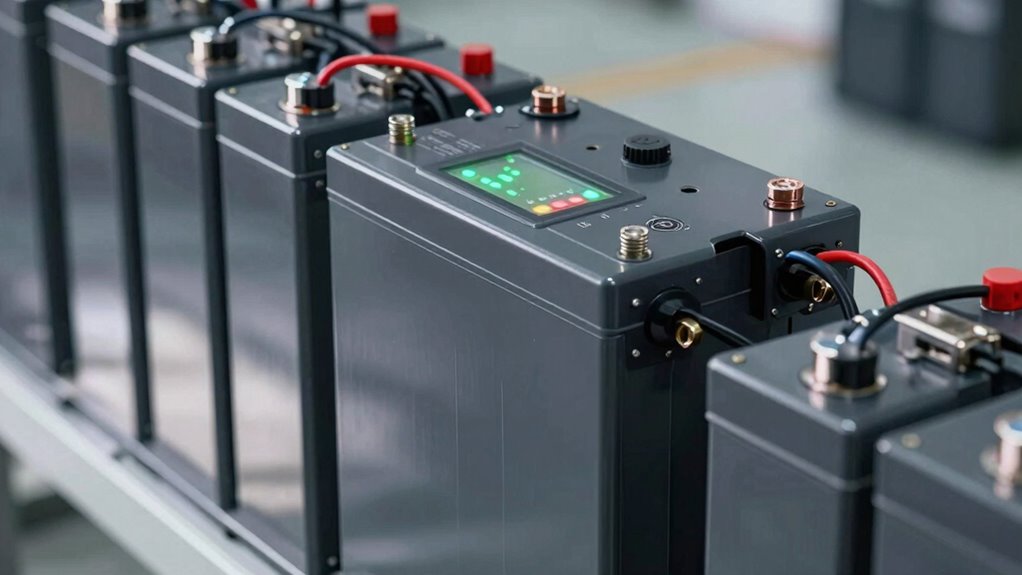

The key tool to prevent overdischarge in expensive battery banks is an automatic voltage regulation system. These systems constantly monitor voltage levels and automatically disconnect or reduce load when voltage drops too low, protecting your batteries from damage. By ensuring they stay within safe limits, this tool extends your batteries’ lifespan and maintains performance. Keep going to discover how this technology can safeguard your investment and keep your system running smoothly.
Key Takeaways
- Battery Management Systems (BMS) automatically monitor and regulate voltage to prevent overdischarge.
- Smart charge controllers ensure batteries stay within safe voltage ranges during operation.
- Automated voltage regulation systems provide real-time alerts and adjustments to protect expensive batteries.
- Continuous voltage and temperature analysis helps detect issues early and prevent damage.
- Integrating these systems extends battery lifespan and maintains optimal performance, avoiding costly replacements.
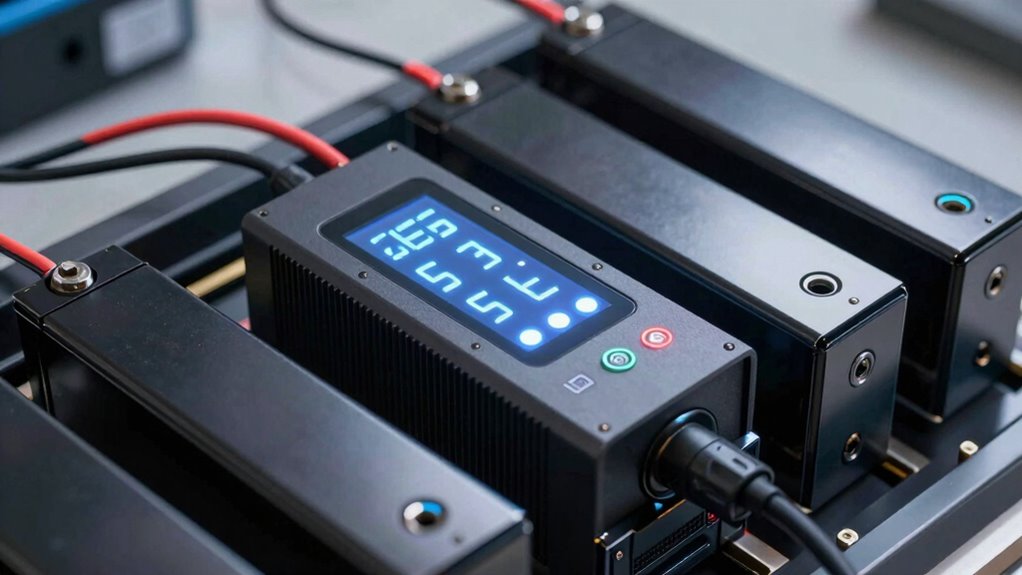
When managing expensive battery banks, preventing overdischarge is essential to maintaining their lifespan and performance. Overdischarging can cause irreversible damage, reducing capacity and increasing the risk of costly replacements. To effectively safeguard your investment, proper battery management is indispensable. This involves carefully monitoring the batteries’ state of charge and ensuring they don’t dip below safe voltage levels. That’s where voltage regulation comes into play, acting as a key component of your overall battery management strategy. Voltage regulation maintains the batteries within ideal voltage ranges, preventing them from dropping into dangerous levels that can lead to overdischarge.
Proper voltage regulation is key to protecting large battery banks from overdischarge and extending their lifespan.
In practical terms, implementing reliable voltage regulation means integrating a dedicated system that constantly tracks your battery bank’s voltage. When the voltage approaches a predefined lower threshold, the system automatically disconnects or reduces load to prevent further discharge. This automation is crucial because it removes guesswork and minimizes the risk of human error, ensuring your batteries remain within safe operational limits even during peak usage or unexpected load spikes. By maintaining a consistent voltage, you also promote healthier chemical reactions within the batteries, which translates into longer service life and better performance over time. Incorporating proper voltage regulation is a fundamental aspect of effective battery management.
Good battery management isn’t just about preventing overdischarge; it’s about creating a complete system that optimizes every aspect of your battery’s health. Voltage regulation devices, such as smart charge controllers or specialized battery management systems (BMS), continuously analyze voltage levels, current flow, and temperature. They adjust charging and discharging processes accordingly, helping to avoid overdischarge while also preventing overcharge, which can be equally damaging. When these systems work together, they form a protective barrier around your investment, ensuring the batteries operate efficiently and safely under varying conditions.
Moreover, effective battery management with proper voltage regulation simplifies maintenance and troubleshooting. Instead of manually checking each battery’s voltage, your system provides real-time data and alerts. You can quickly identify potential issues before they escalate, reducing downtime and repair costs. This proactive approach not only extends your batteries’ lifespan but also minimizes operational disruptions. Ultimately, investing in a robust voltage regulation solution as part of your battery management strategy safeguards your expensive battery banks, keeps them functioning at their best, and preserves their value for years to come.
Frequently Asked Questions
How Does Overdischarge Damage Battery Banks?
Overdischarge damages your battery bank by causing the internal cells to degrade faster, which shortens its overall battery lifespan. When you let the voltage drop too low, it reduces the power efficiency and can lead to irreversible harm. This means your batteries won’t hold a charge as well, forcing you to replace them sooner and increasing costs. To protect your investment, monitor and prevent overdischarge consistently.
What Types of Batteries Benefit Most From This Tool?
You’ll find that lithium-ion batteries benefit most from this tool, especially in energy storage applications. These batteries, with their specific chemistry, are highly sensitive to overdischarge, which can permanently damage their capacity. Using this tool helps you monitor and prevent overdischarge, ensuring your energy storage systems stay healthy and efficient. It’s an essential device for maintaining the longevity and performance of your batteries in critical applications.
Is the Tool Compatible With All Battery Sizes?
Yes, this tool’s versatile design provides broad battery compatibility and size flexibility, making it suitable for a variety of battery sizes. You can confidently connect it to different batteries without worrying about mismatched or incompatible models. Its adaptable architecture guarantees it fits small to large batteries seamlessly, so you can protect your investment regardless of battery size. This tool truly simplifies safeguarding your batteries with reliable, flexible, and fuss-free functionality.
How Easy Is It to Install the Overdischarge Prevention Device?
Installing the overdischarge prevention device is straightforward with its user-friendly setup. You simply follow the clear instructions in the installation process, connect the device to your battery bank, and configure the settings. Most users find it quick and hassle-free, often completing the installation in just a few minutes. Its design guarantees compatibility and ease of use, making it accessible even if you’re new to battery management systems.
What Maintenance Is Required for the Tool?
You’ll need to regularly check your battery calibration, ensuring the tool accurately measures voltage levels. About once a year, inspect circuit protection components for wear or damage, preventing potential failures. Keep the device clean and free of dust, and verify connections are secure. Routine maintenance minimizes risks and extends lifespan, so you can confidently rely on it to prevent overdischarge, safeguarding your expensive battery bank efficiently and effectively.
Conclusion
Think of this tool as the vigilant guardian of your precious battery bank, constantly watching over it like a lighthouse guiding ships away from rocky shores. By preventing overdischarge, it keeps your investment safe and shining bright for years to come. With this simple yet powerful device, you hold the key to liberating longer-lasting, healthier batteries. Don’t let your valuable energy treasure sink into the depths—arm yourself with this tool and keep your power afloat.