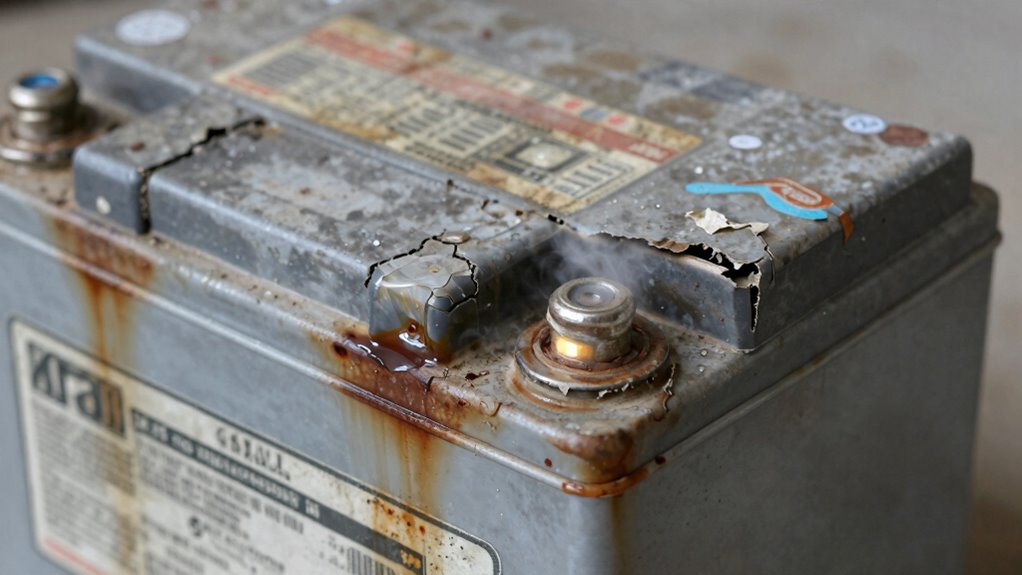

If your lead-acid battery shows signs like persistent capacity loss, physical damage such as swelling or corrosion, or struggles to start your vehicle, it’s likely beyond recovery. You might notice voltage drops, frequent jump-starts, or internal leaks that don’t improve after charging or cleaning. When these issues occur repeatedly, it’s a clear warning to replace and recycle your battery properly. Keep going to find out more about how to recognize and handle such faulty batteries.
Key Takeaways
- The battery shows persistent capacity loss and voltage drops below recommended levels despite charging.
- Visible signs like swelling, corrosion, or leaks indicate internal damage beyond repair.
- The battery fails to start vehicles or equipment reliably, even after maintenance attempts.
- Internal deterioration signs, such as degraded plates and inconsistent performance, are evident.
- Physical deformities or damage unresponsive to cleaning signal that the battery is beyond recovery.

When a lead-acid battery reaches the point of no return, it’s more cost-effective and environmentally responsible to recognize that it’s beyond recovery. Ignoring warning signs can lead to serious issues, including leaks, reduced performance, and potential environmental hazards. The moment your battery begins showing visible damage or inconsistent behavior, it’s time to consider proper disposal methods. Recycling is vital, as lead-acid batteries contain hazardous materials like lead and sulfuric acid that can harm the environment if mishandled. Engaging in battery recycling ensures these toxic substances are safely processed, preventing soil and water contamination.
One of the clearest signs your lead-acid battery is beyond saving is a significant loss of capacity. If your vehicle or equipment struggles to start, or if the battery voltage drops below the recommended level even after charging, it indicates internal deterioration. Corrosion around the terminals is another red flag. White or bluish deposits not only hinder electrical connections but also suggest internal damage. If cleaning the terminals doesn’t restore proper function, it’s likely time to replace the battery. Additionally, swelling or bulging of the battery case signals internal issues and a high risk of leaking or rupture. Never ignore these physical deformities, as they pose safety risks and environmental threats.
A battery that frequently needs jump-starts or shows inconsistent charging patterns points to internal failure. Over time, the plates inside the battery degrade, reducing its ability to hold a charge. If you notice rapid self-discharge or if the battery’s performance deteriorates despite proper maintenance, it’s a clear sign that the battery has reached its end of life. Attempting to revive a severely damaged lead-acid battery isn’t just inefficient; it can be dangerous. Instead, you should prioritize environmentally responsible disposal through certified recycling programs. Recognizing these warning signs early can save you money and prevent environmental harm.
Proper battery disposal isn’t just about following regulations; it’s about minimizing environmental impact. When a lead-acid battery is beyond recovery, recycling ensures that the valuable materials, like lead and plastic, are reclaimed and reused. This reduces the need for new raw materials and lessens the environmental footprint of manufacturing. Recycling also prevents harmful chemicals from leaching into the soil and water, safeguarding ecosystems and public health. Recognizing these warning signs early and choosing proper recycling methods helps you avoid environmental contamination and promotes sustainable waste management practices. Ultimately, knowing when a battery is beyond repair allows you to act responsibly and protect the environment for the future.
Frequently Asked Questions
How Long Does a Typical Lead-Acid Battery Last?
A typical lead-acid battery lasts about 3 to 5 years, depending on usage and maintenance. You’ll notice battery capacity drops and corrosion damage over time, which signal it’s nearing the end of its life. Regular checks and proper care can extend its lifespan, but once corrosion damage becomes severe and capacity markedly declines, it’s time to replace the battery to avoid failure.
Can a Damaged Battery Be Repaired or Rebuilt?
Your damaged lead-acid battery’s rebuild potential is often as slim as a needle’s eye. While some minor issues like sulfation can be addressed through battery repair, most severe damage renders it beyond repair. If the internal plates are warped or the case is cracked, rebuilding isn’t feasible. Usually, replacement is the smarter choice, as attempting repairs in such cases is like pouring water into a sinking ship.
What Are the Safety Precautions When Handling a Failing Battery?
When handling a failing lead-acid battery, always wear personal protective equipment like gloves and goggles to protect against battery acid spills. Work in a well-ventilated area and avoid open flames or sparks. Handle the battery carefully to prevent leaks or ruptures, and keep acid away from your skin and eyes. Properly dispose of or recycle the battery according to safety guidelines to prevent environmental hazards.
How Does Temperature Affect Battery Lifespan?
You should know that temperature considerably impacts your battery’s lifespan. Excessive heat causes thermal effects that accelerate chemical reactions, leading to faster degradation. Overheating risks damaging internal components and reducing capacity over time. Conversely, cold temperatures can slow chemical processes, decreasing performance temporarily. To prolong your battery’s life, keep it within the recommended temperature range, avoid thermal extremes, and monitor for overheating signs to prevent premature failure.
Are There Environmentally Friendly Disposal Options for Dead Batteries?
You can choose eco-friendly recycling options that prioritize environmental health, ensuring your dead batteries don’t pollute the planet. Follow disposal regulations carefully, whether dropping them off at authorized recycling centers or participating in community collection programs. These options promote responsible disposal, reduce hazardous waste, and support sustainability. By making conscious choices, you contribute to protecting the environment, conserving resources, and supporting a cleaner, greener future for everyone.
Conclusion
When your lead-acid battery shows these signs—struggling to hold charge, swelling, corrosion, foul odors, rapid discharge, frequent failures, or visible damage—it’s time to replace it. Don’t ignore the warning signals, don’t risk further damage, and don’t delay your decision. Recognize the signs, understand the risks, and act promptly. By doing so, you safeguard your equipment, ensure safety, and maintain performance—because a failing battery isn’t just a problem; it’s a call to act before it’s too late.