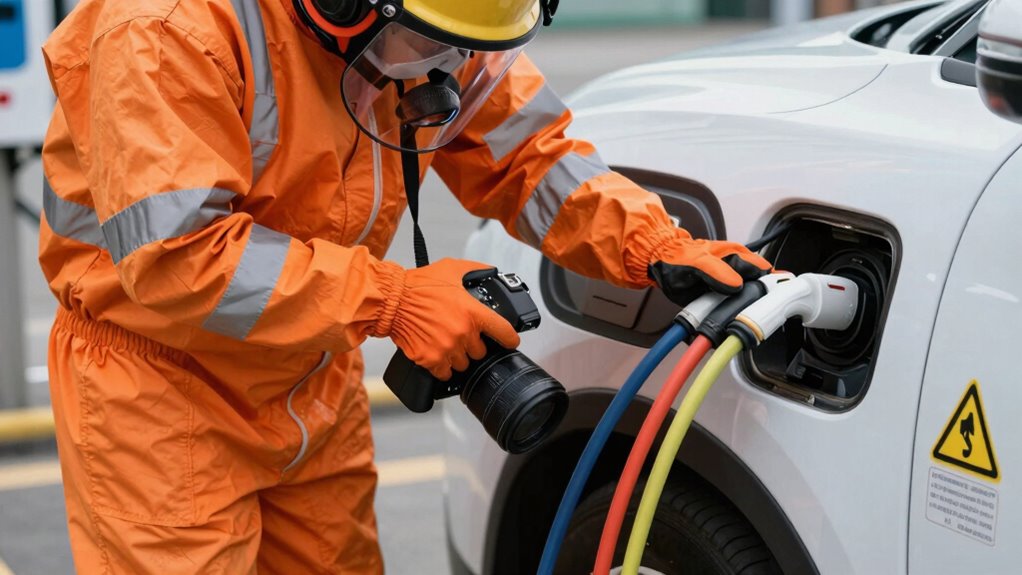
When working with high-voltage EV batteries, PPE keeps you safe from shocks and burns. Wear rubber or insulating gloves rated for the voltage, and always inspect them before use. Protect your eyes with safety glasses or shields, and dress in flame-resistant clothing to prevent burns from sparks. Insulated footwear helps prevent electrical conduction through your body. Staying aware of PPE conditions and following safety steps can make your work much safer—more useful tips are just ahead.

Get backup power and energy gear delivered free with Prime
- Fast, free delivery on millions of items
- Prime Video, Amazon Music and more included
- Member-only deals all year
Key Takeaways
- Always wear high-voltage rated gloves, safety glasses, flame-resistant clothing, and insulated footwear to protect against electric shocks and burns.
- Inspect PPE for damage before use; replace any torn or worn gear to ensure maximum protection.
- Use insulated tools and follow manufacturer safety guidelines to reduce the risk of accidental electrical contact.
- Disconnect the battery and verify energy is fully discharged before starting maintenance work.
- Follow strict safety procedures, never bypass safety features, and prioritize PPE to minimize injury risks during high-voltage EV work.
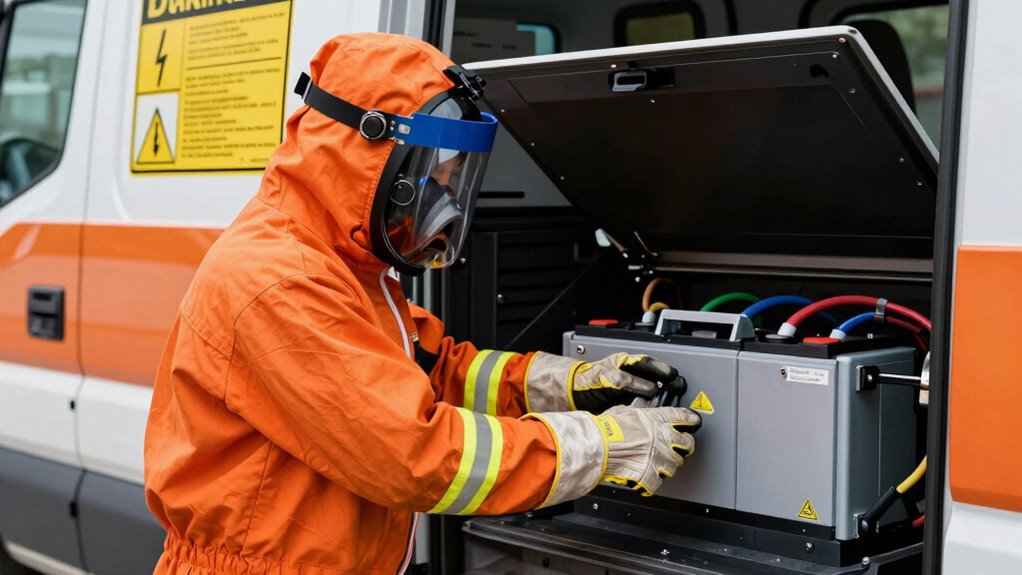
Working with electric vehicles (EVs) involves dealing with high-voltage systems that can pose serious safety risks if not handled properly. One of the most critical aspects of staying safe is understanding how to properly maintain the battery and select the right personal protective equipment (PPE). The battery in an EV contains a large amount of stored energy, which, if released accidentally, can cause severe injuries or even be fatal. That’s why battery maintenance must be approached with caution, following strict safety protocols. Before working on the battery, you should always verify the vehicle’s energy status, disconnect power sources, and use appropriate tools designed for high-voltage systems. Handling the battery without proper precautions can lead to electric shocks, burns, or other injuries, so never underestimate the risks involved.
PPE selection is equally essential. You need to wear specialized gear that provides insulation and protection against electrical hazards. This includes high-voltage gloves made of rubber or a similar insulating material, which are tested and rated for specific voltage levels. When working on EV batteries or high-voltage components, always don gloves that meet industry standards, such as ASTM or IEC certifications. Additionally, eye protection like safety glasses or face shields is crucial to guard against sparks or accidental splashes of battery acid. You should also wear flame-resistant clothing to prevent burns if a short circuit or electrical arc occurs. Proper footwear with insulated soles can help prevent electrical conduction through your body to ground. Incorporating proper PPE maintenance ensures your gear remains effective and safe to use over time.
Another important aspect of PPE is ensuring it’s in good condition. Damaged gloves or torn clothing can compromise your safety, so always inspect your gear before starting work. Remember, PPE isn’t a substitute for proper training or safe work practices; it’s a critical supplement. When working with EV batteries, always follow the manufacturer’s guidelines and your company’s safety procedures. Use insulated tools when possible to reduce the risk of accidental shorts, and never bypass safety features or take shortcuts. Keeping your PPE up to date and correctly worn reinforces your safety, making sure that if something unexpected happens, you’re protected.
high voltage insulated gloves for EV maintenance
As an affiliate, we earn on qualifying purchases.
As an affiliate, we earn on qualifying purchases.
Frequently Asked Questions
What Are the Most Common Mistakes When Handling High-Voltage EV Batteries?
You often make mistakes like misidentifying the battery, which leads to dangerous shocks, or failing to properly ground the system, risking electric shock or damage. Always double-check the battery type before working and verify proper grounding protocols are followed. Avoid rushing or skipping safety steps, as these errors can cause serious injury. Staying vigilant and adhering to safety procedures minimizes risks when handling high-voltage EV batteries.
How Often Should PPE Be Inspected for Damage or Wear?
You should inspect your PPE before each use to guarantee it’s in good condition. Perform a thorough damage assessment, looking for cuts, tears, cracks, or signs of wear that could compromise protection. Regularly check for damage, especially after exposure to high-voltage environments or rough handling. Proper PPE inspection helps identify potential issues early, maintaining safety and preventing accidents during EV work. Never skip this essential safety step.
Are There Specific Training Requirements for High-Voltage EV Work?
You need specific training requirements to work safely on high-voltage EV systems. About 80% of electrical accidents involve untrained personnel, highlighting the importance of proper education. Certification standards, such as OSHA and NFPA 70E, mandate specialized training to guarantee you understand hazard controls and PPE use. By completing these programs, you gain essential skills to minimize risks, stay compliant, and protect yourself while working on high-voltage EVs.
What Emergency Procedures Should Be Followed During a High-Voltage Incident?
If a high-voltage incident occurs, you should immediately disconnect power if safe, call emergency services, and warn others nearby. Follow your workplace’s emergency response plan, including evacuation procedures, to guarantee everyone’s safety. Keep a safe distance from the vehicle, avoid contact with electrical parts, and do not attempt repairs. Prioritize evacuating everyone from danger zones and wait for trained emergency personnel to handle the situation.
How Do Weather Conditions Affect High-Voltage Safety Protocols?
Imagine working on an EV during a heavy rainstorm; weather impact can considerably affect safety protocols. Cold temperatures may cause PPE materials to become brittle, reducing insulation effectiveness, while wet conditions increase the risk of electrical conduction. You should adjust your safety measures accordingly, ensuring equipment stays dry and insulated, and be extra cautious of slipping hazards. Always monitor weather forecasts and modify procedures to maintain high-voltage safety in varying weather conditions.
Conclusion
Remember, proper PPE and cautious conduct keep you safe when working with high-voltage EVs. Prioritize protection, stay prepared, and practice prudent procedures to prevent potential problems. By being vigilant and vigilant, you’ll avoid accidents and ensure your safety. Stay smart, stay safe, and always respect the risks. Protect yourself with the right gear, stay informed, and never underestimate the importance of high-voltage safety. Your safety’s in your hands—so stay savvy and secure!
Halloween Picks
halloween
As an affiliate, we earn on qualifying purchases.