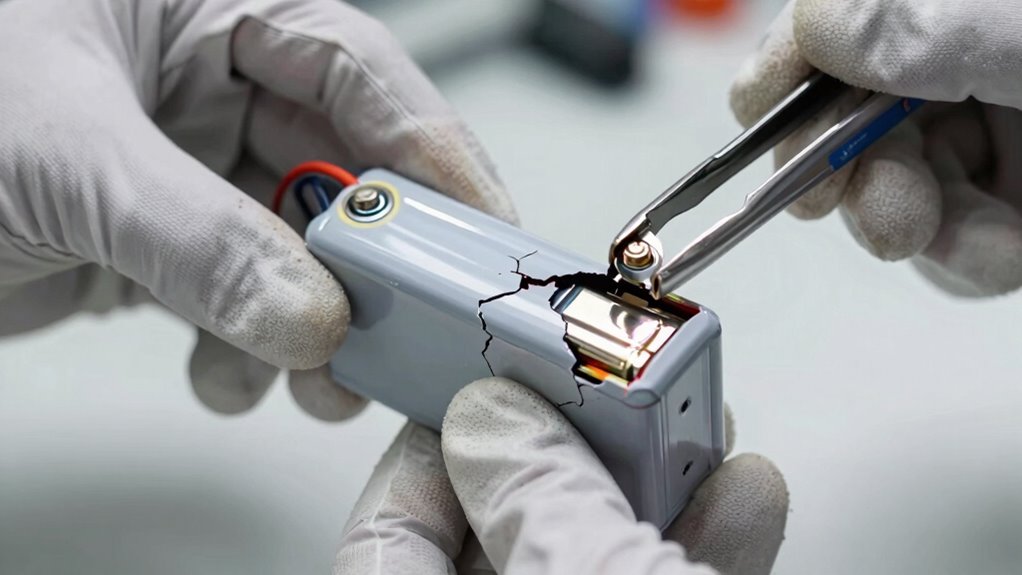

If you find a battery with a cracked case, handle it carefully and wear protective gloves and eye gear to prevent chemical exposure. Keep it away from heat, flammable materials, or any pressure that might worsen the damage. Store it in a non-conductive, sealed container and never attempt to use or charge it. Dispose of it properly at a designated hazardous waste facility according to local guidelines. Learning more will help you stay safe and protect the environment.

Get backup power and energy gear delivered free — and shop member deals
- Fast, free delivery on millions of items
- Access to Prime Big Deal Days deals on October 6–7
- Prime Video, Amazon Music and more included
Key Takeaways
- Wear protective gloves and eye gear before handling the cracked battery.
- Avoid applying pressure or puncturing the damaged battery to prevent leaks or sparks.
- Store the damaged battery in a sealed, non-conductive container away from heat sources.
- Do not attempt to use or charge the compromised battery; seek proper disposal.
- Take the battery to a designated hazardous waste or recycling facility promptly.
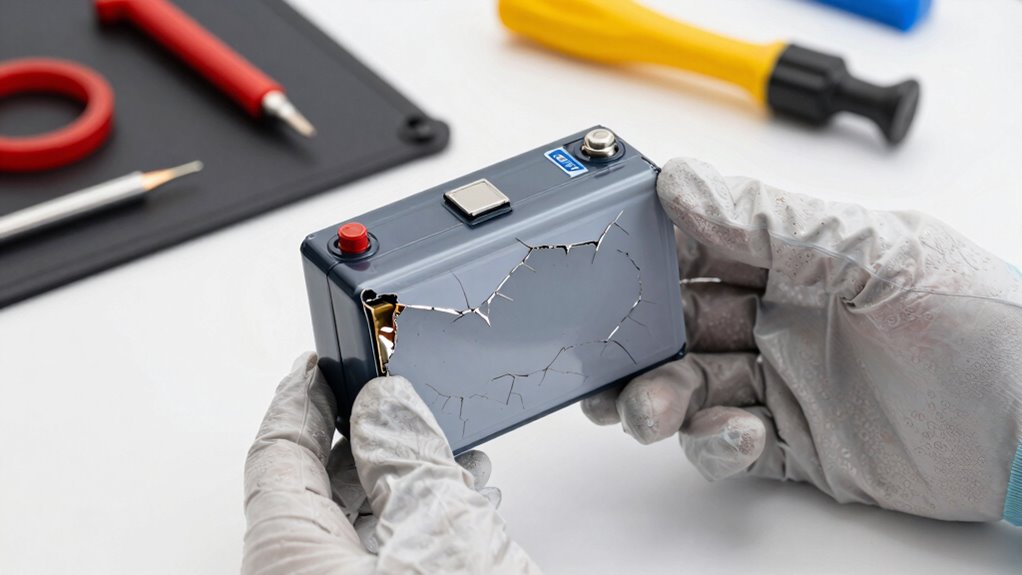
Have you ever wondered how to handle batteries safely? When you notice a battery with a cracked case, it’s essential to treat it with care to prevent potential hazards. A cracked battery can leak corrosive chemicals, pose a risk of fire, and contaminate the environment if not disposed of properly. Your first priority should be to minimize any risk of fire safety issues or chemical exposure by handling the damaged battery carefully. Never try to use or charge a cracked battery, as this can lead to overheating or even an explosion. Instead, focus on safe disposal and proper handling to protect yourself and others.
Start by wearing protective gloves and eye protection. Cracks in the battery casing can release dangerous chemicals, which can irritate or damage your skin and eyes. Once protected, avoid applying pressure or puncturing the battery further, as this could cause leaks or sparks. Carefully place the damaged battery in a non-conductive, sealed container—preferably a plastic or metal container designed for hazardous waste. This prevents accidental contact and keeps the chemicals contained until you can take the battery to a proper disposal facility.
When dealing with a cracked battery, always remember the importance of battery recycling. Many communities have designated recycling centers or collection points for batteries, especially damaged ones. Proper battery recycling ensures that chemicals are handled safely and that valuable materials can be recovered and reused. Never throw a cracked battery in the regular trash, as it can leak chemicals into the environment or cause fires in landfills. Contact your local waste management authority to find out about the safest way to dispose of damaged batteries in your area. Following hazardous waste disposal guidelines is crucial to preventing environmental contamination and safety hazards. Additionally, knowing about battery safety tips can help you prevent accidents before they occur.
Handling a cracked battery responsibly also involves being aware of fire safety. Damaged batteries can short-circuit or generate heat, increasing the risk of fire. Keep the damaged battery away from heat sources, flammable materials, or anything that could ignite a chemical leak. If you notice any swelling, smoke, or unusual smell, evacuate the area immediately and contact emergency services. Taking these precautions can prevent small incidents from escalating into dangerous fires.
As an affiliate, we earn on qualifying purchases.
Frequently Asked Questions
Can a Cracked Battery Still Hold a Charge?
A cracked battery may still hold a charge temporarily, but it’s risky. The damage can cause chemical leakage, which is dangerous and harmful to the environment. You should handle it carefully, avoid using it further, and prioritize battery recycling. Never attempt to repair or use a cracked battery, as it can lead to fire or chemical exposure. Always dispose of it properly through certified recycling programs to prevent hazards.
How Long Should I Wait Before Disposing of a Cracked Battery?
Think of your cracked battery as a ticking time bomb—you shouldn’t wait long to dispose of it safely. You ought to contact your local battery recycling center immediately and avoid handling it more than necessary. Never throw it in the trash. For safe disposal, follow your community’s guidelines or take it to a certified recycling facility. Prompt action minimizes risks and ensures environmentally friendly disposal.
Are There Specific Tools Needed to Handle a Cracked Battery Safely?
Yes, you should use specific tools to handle a cracked battery safely. Always wear protective gloves to prevent skin contact with any leaked chemicals. Use insulated tools to carefully disconnect and lift the battery, reducing the risk of electrical shock or short-circuiting. These tools help protect you from potential sparks or sparks and keep the process safe. Remember, handling a cracked battery requires caution and the right equipment to avoid injury.
What Are the Signs of a Failing or Dangerous Battery?
You’ll notice a failing or dangerous battery if it shows signs like reduced battery shelf life, meaning it doesn’t hold a charge as well, or if you see chemical leakage, which indicates internal damage. Swelling, corrosion, or a foul smell are also warning signs. If any of these appear, stop using the battery immediately and handle it with care to prevent leaks or potential hazards.
Can I Repair a Cracked Battery Myself?
You shouldn’t attempt to repair a cracked battery yourself because it’s dangerous. Instead, carefully wear personal protective equipment like gloves and goggles, then safely dispose of the damaged battery through proper battery recycling programs. Attempting repairs can cause leaks, fires, or chemical exposure. Always prioritize safety and let trained professionals handle cracked batteries to prevent accidents and environmental harm.
Conclusion
Handling a cracked battery is like steering a minefield—you must proceed with caution and respect the danger. By following safe practices, you become the steady anchor in a storm of potential hazards, steering clear of disaster’s grasp. Remember, your careful actions are the lighthouse guiding you safely through treacherous waters. With vigilance and caution, you turn a risky situation into a lesson of resilience, proving that safe handling is the true path to lasting safety.
Halloween Picks
halloween
As an affiliate, we earn on qualifying purchases.