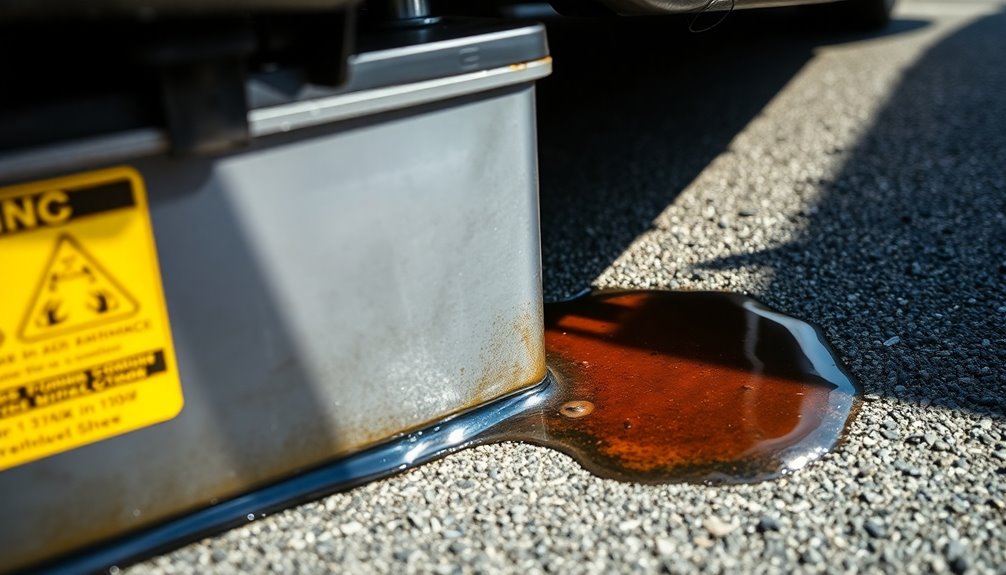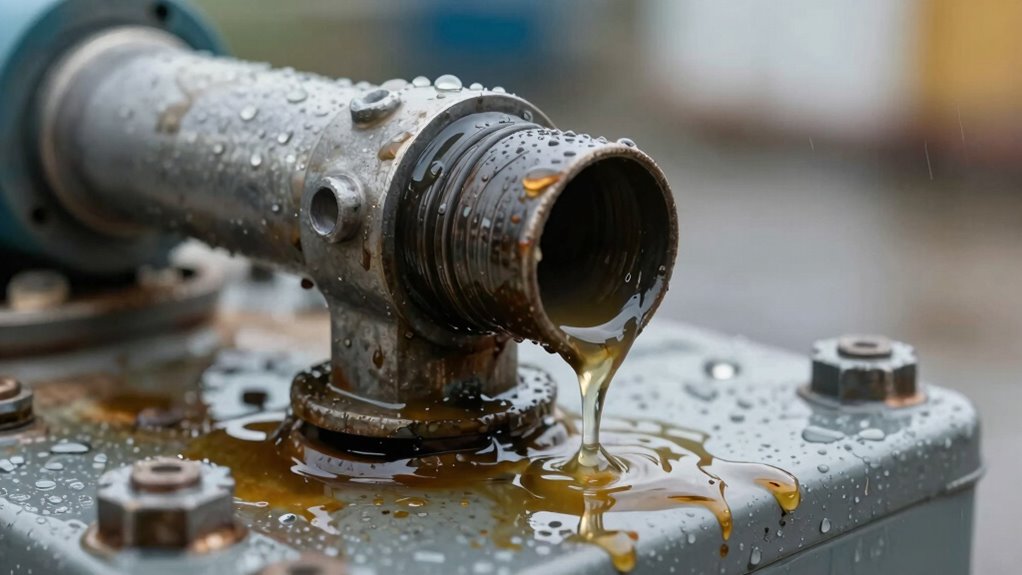
When managing flooded batteries, you must plan for the safe venting of flammable gases like hydrogen and oxygen that are produced during normal operation. These gases build up pressure inside the battery, so proper vents are essential to release them securely and prevent dangerous buildup. Regularly inspect and maintain these vents to avoid blockages or damage. Understanding these safety measures helps ensure your system runs safely, and there’s more to know if you continue exploring.
Key Takeaways
- Flooded batteries produce hydrogen and oxygen gases that must be safely vented to prevent pressure buildup.
- Proper venting systems allow gases to escape safely, reducing the risk of explosions or damage.
- Regular inspection and maintenance of vents are essential to ensure unobstructed gas release.
- Never block or seal vents, as trapped gases can cause dangerous pressure and hazards.
- Adequate ventilation and safety precautions are critical during battery operation to handle produced gases safely.
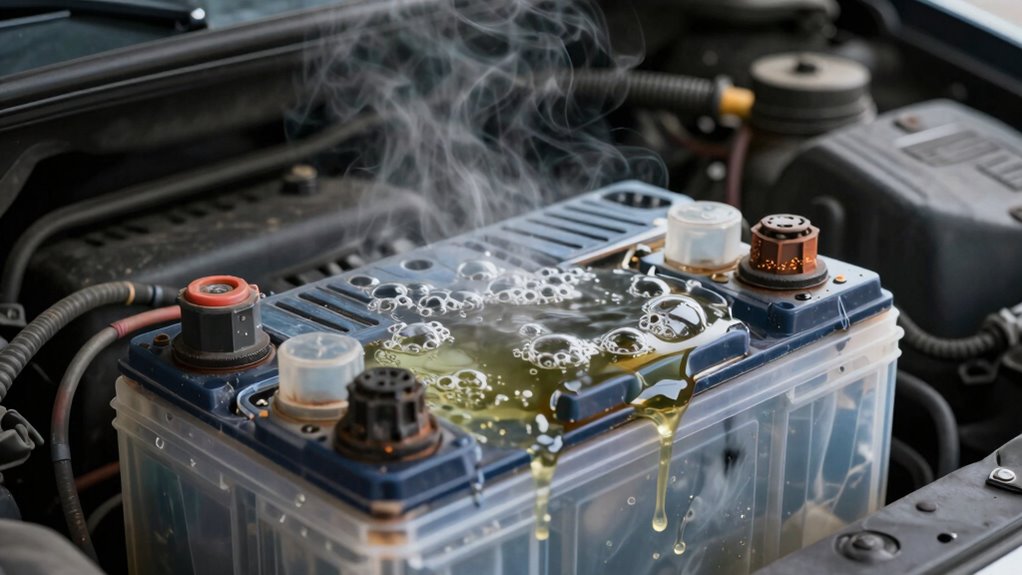
Have you ever wondered what happens inside a flooded battery during normal operation? When your battery is functioning properly, it produces gases—mainly hydrogen and oxygen—through a process called electrolysis. These gases are a natural byproduct of the chemical reactions happening inside the cells. As the battery charges and discharges, the electrolyte reacts with the plates, releasing these gases and causing pressure to build up. That’s why venting is essential; it helps release excess gases safely and prevents dangerous pressure buildup. Understanding this process is key to proper battery maintenance and guaranteeing safety precautions are in place.
During normal operation, the gases produced inside a flooded battery are usually vented through designed outlets or valves. These vents allow hydrogen and oxygen to escape safely, preventing the buildup of potentially explosive pressure. Without proper venting, gases could accumulate inside the sealed case, risking rupture or explosion. That’s why it’s crucial to regularly check your battery’s vents and guarantee they’re unobstructed. Proper battery maintenance involves inspecting these vents periodically, cleaning them if necessary, and replacing any damaged components. Neglecting this can compromise safety and lead to hazardous situations.
Regularly check and clean battery vents to ensure safe gas release and prevent dangerous pressure buildup.
Safety precautions are essential when working with flooded batteries because of the gases they emit. Always wear protective gear—goggles, gloves, and a well-ventilated space—to minimize risks. Hydrogen gas is highly flammable, so avoid open flames, sparks, or smoking near the battery. Never attempt to seal or block the vents, as this can cause pressure to build up inside. Instead, guarantee the vents are functioning correctly and that your battery is installed in a location with good airflow. If you notice excessive gassing, swelling, or leaks, it’s a sign that something’s wrong, and you should take immediate action to address the issue.
Proper handling of flooded batteries also includes maintaining the electrolyte level and keeping the terminals clean. When topping up the electrolyte, do so carefully to avoid overfilling, which can increase gas production. Regularly inspecting the battery for corrosion or leaks and cleaning the terminals helps prevent electrical issues that could lead to abnormal gas release. Remember, safety precautions aren’t just about protecting the battery but also about safeguarding yourself and your environment from potential hazards linked to vented gases.
In essence, understanding what happens inside a flooded battery during normal operation underscores the importance of diligent battery maintenance and safety precautions. Recognizing the gases produced and guaranteeing proper venting can prevent accidents and prolong your battery’s lifespan. Always treat these batteries with respect, follow safety guidelines, and perform regular inspections to keep everything operating smoothly and safely.
A key aspect of this process is recognizing the importance of ventilation systems in ensuring safe operation and longevity of flooded batteries.
Frequently Asked Questions
How Often Should I Check My Flooded Battery’s Venting System?
You should check your flooded battery’s venting system at least once a month. Regular vent maintenance is essential to guarantee gases escape safely and prevent pressure buildup. Follow safety protocols during inspections, wearing protective gear and working in well-ventilated areas. Keep an eye out for blockages or damage to the vents, and clean them as needed. Consistent checks help maintain safe operation and prolong your battery’s lifespan.
What Safety Gear Is Recommended When Inspecting Flooded Battery Vents?
Think of inspecting flooded battery vents like handling a delicate, volatile potion. You should wear protective gloves and eye protection to shield yourself from harmful gases and acid splashes. I once saw a technician avoid safety gear and suffer minor burns. Always prioritize safety; gloves protect your skin, and eye protection guards against splashes. Proper gear guarantees you can inspect vents confidently and safely, preventing accidents.
Can Faulty Venting Cause Permanent Damage to the Battery?
Faulty venting can cause permanent damage to your flooded battery because it disrupts proper ventilation, leading to gas buildup and potential overpressure. This hampers battery maintenance by accelerating corrosion and reducing lifespan. To prevent this, make certain your battery meets ventilation standards, allowing gases to escape safely. Regularly inspect vents for blockages or damage, and maintain proper ventilation to preserve battery health and avoid costly replacements.
Are There Specific Ventilation Requirements for Different Battery Sizes?
Did you know larger batteries produce more gas and need better ventilation? Yes, ventilation requirements vary with battery capacity. For bigger batteries, you should use venting materials that can handle increased gas flow and prevent leaks. Proper ventilation guarantees safety and battery longevity, so always follow manufacturer guidelines based on your battery’s size. Adequate venting helps manage gas buildup, reducing risks of damage or accidents.
How Does Ambient Temperature Affect Venting and Gas Release?
You should know that ambient temperature considerably impacts venting and gas release from flooded batteries. When temperatures rise, the batteries produce more gas, increasing venting need; cooler temperatures slow this process. High ambient temperatures can cause excessive gas buildup, risking leaks or explosions if not properly ventilated. Consequently, maintaining ideal ambient temperatures helps control gas release, ensuring safety and proper battery performance during operation and charging.
Conclusion
So, next time you toss a flooded battery into your DIY project, remember it’s not just a pretty paperweight. It’s a tiny, volatile volcano waiting to erupt if you ignore its venting needs. Sure, it’s tempting to pretend you’re a battery scientist, but trust me, your friends will love the surprise smell and mess even less. Plan ahead, vent properly, and avoid turning your garage into a chemical disaster zone—because who doesn’t want a little excitement?