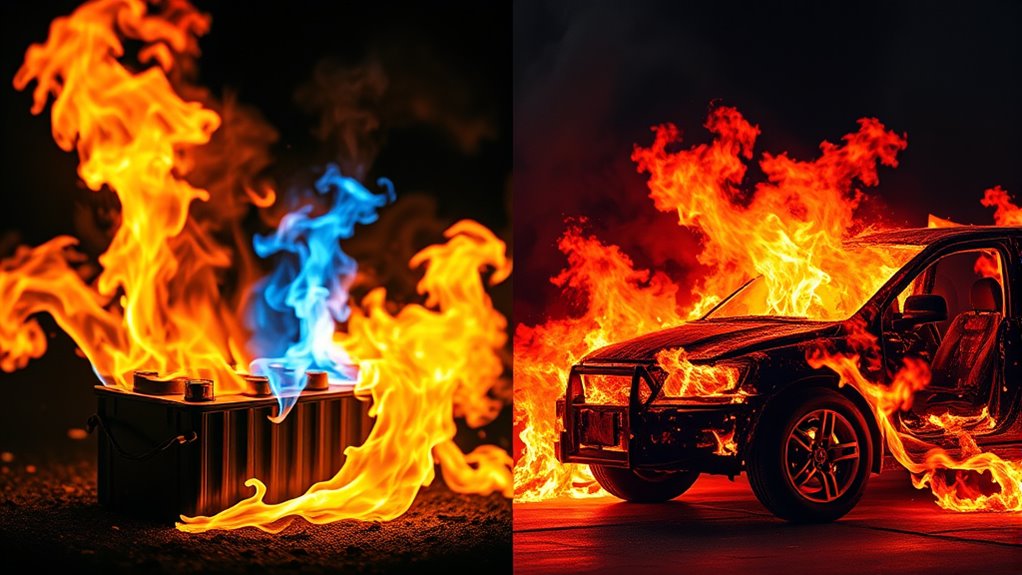

Lithium battery fires are generally more intense, unpredictable, and longer-lasting than traditional internal combustion engine (ICE) vehicle fires. They produce higher heat, spread rapidly via thermal runaway, and often reignite even after suppression efforts. In contrast, ICE vehicle fires are fueled by gasoline or diesel, making them easier to control with standard methods. If you’re curious about specific statistics and safety challenges, you’ll find valuable insights ahead.
Key Takeaways
- Lithium battery fires are less frequent but tend to be more intense, longer-lasting, and require extended cooling times than ICE vehicle fires.
- EV fires often involve rapid thermal runaway, high heat output, and toxic fumes, making suppression more complex than traditional gasoline fires.
- Standard firefighting methods are less effective for lithium fires, necessitating large volumes of water and specialized techniques.
- Reignition is common in lithium battery fires even after initial suppression, unlike the typically predictable burn of ICE vehicle fires.
- Fire departments now invest more in training and equipment to manage the unique challenges of lithium battery and EV fires.

When comparing lithium battery fires to internal combustion engine (ICE) vehicle fires, it’s important to understand that both can be dangerous, but they behave and respond to firefighting efforts differently. Lithium batteries, especially in electric vehicles, pose unique challenges for battery safety and fire suppression. Unlike traditional fuel leaks or combustibles in ICE vehicles, lithium fires are often characterized by intense heat, rapid fire spread, and the potential for thermal runaway. This phenomenon occurs when a cell overheats and ignites neighboring cells, causing a chain reaction that’s hard to stop once it starts. As a result, extinguishing a lithium battery fire demands specialized fire suppression methods that can cool and contain these batteries effectively, often requiring large amounts of water or specialized agents to prevent reignition.
In contrast, ICE vehicle fires are typically fueled by gasoline or diesel, which ignite more predictably and are easier to suppress with standard firefighting techniques. Firefighters often use foam or dry chemicals to smother the flames and cut off the fuel supply. However, lithium battery fires are less predictable and can reignite even after initial suppression, making battery safety a primary concern. The high energy density stored within lithium cells means that once a fire starts, it can escalate quickly, releasing toxic fumes and smoke that complicate rescue and suppression efforts. This is why fire departments are increasingly trained specifically for electric vehicle fires, emphasizing the importance of proper fire suppression techniques designed for lithium battery fires.
The statistics reveal that while lithium battery fires are less frequent than ICE vehicle fires, they tend to be more severe when they do occur. According to reports, EV fires are often more intense and longer-lasting, with some incidents requiring multiple firefighting units and extended cooling periods. The fire suppression process must account for the possibility of reignition, which isn’t as common with traditional vehicle fires. Safety protocols recommend using large amounts of water to cool the batteries thoroughly and prevent re-ignition, but this also introduces risks of electrical shock if not handled properly. The emphasis on battery safety has grown as electric vehicles become more prevalent, prompting manufacturers and firefighters to develop better strategies for managing these fires. The goal is to minimize damage, protect lives, and contain the fire as quickly as possible, knowing that lithium battery fires demand a different approach than conventional ICE vehicle fires. Furthermore, advancements in AI Security technologies are beginning to aid in predictive safety measures and fire detection systems, enhancing overall response capabilities for such incidents.
Frequently Asked Questions
How Quickly Can a Lithium Battery Fire Be Extinguished?
You can typically extinguish a lithium battery fire within 30 minutes to an hour using specialized fire suppression techniques. It’s vital to prioritize firefighter safety, as these fires can reignite and release toxic gases. Using large amounts of water or foam helps cool the battery and suppress the fire effectively. Always follow safety protocols and be aware of the unique challenges posed by lithium battery fires to guarantee a safe and swift response.
What Are the Environmental Impacts of Lithium Battery Fires Versus ICE Fires?
You might think lithium battery fires are less harmful, but they release toxic emissions that can contaminate air and water, impacting ecosystems. Unlike ICE fires, which produce greenhouse gases and pollutants, lithium fires also pose recycling challenges, increasing environmental waste. Both fires harm the environment, but lithium battery fires’s toxic emissions and recycling issues make them particularly concerning for long-term ecological health.
Are There Specific Safety Regulations for Lithium Battery Storage?
You should be aware that there are specific safety regulations for lithium battery storage to guarantee safety and prevent fires. These storage regulations focus on battery safety, requiring proper packaging, ventilation, and temperature control. Following these guidelines helps reduce risks associated with lithium batteries, especially in commercial or large-scale storage settings. Always adhere to local and international standards to ensure safe handling and storage of lithium batteries.
How Does Fire Suppression Differ Between Lithium Batteries and ICE Vehicles?
You need to know that fire suppression techniques differ markedly between lithium batteries and ICE vehicles. Lithium battery fires require specialized methods like large amounts of water, foam, or dry chemical extinguishers to cool and suppress thermal runaway, while ICE vehicle fires often involve foam, water, or dry chemicals targeting fuel fires. Safety regulations guide these practices, emphasizing the importance of tailored fire suppression systems to guarantee safety and minimize damage.
What Are the Long-Term Health Risks From Exposure to Battery Fire Fumes?
You should be aware that long-term health risks from exposure to battery fire fumes include respiratory issues, lung damage, and possible chemical poisoning. Toxic fumes released during a lithium battery fire contain hazardous substances like carbon monoxide, volatile organic compounds, and heavy metals, which can accumulate in your body over time. Prolonged inhalation or contact increases your risk of chronic health problems, so it’s crucial to avoid inhaling fumes and seek medical attention if exposed.
Conclusion
So, as you consider the risks, it’s interesting to note that while lithium battery fires are rare, they can be intense and hard to put out. Yet, just yesterday, an ICE vehicle fire broke out unexpectedly, highlighting how both types of fires can catch you off guard. Coincidentally, whether you’re dealing with batteries or engines, safety precautions matter—because in the end, both risks remind you that surprises can happen anytime, anywhere.