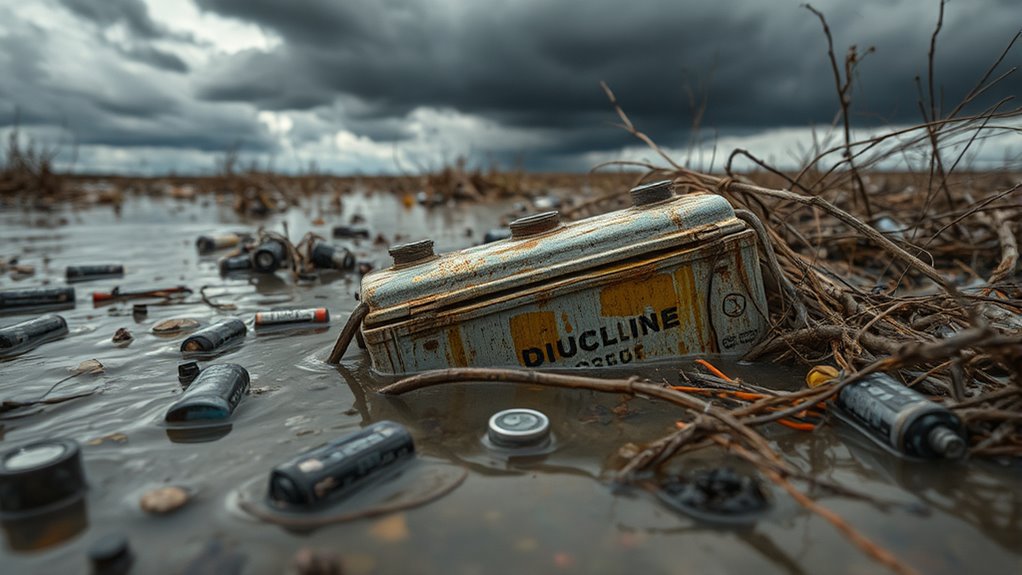

Disposing of batteries improperly can release harmful chemicals like lead, mercury, and cadmium into soil and water, contaminating ecosystems and endangering wildlife. These toxins can seep into groundwater and enter the food chain, posing health risks to humans and animals. Fire hazards also increase when damaged batteries ignite in landfills, releasing toxic fumes. Proper disposal and recycling help prevent these hazards. Keep exploring to learn how responsible actions can protect the environment and your health.
Key Takeaways
- Leaking chemicals from improperly disposed batteries contaminate soil and groundwater, harming ecosystems and wildlife.
- Toxic substances like lead and mercury can enter the food chain, posing health risks to humans and animals.
- Damaged batteries may cause fires and explosions, releasing hazardous fumes and endangering nearby communities.
- Landfilling batteries without proper treatment increases long-term environmental pollution and risks to water sources.
- Recycling programs help mitigate hazards by safely managing toxic components and preventing environmental contamination.
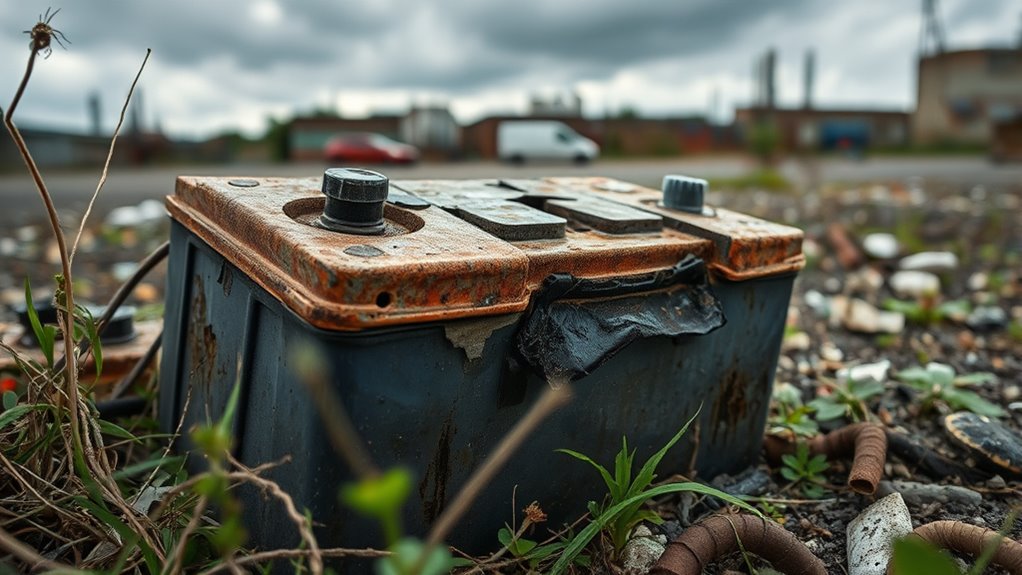
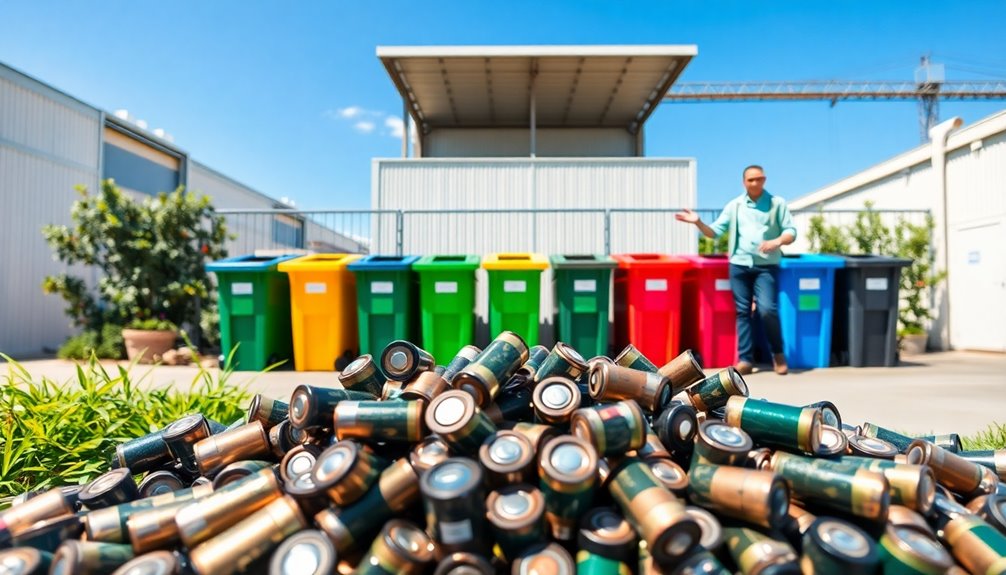
Have you ever wondered what happens when you toss batteries into the trash? Many people don’t realize that improper disposal of batteries can lead to serious environmental consequences. When batteries are thrown away with regular waste, they often end up in landfills where they can leak harmful chemicals into the soil and groundwater. These chemicals, such as lead, mercury, and cadmium, are considered hazardous waste, and their release can contaminate ecosystems, endangering wildlife and human health alike. To prevent this, recycling programs are essential; they are designed specifically to handle hazardous waste like batteries safely. By participating in these programs, you ensure that toxic components are properly managed and disposed of, reducing the risk of environmental contamination. Unfortunately, many communities lack accessible recycling options, which leads people to dispose of batteries improperly, often in household trash.
When batteries aren’t recycled properly, they pose a threat not only to the environment but also to sanitation workers who handle waste. During compacting or landfilling, if a battery is crushed or damaged, it can leak hazardous substances, creating dangerous conditions. These substances can leach into the soil, contaminate water sources, and even enter the food chain, impacting animals and humans. The danger intensifies when batteries are discarded alongside other waste, making it difficult to control the spread of pollution. This highlights the importance of public awareness about recycling programs that accept batteries. These programs provide a responsible way to handle hazardous waste, ensuring that harmful chemicals are contained and processed safely. Proper disposal of batteries reduces environmental hazards and prevents long-term pollution.
Moreover, improper disposal of batteries can lead to fires in landfills. Certain types of batteries, such as lithium-ion batteries, are prone to short-circuiting if damaged, which can cause sparks or fires that are hard to extinguish. These fires are not only dangerous but also release toxic fumes into the atmosphere, contributing further to environmental pollution. Recycling programs often include specialized procedures to safely recover valuable materials from batteries while preventing such hazards. By making use of these programs, you help reduce the risk of fires and further environmental damage.
Ultimately, understanding the importance of proper disposal and recycling of batteries helps you become part of the solution. Instead of tossing them in the trash, seek out local recycling programs or designated collection sites. Proper disposal of batteries as hazardous waste ensures that their potentially dangerous contents are managed responsibly, protecting both the environment and public health. Your small action can make a big difference in preventing pollution and conserving natural resources.
Frequently Asked Questions
How Does Battery Disposal Affect Local Water Sources?
When you dispose of batteries improperly, they can leak harmful chemicals into local water sources. These toxins cause water contamination, which threatens aquatic ecosystems and the animals and plants that rely on them. Your actions can lead to polluted water, making it unsafe for drinking and harming biodiversity. Properly recycling batteries helps prevent this damage, protecting your community’s water quality and preserving aquatic life.
Are There Specific Regulations for Battery Recycling in Different Countries?
You should be aware that different countries have their own regulations for battery recycling, often guided by international regulations and standards. These recycling policies aim to reduce environmental hazards and promote safe disposal. In some places, strict laws require proper recycling, while others may lack all-encompassing rules. It’s crucial to follow local regulations and utilize designated recycling centers to guarantee batteries are disposed of responsibly and in accordance with international guidelines.
What Are the Health Risks for Waste Management Workers Handling Batteries?
Imagine handling a delicate balance between safety and risk—you’re exposed to chemical hazards from batteries that can leak or rupture. For waste management workers, this means potential chemical exposure, which can cause skin irritation, respiratory issues, or long-term health problems. Prioritizing worker safety through protective gear and proper training minimizes these risks, ensuring you’re safeguarded while managing batteries. Your health depends on careful handling and adherence to safety protocols.
How Can Consumers Identify the Type of Battery for Proper Disposal?
You can identify the type of battery for proper disposal by looking for battery symbols and recycling labels on the packaging. These symbols, like the crossed-out trash bin, indicate batteries that require special handling. Recycling labels often specify the battery type, such as lithium or nickel-metal hydride. Always read these symbols carefully to guarantee you’re disposing of batteries correctly, helping prevent environmental hazards and promoting recycling efforts.
What Innovations Are Being Developed to Reduce Battery Environmental Impact?
Researchers are developing solid state batteries that use safer, non-liquid electrolytes, reducing environmental risks. You’ll notice innovations in biodegradable materials, which break down naturally and lessen pollution. These advancements aim to create batteries that last longer, charge faster, and are eco-friendly, helping you reduce your environmental impact. By adopting these new technologies, you contribute to a cleaner planet while benefiting from safer, more sustainable energy storage solutions.
Conclusion
If you don’t dispose of batteries properly, you’re risking more than just a mess—you’re harming the environment. Did you know that over 3 billion batteries are discarded each year worldwide, leaching toxic metals into our soil and water? By recycling and disposing of batteries responsibly, you help reduce pollution and protect wildlife. So, take action today—small steps can make a big difference in safeguarding our planet for future generations.