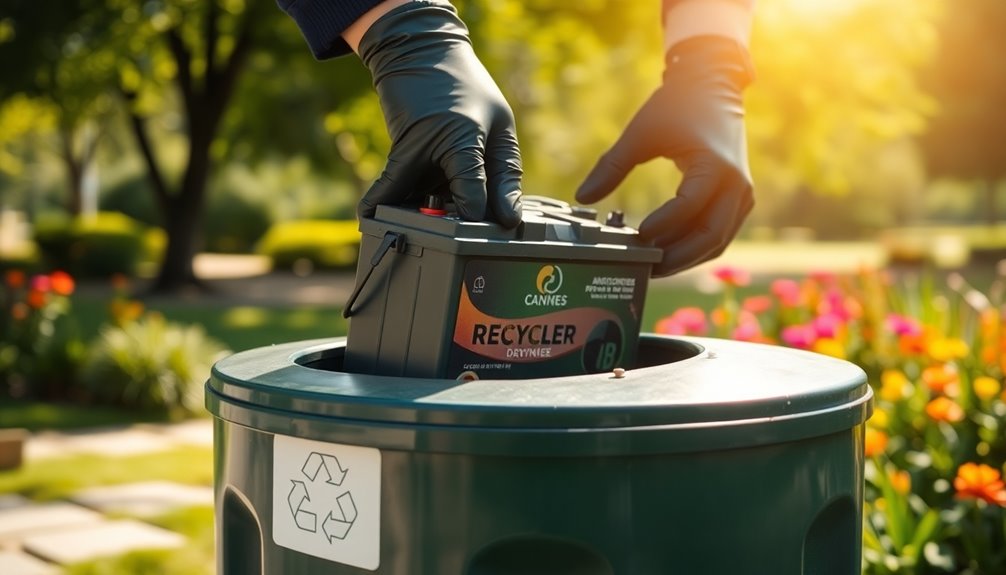

To safely dispose of batteries, you should avoid throwing them in the trash, as they can leak harmful chemicals and cause fires, especially lithium ones. Instead, use designated recycling centers or collection programs for different battery types. Recycling helps prevent environmental damage, conserves resources, and keeps hazardous materials out of landfills. Learning how to dispose of batteries properly is essential for protecting your community and the environment; keep exploring to find out more.
Key Takeaways
- Recycling batteries safely prevents chemical leaks and environmental contamination compared to trash disposal.
- Trash disposal risks corrosion, chemical leaks, and potential fires, especially with lithium batteries.
- Proper recycling involves designated collection centers, while trash disposal often leads to hazardous waste in landfills.
- Recycling recovers valuable materials like lithium, cobalt, and nickel, conserving resources and reducing mining impacts.
- Educating about local disposal regulations ensures batteries are handled safely, reducing health and environmental risks.
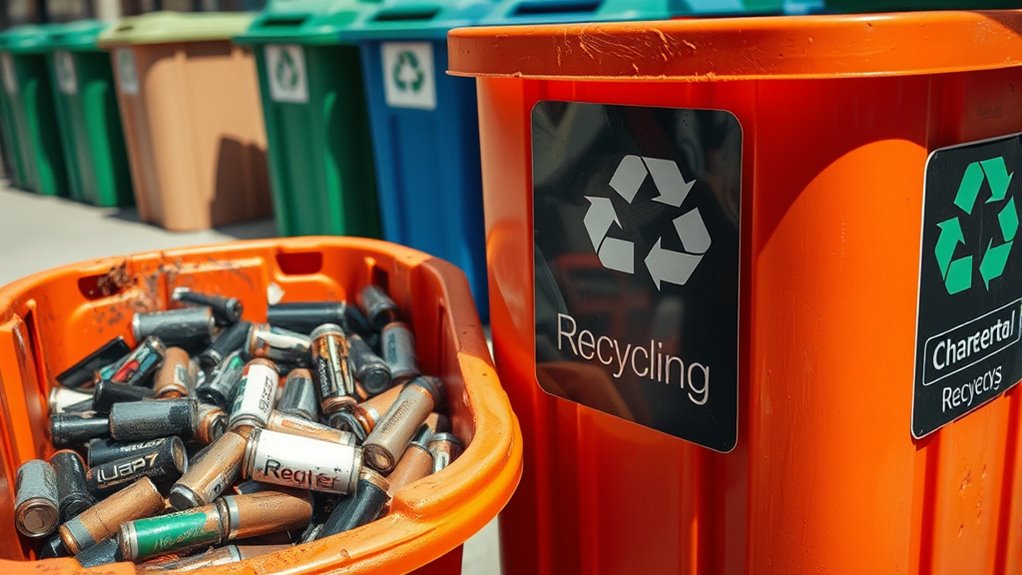
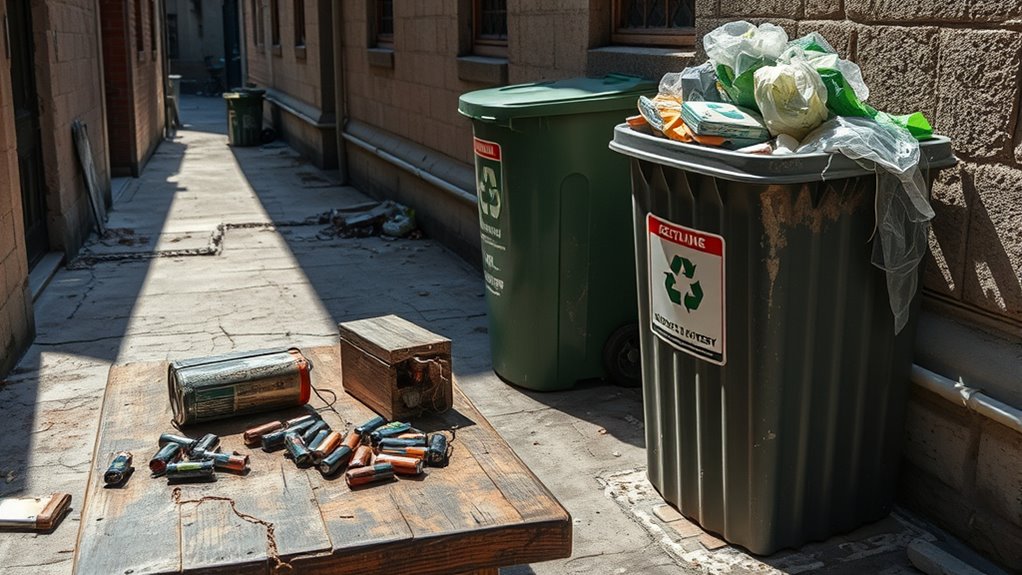
Properly disposing of batteries is vital to protect the environment and your community’s health. When batteries end up in the trash, they often become hazardous waste, posing risks to soil, water, and air quality. Many types of batteries contain harmful chemicals like heavy metals and corrosive substances that can leak if not handled properly. That’s why understanding the importance of battery recycling over simply tossing them in the trash is essential. Recycling batteries ensures these hazardous materials are managed safely and prevents environmental contamination. Instead of throwing batteries away, look for designated recycling centers or collection points in your community. These facilities are equipped to handle batteries properly, extracting valuable materials and safely disposing of the hazardous waste. Proper disposal through battery recycling also conserves resources by recovering metals like lithium, cobalt, and nickel, reducing the need for mining new raw materials. This process not only minimizes environmental impact but also supports sustainable practices. When you recycle, you actively prevent the hazardous waste inside batteries from contaminating landfills and leaching into groundwater, which can threaten ecosystems and public health. It’s important to recognize that different batteries require different disposal methods. For instance, single-use alkaline batteries are often accepted at general recycling programs, but rechargeable batteries, such as lithium-ion or nickel-metal hydride, need to be taken to specialized facilities. Many electronics stores, home improvement centers, and community collection events provide safe disposal options for these types. Avoid the temptation to throw batteries into the trash, even if they seem harmless. Over time, the chemicals inside can corrode the battery casing and leak out, causing environmental harm and potential health hazards. Additionally, improper disposal can lead to fires, especially with lithium batteries, which can ignite if damaged or crushed in a landfill. Educating yourself about local regulations and recycling programs makes it easier to do the right thing. Most communities now have dedicated drop-off sites or scheduled collection days specifically for batteries and hazardous waste. By making the effort to recycle batteries correctly, you contribute to a cleaner environment and help prevent dangerous chemicals from polluting your community. Proper disposal also involves understanding hazardous waste management practices to ensure safe handling and disposal. It’s a simple step that makes a significant difference. Remember, responsible disposal isn’t just about convenience—it’s about safeguarding our planet and ensuring that hazardous waste stays out of landfills and out of harm’s way. So next time you replace batteries, think about the proper way to dispose of them, and choose recycling whenever possible. Your actions help protect the environment and promote a safer, healthier community for everyone.
Frequently Asked Questions
Are There Specific Recycling Programs for Different Types of Batteries?
Yes, there are specific recycling programs for different battery types. You should look for battery collection sites that handle various battery type distinctions, such as alkaline, lithium-ion, or lead-acid batteries. These specialized programs guarantee safe disposal and proper recycling, preventing environmental harm. Always check local guidelines, as some batteries require special handling, and using designated collection sites helps you recycle responsibly and keep hazardous materials out of trash.
How Can I Identify if a Battery Is Hazardous Waste?
You can identify if a battery is hazardous waste by checking its labeling, which often includes warnings or symbols indicating danger. Many batteries, like lithium and nickel-cadmium types, are classified as hazardous due to their chemical contents. Follow disposal regulations that specify proper handling, such as recycling or special disposal procedures. Always read labels carefully, and when in doubt, consult local waste management guidelines to guarantee safe and compliant disposal.
What Are the Environmental Impacts of Improper Battery Disposal?
Did you know that improper battery disposal contributes to over 30% of battery pollution? When you toss batteries in the trash, they can leak harmful chemicals, causing soil contamination and harming ecosystems. This pollution can seep into groundwater, affecting drinking water sources. By not recycling, you risk releasing toxic metals like lead and cadmium, which pose serious health risks and damage the environment. Always dispose of batteries responsibly to help reduce these impacts.
Are There Any Incentives for Recycling Batteries?
You can find recycling incentives and battery deposit programs that motivate you to recycle batteries instead of trashing them. These programs often offer monetary rewards or discounts, encouraging responsible disposal. By participating, you help reduce environmental harm caused by improper disposal. Recycling incentives make it easier and more appealing for you to recycle batteries, ensuring valuable materials are recovered and pollution is minimized.
How Long Does Battery Recycling Typically Take?
Battery recycling typically takes a few weeks, with the recycling process duration fluctuate based on the battery type and facility. During this battery recycling timeline, your batteries go through collection, sorting, and processing steps to recover valuable materials. You can help speed up the process by properly packaging your batteries and choosing certified recycling centers. While it may take some time, recycling ensures safer disposal and environmental benefits.
Conclusion
When it comes to disposing of batteries, think of it as steering clear of a ticking time bomb. Recycling batteries is like giving them a second chance at life, preventing harmful leaks and environmental damage. Trash might seem easier, but it’s a trap that can explode into costly problems later. So, always choose recycling—your small act can make a big difference, turning waste into a resource and keeping our planet safe and sound.