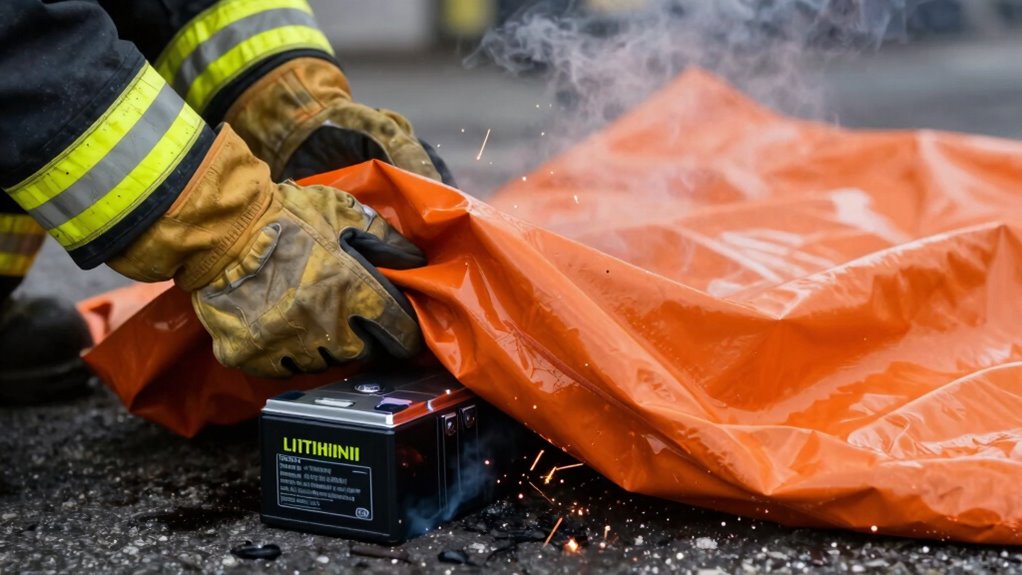

Fire blankets are a great first tool for small, contained battery fires, as they cut off oxygen and smother flames quickly. But they aren’t helpful for large, spreading fires or when batteries are damaged extensively. Never use water on lithium-ion battery fires, as it can cause dangerous reactions. Knowing when and how to use a fire blanket safely can make a big difference — explore further if you want to stay prepared.
Key Takeaways
- Fire blankets effectively smother small, contained battery fires by cutting off oxygen, preventing fire spread.
- They are unsuitable for large, spreading, or device-involved fires, where professional firefighting is necessary.
- Fire blankets do not address the root cause of battery fires and should complement proper storage and handling.
- Never use water on lithium-ion battery fires due to chemical reactions; fire blankets are a safer alternative for small fires.
- Proper training and accessible placement of fire blankets enhance safety but they are not a substitute for emergency services.
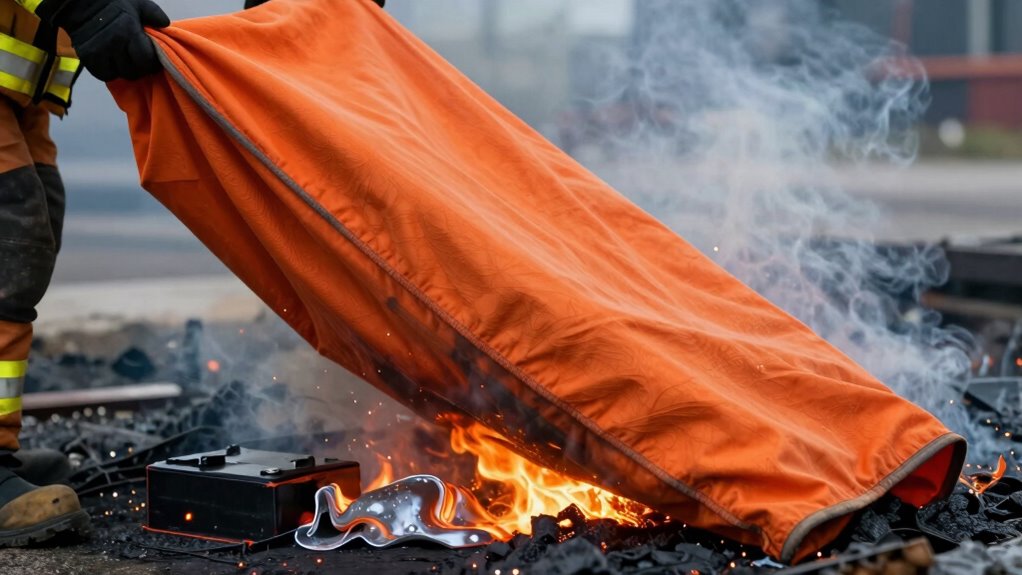
When a battery catches fire, quick action is essential to prevent damage and guarantee safety. In such moments, knowing how to effectively use a fire blanket can make all the difference. Fire blanket safety is important because it provides a simple, immediate way to smother a small battery fire before it spreads. Unlike water, which can worsen certain battery fires—especially lithium-ion ones—fire blankets are designed to cut off oxygen, effectively extinguishing the flames. However, it’s important to remember that fire blankets aren’t a catch-all solution. They’re most effective for small, contained fires, not large or spreading blazes.
Quickly smother small battery fires with a fire blanket to prevent spread and ensure safety.
Prevention is your best tool when dealing with batteries. Battery fire prevention starts with careful handling and storage. Keep batteries away from heat sources and always avoid puncturing or damaging them. Regularly inspect batteries for signs of swelling, corrosion, or damage, as these issues can increase fire risk. When it comes to fire blanket safety, ensure you know how to use one properly before an emergency occurs. Practice pulling the blanket from its container quickly, holding it firmly with both hands, and covering the fire completely to smother the flames. Remember, don’t try to move the burning battery, as this could cause the fire to intensify or spread. Understanding fire safety measures can also help you respond more effectively in emergencies.
In many cases, a fire blanket can be a lifesaver during battery fires, especially in confined spaces like garages or workshops. It’s an effective tool for battery fire prevention because it provides a fast, accessible way to respond. But, it’s not a substitute for professional firefighting equipment or emergency services. If a fire continues to grow or if it’s in a larger device, evacuate the area immediately and call emergency services. Never try to put out a lithium-ion battery fire with water; it can cause the fire to intensify or lead to dangerous chemical reactions.
While fire blankets are an essential part of safety gear, they’re just one piece of a thorough safety plan. Proper storage, handling, and regular maintenance of batteries are fundamental to prevent fires altogether. Always keep your fire blanket in a visible, accessible spot, and ensure everyone in your household or workspace knows how to use it. Remember, being prepared with the right safety tools and knowledge can help you act swiftly and confidently when every second counts.
Frequently Asked Questions
Can Fire Blankets Be Reused After a Battery Fire?
Yes, fire blankets can often be reused after a battery fire, but their reusability potential depends on how much they were exposed to the fire. If the blanket shows signs of damage or contamination, it’s best to dispose of it properly. Always check manufacturer guidelines for disposal considerations, because contaminated blankets may no longer provide effective fire suppression and could pose safety risks if reused.
How Do Fire Blankets Compare to Other Fire Suppression Methods?
Think of fire blankets like a trusty umbrella in a sudden downpour—they’re simple but effective. Compared to chemical suppression and automatic systems, fire blankets are best for small, contained battery fires. They smother flames quickly but don’t offer the same level of protection as chemical suppression or automatic systems for larger fires. For battery safety, use fire blankets as a first line, but rely on more advanced methods for bigger emergencies.
Are Fire Blankets Effective Against Lithium-Ion Battery Fires?
Fire blankets can be effective against lithium-ion battery fires if they’re designed for battery containment and fire resistance. They smother small fires by cutting off oxygen, preventing flames from spreading. However, for large or intense battery fires, fire blankets might not provide sufficient suppression. You should always evaluate the fire size and use additional methods like extinguishers suited for electrical fires to ensure safety.
What Maintenance Do Fire Blankets Require?
Maintenance matters for fire blankets to guarantee safety and effectiveness. You should perform regular maintenance checks to confirm the blanket’s integrity, looking for tears, damage, or wear. Follow storage guidelines by keeping it in a dry, accessible location, away from heat and chemicals. Periodically inspect the blanket’s covering and binding, replacing it if any damage is found. Proper maintenance guarantees your fire blanket remains a reliable resource when emergencies erupt.
How Should a Fire Blanket Be Stored for Quick Access?
You should store your fire blanket in a designated, easily accessible location, like near the exit or in a wall-mounted box. Make accessibility a priority, guaranteeing it’s quick to grab during emergencies. Keep it away from high-traffic areas to prevent accidental damage but visible enough so everyone knows where it is. Regularly check the storage container to ensure the blanket’s ready for immediate use when needed.
Conclusion
While fire blankets can be a quick way to smother small battery fires, they aren’t always the best solution. Some experts believe they work best on lithium-ion battery fires if used immediately, but may not be effective for larger or deeper fires. It’s a good idea to understand their limitations and have other fire safety tools on hand. Remember, knowing when to use a fire blanket could be the difference between containment and disaster.