If your battery takes longer to start, charges slowly, or drains quickly, it might need reconditioning. Watch for swelling, leaks, or corrosion around terminals, which signal internal damage. Excessive heat during use or charging also suggests deterioration. Even if performance drops suddenly, it’s a sign of declining health. Recognizing these signs early can save you money and extend your battery’s lifespan; keep going to learn how to spot more indicators.
Key Takeaways
- Device or vehicle takes longer to start and experiences faster battery drain.
- Difficulty charging fully or experiencing slow, irregular charging patterns.
- Battery becomes excessively warm or hot during use or charging.
- Visible damage such as swelling, leaks, or corrosion on the battery.
- Persistent performance issues despite minimal use or early signs of decline.

Have you noticed your battery isn’t holding a charge like it used to? If so, you’re probably experiencing some common warning signs that your battery might need reconditioning. One of the most obvious indicators is a decline in battery performance. You may find that your device or vehicle takes longer to start, or that it drains faster than it used to, even with minimal use. This gradual loss of efficiency suggests that the internal chemical processes aren’t functioning at their best anymore, leading to reduced power output. It’s not just a minor inconvenience; it’s a sign that your battery’s health is deteriorating, and reconditioning could help restore some of its former strength.
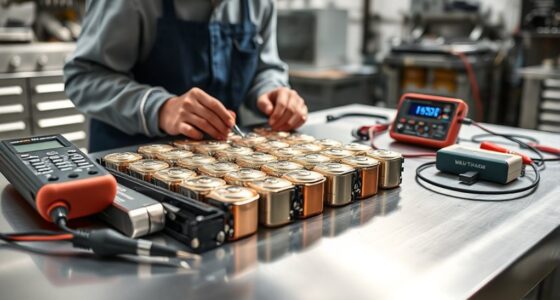
Noticing your battery drains faster or takes longer to start? These signs indicate it may need reconditioning to restore performance.
Charging issues are another key sign that your battery needs attention. If you notice that your device or vehicle struggles to charge fully, or if it charges very slowly, it’s a clear red flag. Sometimes, a battery might seem to charge normally at first but then quickly lose that charge shortly after. You might also see irregular charging patterns, like your device flickering on and off while plugged in or the charger’s indicator light behaving unpredictably. These issues typically point to sulfation or build-up inside the battery cells, which hampers the flow of electricity and prevents proper charging. Ignoring these problems can lead to complete failure, leaving you stranded or forcing you to replace the battery altogether.
Another sign to watch for is overheating during charging or use. If your battery becomes excessively warm or hot, it’s a sign that internal resistance has increased and the battery is struggling to function properly. Overheating can also damage other components, making reconditioning a wise step to prevent further issues. Additionally, if your battery exhibits swelling or leaks, you should treat it as urgent. These physical signs indicate severe internal damage, which might not be fixable by simple reconditioning but still serve as a warning that the battery’s lifespan is nearing its end.
Ultimately, paying attention to these signs can save you time and money. When you notice a decline in battery performance, persistent charging issues, or physical damage, consider reconditioning as a viable solution. Reconditioning can often extend the lifespan of your battery, improve its efficiency, and restore some of its original capacity. Recognizing these signs early helps you avoid unexpected failures and ensures your devices and vehicles operate smoothly. So, stay alert to how your battery performs, and don’t ignore the warning signs that indicate it might be time for maintenance or replacement.
Frequently Asked Questions
How Often Should I Recondition My Vehicle’s Battery?
You should recondition your vehicle’s battery every 3 to 5 years, depending on its Battery lifespan and usage. Regular reconditioning helps extend the battery’s efficiency and prevent early failure. Keep an eye on signs like slow engine start or reduced power, which indicate a need for reconditioning. Consistent reconditioning frequency guarantees your battery stays healthy, saving you money and avoiding unexpected breakdowns.
Can All Types of Batteries Be Reconditioned?
Coincidences often remind you that not all batteries are created equal. You find that some, based on their battery chemistry, can be reconditioned using specific methods, while others may be beyond repair. Lead-acid batteries, for example, respond well to reconditioning methods like desulfation, but lithium-ion batteries usually aren’t suitable for reconditioning. Always check the battery chemistry before attempting to recondition, ensuring you choose the right approach to extend its life.
Is Reconditioning Safe for Lithium-Ion Batteries?
Reconditioning lithium-ion batteries isn’t typically safe because of their specific battery chemistry. You should follow safety precautions, like wearing protective gear and working in a well-ventilated area, if you attempt it. Lithium-ion batteries are sensitive and can pose risks such as fire or chemical leaks if mishandled. It’s best to consult professionals or replace the battery rather than risking damage or injury through reconditioning.
What Are the Costs Involved in Battery Reconditioning?
The cost of battery reconditioning varies but is generally lower than replacing a new battery. You might spend between $50 and $150, depending on the battery type and tools needed. Compared to the cost of a new battery, reconditioning provides a cost comparison that extends your battery’s lifespan, saving you money long-term. Plus, reconditioning helps delay the expense of buying a new battery, making it a smart, budget-friendly choice.
How Long Does the Reconditioning Process Typically Take?
The reconditioning process usually takes between 1 to 3 hours, depending on your battery’s condition and the reconditioning methods used. During this time, you can expect your battery’s lifespan to improve considerably, extending its usability. If your battery shows minor issues, quicker reconditioning may suffice, but more damaged batteries might need additional steps. Overall, patience during the process helps guarantee the best results and longer-lasting battery performance.
Conclusion
If you notice your battery‘s performance declining, it’s a clear sign it needs reconditioning—like a car that’s lost its spark. Don’t ignore these signs, or you might find yourself stranded when you need your device most. Reconditioning can breathe new life into your battery, saving you money and hassle. Think of it as giving your battery a much-needed boost, just like a jumpstart for your device’s energy. Stay attentive, and your battery will thank you.