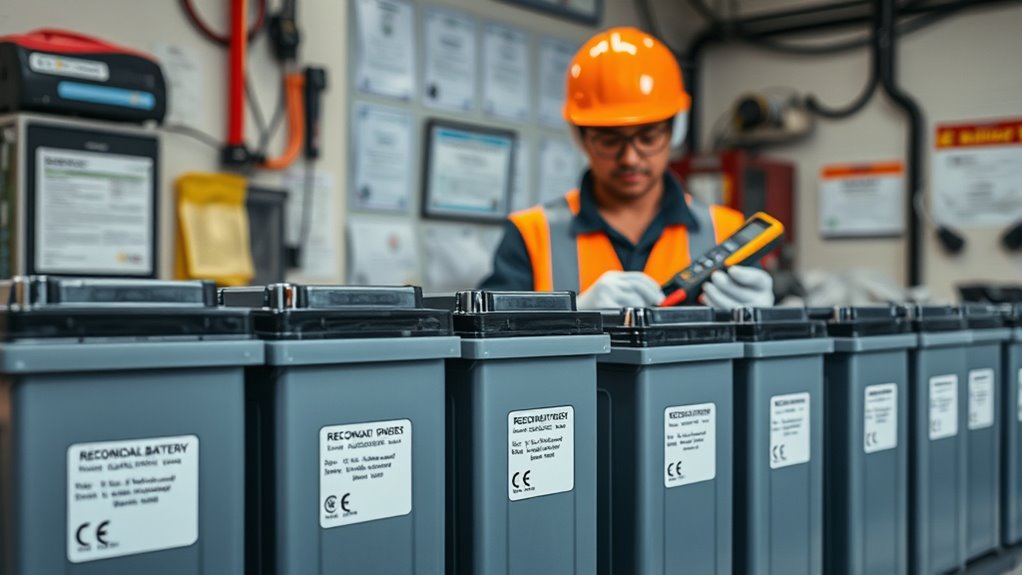

When selling reconditioned batteries, you must follow legal guidelines for labeling, disposal, and safety standards to avoid fines. Ensuring high quality through thorough testing and transparency builds customer trust and reduces returns. Always source batteries responsibly, emphasizing proper recycling practices to protect the environment. Clearly communicate warranty policies to differentiate your business. Staying compliant with regulations and maintaining strict quality standards are essential for sustainable growth—continuing your exploration will help you master these crucial considerations.
Key Takeaways
- Ensure compliance with local regulations on labeling, safety standards, and disposal requirements for reconditioned batteries.
- Conduct thorough quality testing to verify capacity, voltage, and overall performance before sale.
- Clearly communicate warranty policies, including coverage duration and conditions, to build customer trust.
- Source batteries responsibly from reputable suppliers or certified recycling programs to guarantee safety and legality.
- Maintain transparent documentation of battery reconditioning processes and test results to support legal and quality claims.
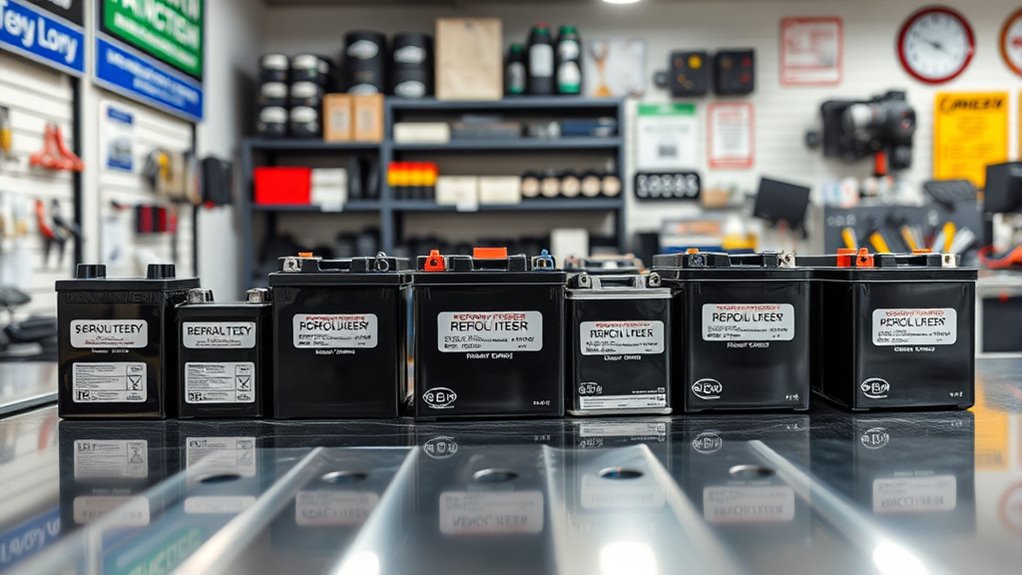
Selling reconditioned batteries can be a profitable venture if you understand the market and proper techniques. To succeed, you need to grasp the importance of battery recycling and the legal responsibilities involved in reconditioning batteries. Battery recycling isn’t just an environmentally friendly practice; it’s also a vital step in the reconditioning process. Recycling helps recover valuable materials, reduces waste, and guarantees that hazardous substances don’t pollute the environment. When you source batteries for reconditioning, make sure they come from reputable suppliers or recycling programs that comply with environmental regulations. Proper recycling practices also help you verify the battery’s history, which can be essential for evaluating its potential for reconditioning and resale.
Recycling batteries is essential for environmental safety and assessing reconditioning potential.
Equally important are warranty policies. Customers want assurance that the reconditioned batteries they purchase will perform reliably. Developing clear warranty policies not only protects your reputation but also establishes trust with your buyers. When you offer warranties, specify the duration, coverage terms, and what constitutes a valid claim. For example, you might guarantee that the battery will hold a certain charge for a specified period or offer a replacement if it fails within that time. These policies need to be transparent and consistent, so customers feel confident in their purchase. Offering warranties can also differentiate your business from competitors who might sell batteries without any guarantees. Keep in mind that warranty policies impact your operational costs, so factor that into your pricing and inventory management strategies.
Before selling reconditioned batteries, verify they meet quality standards. Conduct thorough testing to confirm capacity, voltage, and overall performance. If a battery doesn’t meet your criteria, don’t sell it—reliability is key to building a good reputation and avoiding costly returns and warranty claims. Be honest with your customers about the battery’s condition and any reconditioning work performed. Transparency can prevent disputes and foster customer loyalty.
In addition to quality, stay compliant with local laws and regulations regarding the sale of reconditioned batteries. Some regions have strict rules about labeling, disposal, and safety standards. Understanding these legal requirements helps you avoid fines and legal issues. Regularly updating your knowledge about battery recycling regulations and warranty policies ensures your business remains compliant and trustworthy. By focusing on environmentally responsible practices and clear customer policies, you position yourself for steady growth in the reconditioned battery market.
Frequently Asked Questions
Are There Specific Certifications Required for Reconditioned Batteries?
You should guarantee your reconditioned batteries meet specific certification standards for safety and quality assurance. While there aren’t universal certifications, obtaining industry-recognized labels like UL or CE can boost credibility and compliance. These certifications demonstrate your batteries meet rigorous safety and performance benchmarks, giving customers confidence. Always stay updated on regional regulations, as requirements may vary, and maintaining high certification standards helps you avoid legal issues and build trust in your products.
How Do Warranty Policies Affect Reconditioned Battery Sales?
You might think warranties are just a formality, but they actually play a vital role in reconditioned battery sales. Proper warranty enforcement guarantees consumer protection, building trust in your products. If you neglect clear warranty policies, you risk losing credibility—and customers. Offering transparent, enforceable warranties demonstrates your commitment to quality, helping you stand out in a competitive market. After all, a confident warranty speaks volumes about your product’s reliability.
Can Reconditioned Batteries Be Sold Internationally Legally?
Yes, you can sell reconditioned batteries internationally, but you need to follow international trade laws and shipping regulations. You must guarantee your batteries meet the destination country’s safety standards and import restrictions. Check specific regulations for hazardous materials, packaging, and documentation. Staying compliant helps prevent delays or legal issues during international shipping, so always research the regulations of each country you plan to export to before selling your reconditioned batteries abroad.
What Safety Regulations Must Be Followed During Reconditioning?
Imagine reconditioning batteries at home, but safety regulations require you to handle hazardous materials cautiously. You must wear protective gear, guarantee proper ventilation, and follow disposal guidelines for battery disposal. Handling hazardous materials responsibly prevents accidents and environmental harm. Always adhere to local regulations, keep documentation, and train staff on safety protocols. This ensures safe reconditioning practices while minimizing risks associated with hazardous materials.
How Do Consumer Rights Differ When Buying Reconditioned Versus New Batteries?
When buying reconditioned batteries, your rights differ mainly in warranty coverage and consumer protection. Reconditioned batteries often come with limited or no warranties, so you might have less recourse if they fail early. In contrast, new batteries usually include full warranties, offering better consumer protection. Always check warranty terms before purchasing, and be aware that laws may vary, affecting your rights and how you can seek remedies if issues arise.
Conclusion
By carefully steering legal requirements and prioritizing quality, you guarantee your reconditioned batteries meet high standards and foster trust. While the path may seem intricate, embracing transparency and diligence allows you to build a reputable business that customers value. Ultimately, your commitment to responsible practices not only enhances your reputation but also supports a sustainable approach to battery reuse. With thoughtful attention, you can turn challenges into opportunities for growth and excellence.