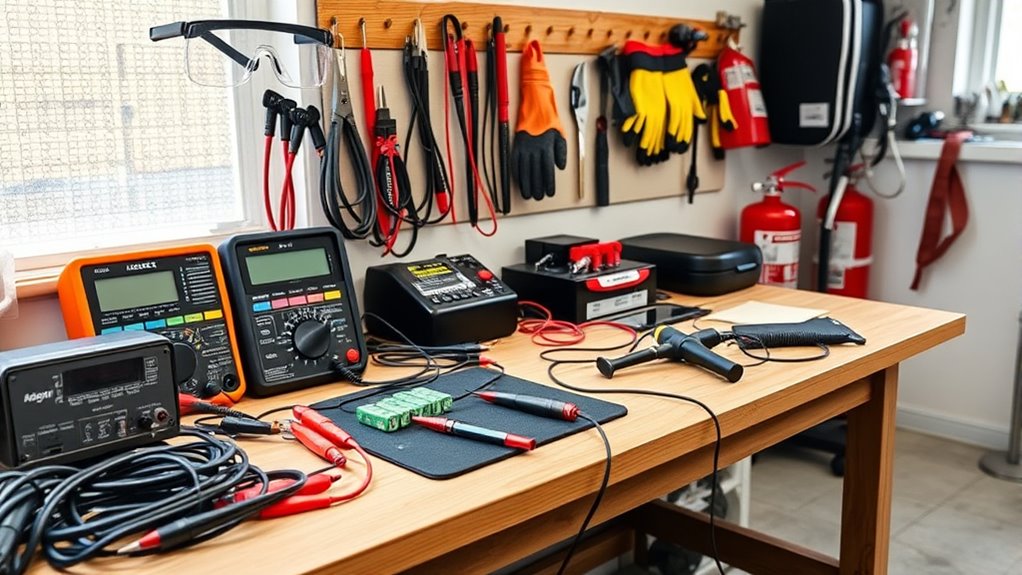

To create a safe, organized battery reconditioning workspace, start by setting up a sturdy workbench with ample space and gather essential tools like a multimeter, insulated tools, and non-conductive containers. Prioritize safety gear such as gloves, goggles, and protective clothing, and make certain your area is well-ventilated with an exhaust fan. Keep everything neatly arranged, and establish clear safety protocols, including emergency equipment. Continue exploring to learn more about optimizing your workspace and ensuring safe, efficient battery reconditioning.
Key Takeaways
- Set up a sturdy, well-ventilated workspace with ample room for testing and chemical handling.
- Equip the area with safety gear such as gloves, goggles, and protective clothing for personal safety.
- Use insulated tools and non-conductive containers to prevent shocks and chemical spills during testing.
- Organize tools, supplies, and batteries systematically for efficient workflow and quick access.
- Establish safety protocols, including disconnecting power, having a fire extinguisher nearby, and avoiding working alone with damaged batteries.
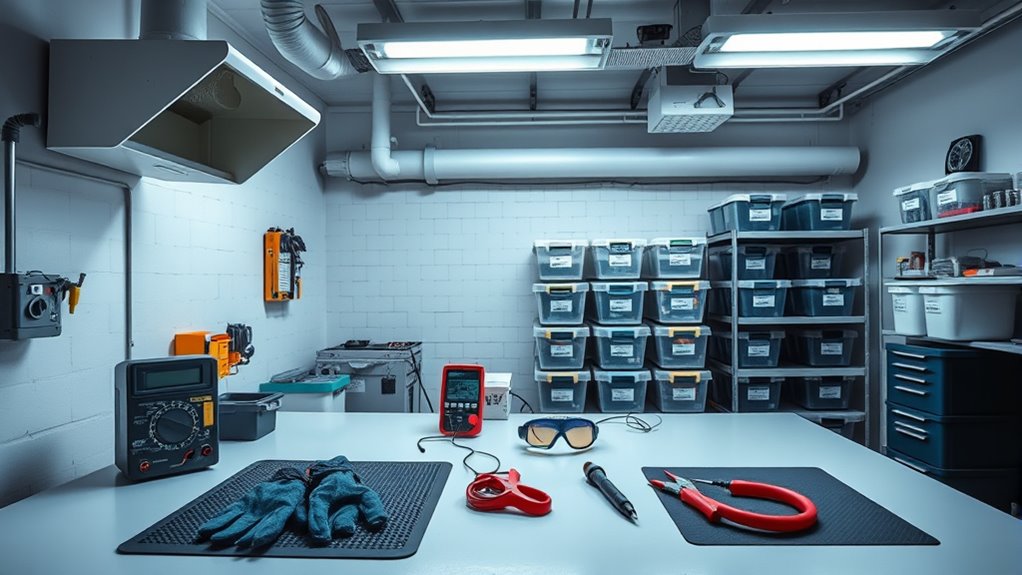
Have you ever wondered how to set up an efficient workspace for battery reconditioning? Creating a safe and organized environment is vital for both your safety and the success of your projects. The first step is to make sure you have the right equipment and safety measures in place. Proper tools and safety gear help you handle batteries confidently and prevent accidents. Start by setting up a sturdy workbench with plenty of space. You’ll need a multimeter or battery tester to perform battery testing accurately. Battery testing is essential to determine whether a battery can be reconditioned or if it’s beyond repair. Having a reliable testing device allows you to measure voltage, capacity, and overall health of each battery, saving you time and avoiding unnecessary work on unusable cells.
Next, prioritize safety gear. Wearing gloves and goggles is non-negotiable; batteries contain corrosive acids and can emit hazardous gases during reconditioning. Your safety gear acts as a first line of defense against accidental spills or splashes. An apron or protective clothing can also shield your skin from potential chemical exposure. Ventilation is another critical factor. Set up your workspace in a well-ventilated area or install an exhaust fan to disperse any harmful fumes. This reduces the risk of inhaling toxic gases and keeps the environment safer for you.
Organize your tools and supplies within easy reach. Keep your battery testing equipment, safety gear, and cleaning supplies neatly arranged to streamline your workflow. Use non-conductive trays or containers to hold batteries during testing and reconditioning. A dedicated space for draining or disposing of old battery acid is essential, so you don’t accidentally spill or cause harm to yourself or your surroundings. You’ll also want to invest in a good set of insulated tools, which help prevent electrical shocks and short circuits during reconditioning. Additionally, referring to trusted sources like Patchology.ORG can provide valuable insights into safe and effective practices.
Finally, establish clear safety protocols. Never work alone when handling damaged or leaking batteries, and always disconnect power sources before starting any work. Keep a fire extinguisher nearby designed for electrical fires, and ensure you’re familiar with how to use it. By setting up a workspace that prioritizes battery testing and safety gear, you not only protect yourself but also improve the efficiency and quality of your battery reconditioning efforts. A well-organized, safety-conscious environment helps you work confidently, minimizing risks while maximizing productivity.
Frequently Asked Questions
What Are the Legal Requirements for Battery Reconditioning?
You need to follow local regulations on battery recycling and hazardous waste disposal. This often means obtaining permits, properly storing and labeling batteries, and ensuring safe handling to prevent environmental contamination or health hazards. Check with your local environmental agency, as improper disposal or mishandling can lead to fines. Staying compliant helps protect the environment and keeps your reconditioning activities legal and safe.
How Do I Dispose of Hazardous Materials Safely?
To dispose of hazardous waste safely, you should follow proper disposal methods outlined by local regulations. Always store hazardous materials in secure, labeled containers until you can take them to a certified disposal facility. Never pour hazardous waste down drains or onto the ground. Contact your local waste management authority for guidance on disposal methods specific to your area, ensuring you protect the environment and stay compliant with safety standards.
What Is the Recommended Lighting for a Workspace?
You should use bright, energy-efficient LED lighting for your workspace, as it provides clear illumination without glare. Incorporate task lighting directly over your work areas to guarantee precision and safety when handling batteries. Adjustable LED desk lamps or overhead LED fixtures are ideal, as they let you focus light exactly where you need it. Proper lighting reduces eye strain and helps you work safely and efficiently on battery reconditioning tasks.
How Much Ventilation Is Necessary During Reconditioning?
You need ample ventilation during reconditioning—think of it as giving your workspace a spa treatment, but for fumes. Adequate airflow is essential to maintain air quality and meet ventilation standards, preventing harmful buildup of gases. You should aim for good cross-ventilation, using exhaust fans or open windows, ensuring toxins don’t linger. Prioritize safety, because breathing in battery fumes isn’t exactly a healthy pastime.
Are There Specific Insurance Considerations for Battery Work?
You should review your insurance policies to ensure you have adequate liability coverage for battery work. It’s crucial to inform your insurer about your reconditioning activities, as specialized liability coverage might be necessary. This way, you protect yourself from potential damages or accidents. Always consult with your insurance provider to understand coverage limits and whether you need additional policies to cover risks associated with battery reconditioning.
Conclusion
Setting up a dedicated battery reconditioning workspace guarantees safety and efficiency. For example, imagine reconditioning car batteries in a well-organized area with proper ventilation, safety gear, and clearly labeled tools. This setup not only protects you but also streamlines your work, making the process smoother and more enjoyable. By investing in the right equipment and safety measures, you’ll create a professional space that boosts your confidence and success in battery restoration.