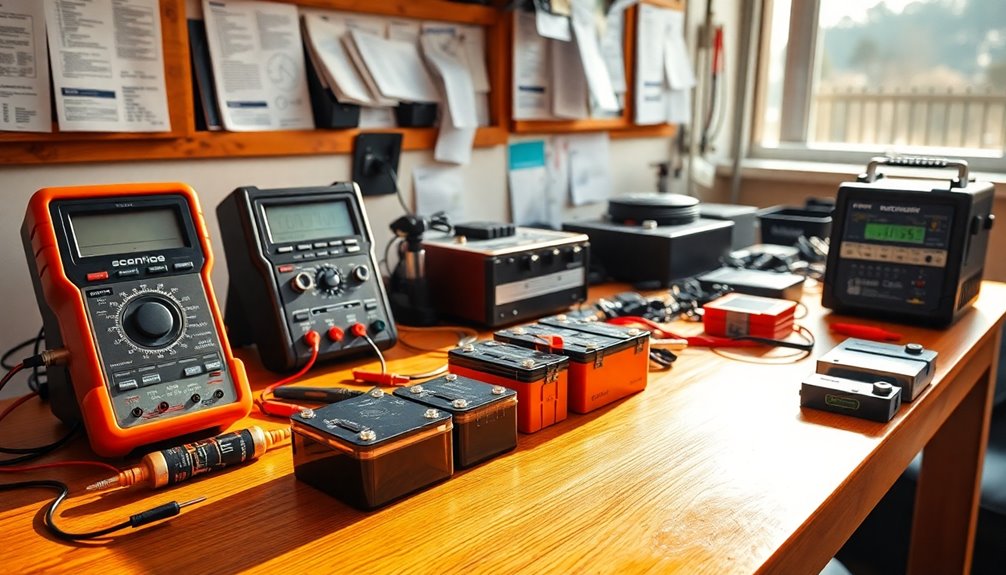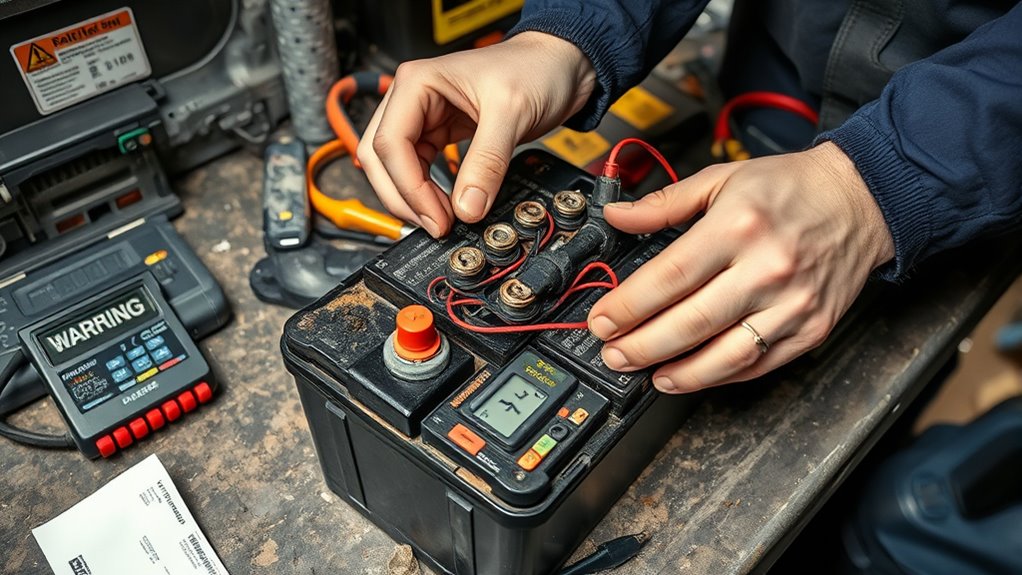

To avoid common mistakes during battery reconditioning, always monitor your electrolyte levels carefully and use distilled water only when necessary. Never use metal tools or makeshift implements that could damage internal parts or cause leaks. Handle electrolytes with proper safety gear and in well-ventilated areas to prevent accidents. Following manufacturer guidelines and using non-metallic tools helps keep you safe and your battery in good shape. Continue on to learn more tips for a successful reconditioning process.
Key Takeaways
- Regularly check and maintain correct electrolyte levels to prevent damage and leaks.
- Use insulated, non-metallic tools and avoid metallic objects during maintenance.
- Handle electrolyte carefully with proper safety gear to prevent spills and skin or eye contact.
- Follow manufacturer guidelines and safety procedures for electrolyte addition and battery reconditioning.
- Work in well-ventilated areas to minimize exposure to harmful fumes and ensure safety.
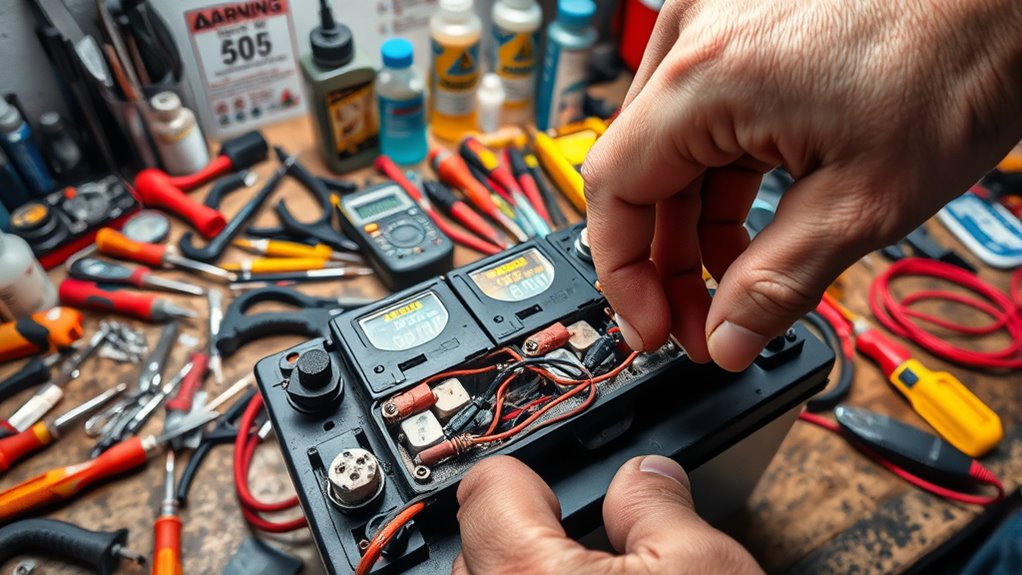
Reconditioning batteries can be a cost-effective way to extend their lifespan, but it’s easy to make mistakes that can damage the battery or even pose safety risks. One common error is neglecting the correct electrolyte levels. If you don’t check or maintain proper electrolyte levels, you risk damaging the battery’s internal plates or causing it to malfunction. Too little electrolyte can lead to dry plates, reducing the battery’s capacity, while too much can cause overflow or leakage, which may damage other components or pose safety hazards. Always measure electrolyte levels carefully and top up with the recommended distilled water only when necessary. Avoid guessing or overfilling, as improper electrolyte management can severely impact the battery’s performance and safety.
Another mistake people often make during reconditioning is using improper tools. Using the wrong equipment can damage the battery or lead to dangerous situations. For example, using metallic tools like screwdrivers or pliers to open sealed batteries can cause short circuits or sparks. Instead, opt for insulated tools designed specifically for battery work. When handling electrolyte or internal components, use non-conductive gloves and appropriate safety gear. Improper tools can also lead to physical damage, such as puncturing the casing or damaging internal plates, which diminishes the battery’s ability to hold a charge or makes it unsafe to use. Always follow manufacturer guidelines and use dedicated, non-metallic tools to prevent accidents and preserve the battery’s integrity.
Furthermore, handling electrolyte improperly with the wrong tools can lead to spills or splashes, which are hazardous. For example, using a regular spoon or makeshift tools to add electrolyte might cause spills or accidental contact with skin and eyes. These chemicals are corrosive and require careful handling. Use proper funnels, pipettes, or syringes designed for battery maintenance to add or remove electrolyte safely. Also, ensure you work in a well-ventilated area and wear eye protection to prevent injury from splashes or fumes. Cutting corners with inadequate tools or incorrect electrolyte management doesn’t just compromise the reconditioning process—it can create safety issues that may have serious consequences. Being aware of proper headphone connections and safety procedures can help prevent accidents during battery maintenance.
Frequently Asked Questions
Can Improper Tools Damage My Battery During Reconditioning?
Yes, improper tools can damage your battery during reconditioning. Using incompatible tools may cause physical harm, affecting battery safety and performance. Always make certain your tools match the battery type and size, avoiding metal or conductive materials that could short-circuit or harm the cells. Proper, compatible tools help maintain battery integrity and safety, ensuring a successful reconditioning process without risking damage or safety hazards.
Is There a Risk of Fire or Explosion When Reconditioning Batteries?
Reconditioning batteries is like walking a tightrope—there’s a real fire hazard and explosion risk if you’re not careful. You could unintentionally ignite flammable gases or cause a dangerous spark, leading to a fire or explosion. Always work in a well-ventilated area, wear protective gear, and follow safety guidelines diligently. Staying cautious keeps you from becoming a casualty of these hidden hazards.
How Long Does the Reconditioning Process Typically Take?
The reconditioning process typically takes anywhere from a few hours to a couple of days, depending on your battery’s condition and capacity. You’ll want to monitor the reconditioning timeline closely, as overdoing it can damage the battery. Usually, you’ll see improvements in battery capacity within this period. Patience is key to ensuring a successful reconditioning, so don’t rush through the process.
Are Certain Battery Brands More Prone to Reconditioning Errors?
Certain battery brands are more prone to reconditioning errors because of their reputation and manufacturing quality. You might find that lower-quality or lesser-known brands often have inconsistent manufacturing standards, making reconditioning more challenging. High-reputation brands with better manufacturing quality generally have more durable and reliable batteries, reducing errors during reconditioning. Always research the brand’s reputation before attempting to recondition, and follow proper procedures for different battery types to avoid mistakes.
What Safety Gear Should I Wear During the Process?
While sparks fly and batteries hiss, you should always wear protective clothing and eye protection. These safety gears shield you from harmful acid splashes and dangerous sparks, turning a risky task into a controlled process. Don’t underestimate the power of proper safety measures; they keep you safe while you revive batteries. Remember, safety isn’t optional—it’s your first line of defense against potential accidents and injuries.
Conclusion
Avoiding these common mistakes is your key to successful battery reconditioning. Like a seasoned sailor steering clear of hidden reefs, stay vigilant and informed. With patience and care, you’ll revive batteries that once seemed lost, turning setbacks into comebacks. Remember, each step you take builds confidence, guiding you safely through the storm. Keep these tips in mind, and you’ll navigate the reconditioning journey with skill, transforming challenges into opportunities just as dawn follows night.