
When reconditioning nickel‑cadmium batteries, you need to pay attention to their unique chemistry and avoid over-discharging or excessive heat. Fully cycling the battery helps reduce memory effect and restore capacity, but make sure to monitor charging carefully with proper chargers. Safety is key—watch for swelling or odors—and follow voltage guidelines strictly. If you keep these special considerations in mind, you’ll improve battery life while avoiding damage, just as you’ll discover with some careful steps.
Key Takeaways
- Fully cycle Ni-Cd batteries to reverse memory effect and restore capacity.
- Use controlled, slow charging with timers to prevent overheating and damage.
- Monitor for signs of damage, such as swelling or odors, during reconditioning.
- Avoid over-discharging to protect internal cells and ensure safe reconditioning.
- Follow manufacturer voltage and current guidelines for safe and effective reconditioning.

Reconditioning nickel-cadmium (Ni-Cd) batteries can extend their lifespan and improve performance, saving you money and reducing waste. When working with Ni-Cd batteries, understanding their unique battery chemistry is essential. Ni-Cd batteries operate through a chemical reaction between nickel oxide hydroxide and cadmium, which produces electrical energy. Unlike other battery types, they are prone to a phenomenon called “memory effect,” where partial discharges cause the battery to hold less charge over time. Proper reconditioning involves addressing this issue by thoroughly cycling the battery and discharging it completely before recharging. Recognizing these chemistry nuances helps you avoid damaging the cells during reconditioning.
Reconditioning Ni-Cd batteries extends lifespan by addressing memory effect through complete cycling and proper discharging techniques.
Charging techniques are pivotal in maintaining Ni-Cd batteries’ health. Unlike lithium-ion batteries, Ni-Cd cells require specific charging practices to prevent overcharging and damage. You should use a charger with a proper timer or automatic cut-off to prevent continuous charging once the battery reaches full capacity. A slow, controlled charge—often called trickle charging—is preferable because it minimizes heat buildup and reduces stress on the cells. During the reconditioning process, it’s also useful to perform full charge and discharge cycles periodically, which helps break down the memory effect and restore capacity. Avoid rapid charging unless your charger explicitly supports it for Ni-Cd batteries, as quick charging can generate excessive heat and accelerate deterioration.
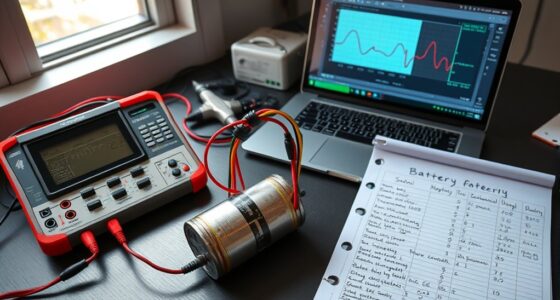
Another critical aspect of reconditioning involves monitoring the temperature and voltage during charging. Excess heat indicates overcharging or internal resistance issues, which can permanently damage the battery. Be attentive to any swelling or unusual odors, and if you notice these signs, stop reconditioning immediately. Proper technique involves not only using the right charger but also ensuring that you don’t over-discharge the battery, as deep discharges can harm the internal structure. Using a multimeter to check voltage levels before and after charging cycles provides insight into the battery’s condition and helps you determine if it’s recovering well.
Additionally, understanding the impact of contrast ratio on image quality is important because it directly affects the perceived depth and richness of the displayed images. Finally, always follow manufacturer recommendations for charging voltage and current. This guidance guarantees that you respect the battery’s limits and avoid shortcuts that could lead to safety hazards or reduced capacity. Reconditioning Ni-Cd batteries demands patience and attention to detail, but when done correctly, it greatly extends your batteries’ usability. By understanding their unique chemistry and applying proper charging techniques, you can bring old batteries back to life and get the most out of your investment, all while contributing to a more sustainable approach to battery management.
Frequently Asked Questions
How Long Does Reconditioning Typically Extend a Nicd Battery’s Lifespan?
Reconditioning a NiCd battery can typically extend its lifespan by several months to a few years, depending on the battery chemistry and how effectively you apply reconditioning techniques. By regularly cycling and balancing the cells, you help prevent memory effects and capacity loss. Keep in mind that proper maintenance and careful reconditioning techniques are essential for maximizing the battery’s longevity. With consistent effort, you can substantially improve your NiCd battery’s performance over time.
Are There Safety Risks Involved in the Reconditioning Process?
Think of reconditioning as walking a tightrope—you must stay alert to avoid pitfalls. Yes, there are safety risks, including battery leakage and chemical hazards. You could accidentally expose yourself to toxic substances or cause a short circuit if you’re careless. Always wear protective gear, work in a well-ventilated area, and handle batteries with caution. Staying vigilant helps you navigate the process safely and prevent potential harm.
Can Reconditioning Restore 100% of Original Battery Capacity?
Reconditioning can often restore most of the original capacity of a nickel‑cadmium battery, but it rarely brings it back to 100%. Your success depends on proper charging techniques and understanding the battery chemistry. Over time, memory effect and capacity loss limit full restoration. By carefully applying correct charging methods, you can improve performance, but don’t expect it to match a brand-new battery’s capacity entirely.
What Are the Signs Indicating a Nicd Battery Needs Reconditioning?
You notice your NICD battery struggles to hold a charge, and suddenly, voltage irregularities appear, hinting at deeper issues. Signs it needs reconditioning include decreased capacity, sluggish performance, and frequent recharging. Watch for battery sulfation, which causes loss of efficiency, and irregular voltage output. If these symptoms emerge, it’s time to recondition your battery, restoring performance before irreversible damage occurs, and prolonging its lifespan effectively.
Is Reconditioning Cost-Effective Compared to Replacing Batteries?
Reconditioning nickel‑cadmium batteries is often more cost-effective than replacing them, especially when you do a thorough cost analysis considering labor, materials, and potential longevity. Plus, reconditioning reduces environmental impact by extending battery life and minimizing waste. You save money and help the environment, making it a smart choice. However, weigh the reconditioning costs against replacement expenses for your specific batteries to make the best decision.
Conclusion
Reconditioning nickel-cadmium batteries is like giving them a second wind, restoring their energy and extending their life. With careful attention and proper techniques, you can revive these batteries and keep your devices running smoothly. Think of it as breathing new life into an old friend, proving that with patience and effort, even worn-out batteries can find renewed purpose. Embrace the process, and you’ll turn what once seemed dead into a powerful comeback story.