
Reconditioned batteries usually last from several months to a few years, but their lifespan depends on factors like their initial condition, proper maintenance, and the quality of the reconditioning process. If you handle them carefully and follow recommended care routines, you can extend their useful life. Keep in mind that chemical degradation can gradually reduce performance over time. To discover tips on maximizing their longevity and getting the most from your batteries, keep exploring further.
Key Takeaways
- Reconditioned batteries typically last from several months up to a few years with proper maintenance.
- The lifespan depends on initial battery condition, reconditioning quality, and ongoing care practices.
- Chemical degradation over time gradually reduces the capacity and cycle life of reconditioned batteries.
- Proper maintenance, like regular checks and avoiding deep discharges, can extend their usable life.
- Using certified reconditioning providers that adhere to recycling standards ensures safety and optimal longevity.
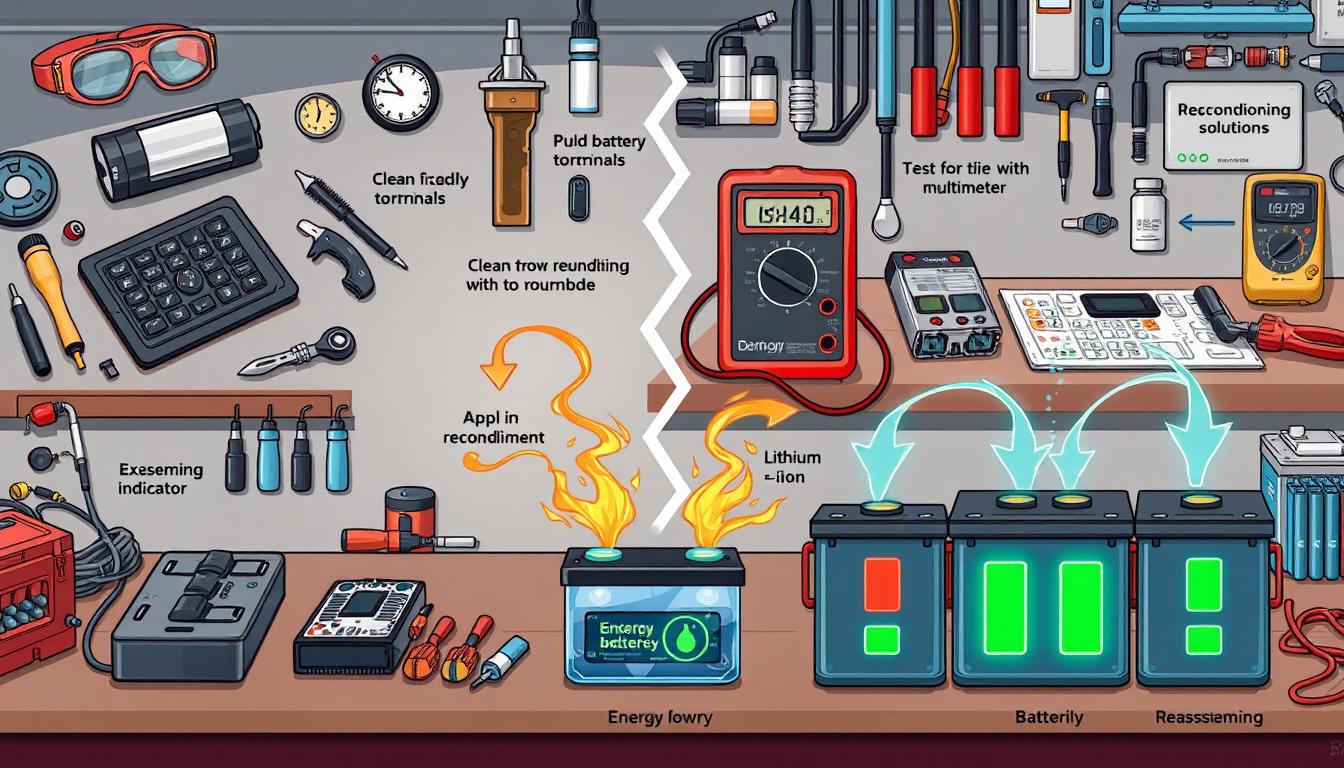
Understanding how long a reconditioned battery lasts is essential if you’re considering giving your old battery a new lease on life. When you opt for reconditioning, you’re essentially restoring a used battery to a functional state, but its lifespan after reconditioning depends on several factors. Proper battery maintenance plays a significant role in prolonging its usability. Regularly checking for signs of deterioration, avoiding deep discharges, and keeping terminals clean can help maintain its capacity and prevent premature failure. When you take good care of your reconditioned battery, you maximize its potential to serve you longer, making the investment worth it.
It’s also imperative to understand the recycling standards involved in the reconditioning process. Reconditioning isn’t just about fixing a battery; it’s about doing so responsibly and sustainably. Reputable services adhere to strict recycling standards to ensure that hazardous materials are handled correctly and that the environment isn’t harmed. When you choose a certified reconditioning provider, you’re supporting environmentally friendly practices that reduce waste and promote recycling. This commitment to recycling standards not only safeguards the planet but also ensures the quality and safety of the reconditioned batteries you use.
The lifespan of a reconditioned battery can vary widely, typically ranging from several months to a few years. Factors influencing this include the battery’s original condition, the quality of the reconditioning process, and how well you maintain it afterward. High-quality reconditioning procedures can restore a battery’s capacity to near-new levels, but over time, chemical degradation will still occur. That’s why ongoing battery maintenance is fundamental. Keep an eye on performance metrics and be attentive to any signs of reduced efficiency, such as slower charging or decreased power output. Addressing these issues early can extend the overall lifespan of your reconditioned battery. Additionally, understanding the state of the battery’s chemistry can help you predict its longevity and performance.
In addition, it’s important to understand that reconditioned batteries may not perform exactly like new ones. They might have slightly reduced capacity or shorter cycle life, but with proper care, they can still provide reliable service for a significant period. When you follow recommended maintenance routines and choose reconditioned batteries from providers who meet recycling standards, you’re making a responsible, eco-friendly choice. While reconditioned batteries won’t last forever, understanding the factors that influence their longevity helps you get the most out of them, saving money and reducing waste in the process.
Frequently Asked Questions
Do Reconditioned Batteries Have Warranty Coverage?
Yes, reconditioned batteries often come with a battery warranty, but coverage policy varies by seller. You should check the warranty details before purchasing, as some providers offer limited coverage for a specific period, protecting you against early failures. Always read the fine print to understand what’s covered and for how long, ensuring you know your rights if the reconditioned battery doesn’t perform as expected.
Can Reconditioned Batteries Be Used in All Devices?
Using a reconditioned battery is like fitting a puzzle piece—you need to check battery compatibility first. Not all reconditioned batteries suit every device because of varying power requirements. Always verify if the battery matches your device’s specifications to guarantee proper function and safety. If compatibility is confirmed, you can confidently use a reconditioned battery, but neglecting this step could lead to poor performance or damage.
What Factors Influence the Lifespan of a Reconditioned Battery?
Your reconditioned battery’s lifespan depends on several factors. Battery capacity plays a key role; higher capacity typically lasts longer. Usage patterns matter too—frequent, heavy use accelerates wear, while gentle use extends life. Proper maintenance, avoiding extreme temperatures, and recharging correctly also help. By managing these factors, you can maximize your reconditioned battery’s performance and longevity, getting the most out of your investment over time.
Are Reconditioned Batteries Safe to Use Long-Term?
Think of reconditioned batteries as seasoned sailors, tested by time but still steering new waters. When they meet modern safety standards and incorporate advanced battery technology, they’re generally safe for long-term use. However, like sailors with weathered ships, they require regular checks to ensure reliability. As long as you follow safety guidelines and choose reputable reconditioning services, you can trust your reconditioned battery to serve you well over time.
How Often Should I Recondition My Battery to Extend Its Life?
You should recondition your battery every 6 to 12 months to maintain ideal performance. Regular battery maintenance through reconditioning helps prevent capacity loss and extends its lifespan. Keep an eye on your battery’s performance—if you notice it’s not holding a charge well, it’s time for reconditioning. Consistent reconditioning frequency ensures your battery remains reliable, saving you money and reducing waste over time.
Conclusion
In conclusion, reconditioned batteries can last quite a while if properly maintained, often matching the lifespan of new ones. While some believe reconditioning extends battery life indefinitely, research shows there’s a natural limit due to wear and chemical degradation. So, while reconditioning does boost longevity, expect a finite lifespan. Treat your reconditioned batteries with care, and you’ll enjoy reliable performance for years—proving that with proper upkeep, they truly can be a cost-effective alternative.