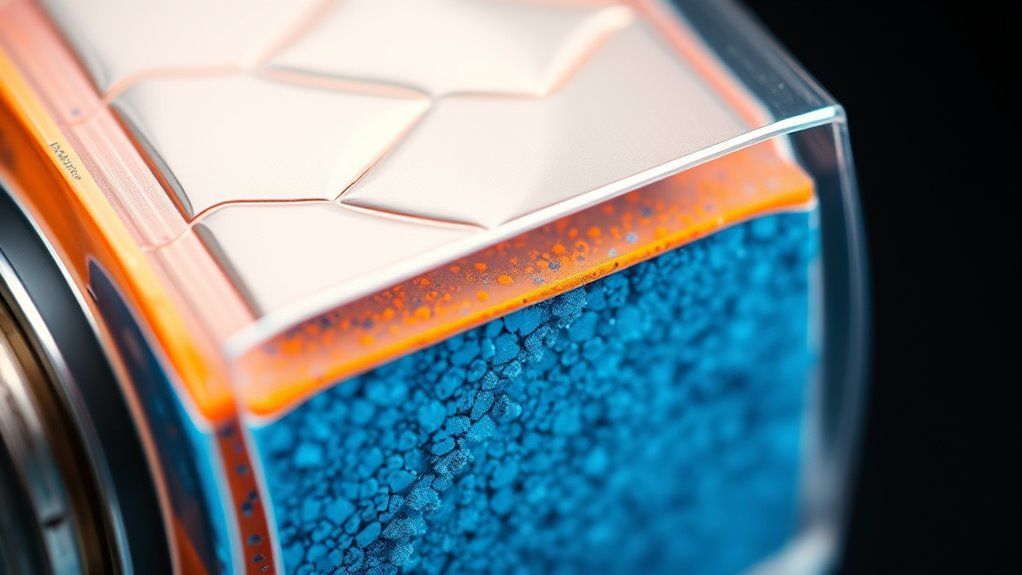

Batteries work by converting chemical energy into electrical energy through electrochemical reactions involving electrons and ions. When you turn on a device, the battery’s anode releases electrons and ions, which flow through the external circuit to the cathode. This flow powers your device. Inside, ions and electrons keep reacting to maintain power during use, and this process can be reversed when you recharge. If you’re curious about what happens inside, keep going to explore more.
Key Takeaways
- Batteries convert chemical energy into electrical energy through electrochemical reactions between electrodes and electrolyte.
- During use, lithium ions move from the anode to the cathode, while electrons flow through an external circuit to power devices.
- The flow of electrons and ions creates an electric current, providing power until the chemical reactants are depleted.
- Recharging reverses the chemical reactions, restoring the original materials and allowing repeated use.
- Battery lifespan depends on material quality, reaction efficiency, and degradation over time affecting capacity and performance.

Have you ever wondered what happens inside a battery when it powers your device? At its core, a battery relies on electrochemical reactions that occur between its various components. When you turn on your phone or laptop, chemical energy stored inside the battery transforms into electrical energy, thanks to these reactions. Inside, you’ll find several key battery components, including an anode, cathode, electrolyte, and separators. Each plays a crucial role in the flow of electricity.
The process begins at the anode, which is typically made of a material like graphite. When the battery is in use, lithium ions, or other charge carriers depending on the battery type, are released from the anode. These ions travel through the electrolyte—a conductive liquid or gel that allows ions to move between the electrodes. Meanwhile, electrons are pushed through an external circuit, creating an electric current that powers your device. This movement of electrons from the anode to the cathode is fundamental to how batteries supply power.
On the other side, the cathode, often made of materials like lithium cobalt oxide or manganese dioxide, receives the ions arriving through the electrolyte. When the ions reach the cathode, they combine with electrons arriving from the external circuit, completing the electrochemical reaction. This process releases energy, which your device converts into usable electrical power. As the battery discharges, these reactions continually occur, maintaining a steady flow of energy.
When you recharge the battery, an external power source reverses the electrochemical reactions. The ions are driven back to the anode, restoring the original chemical states of the battery components. This reversible nature of electrochemical reactions allows batteries to be used repeatedly. The separator, a porous material between the anode and cathode, prevents direct contact between these components, avoiding short circuits while still permitting ion flow.
Understanding electrochemical reactions and the role of battery components helps explain why batteries have limited lifespans. Over time, the materials degrade or become less efficient at facilitating these reactions, reducing battery capacity. The choice of electrode materials and electrolyte composition significantly impacts the battery’s overall performance and longevity.
In essence, the magic behind how batteries work lies in these continuous electrochemical reactions. They convert chemical energy into electrical energy through precise interactions between electrodes, electrolytes, and other components. Next time you use your device, you’ll know that a tiny, complex dance of particles inside the battery is powering your digital world.
Frequently Asked Questions
Can Batteries Be Recycled Safely?
Yes, batteries can be recycled safely if you follow proper procedures. You should participate in battery recycling programs and avoid throwing batteries in regular trash to guarantee safe disposal. Recycling helps recover valuable materials and prevents harmful chemicals from damaging the environment. Always handle batteries carefully, keep them out of reach of children, and take them to authorized collection centers to promote safe disposal and reduce environmental impact.
How Do Temperature Changes Affect Battery Performance?
Temperature changes profoundly impact your battery’s performance due to its temperature sensitivity. When it gets too hot, thermal expansion can cause internal damage, reducing capacity and lifespan. Conversely, cold temperatures slow down chemical reactions, leading to decreased efficiency and shorter runtimes. To keep your battery functioning well, avoid exposing it to extreme temperatures and store it in a cool, dry place. Proper care ensures longer-lasting, reliable performance.
What Causes Batteries to Degrade Over Time?
You cause batteries to degrade over time through chemical degradation, which happens as the internal chemicals break down or become less effective. This process reduces your battery’s capacity and shortens its lifespan. Repeated charge and discharge cycles, high temperatures, and age accelerate this deterioration. Eventually, your battery can’t hold a full charge, meaning you’ll need to replace it sooner than expected, especially if you don’t take care of it properly.
Are There Eco-Friendly Alternatives to Traditional Batteries?
Sure, eco-friendly batteries are here, and they’re saving the planet one biodegradable option at a time! You can opt for batteries made from eco-friendly materials like plant-based components or recycled metals. These biodegradable options break down naturally, reducing waste and pollution. So, next time you need power, choose green alternatives—you’ll get your device juiced and feel smug about helping Mother Earth. It’s a win-win, or so they say!
How Do Lithium-Ion Batteries Differ From Other Types?
Lithium-ion batteries differ from other types mainly in their battery chemistry, which allows for higher energy density. This means you get more power in a smaller, lighter package, making them ideal for smartphones and electric vehicles. They also recharge faster and last longer. Unlike lead-acid or nickel-based batteries, lithium-ion cells maintain their capacity over many cycles, offering a more efficient and eco-friendly energy storage solution.
Conclusion
As you grasp the chemistry inside a battery, imagine tiny sparks dancing between metal plates, fueling your devices like a silent, invisible river flowing beneath the surface. Every time you switch on your phone or laptop, you’re tapping into this intricate dance of atoms and electrons, powering your world. Remember, beneath the sleek exterior lies a complex world of reactions—fascinating chemistry happening just out of sight, keeping your life moving smoothly.