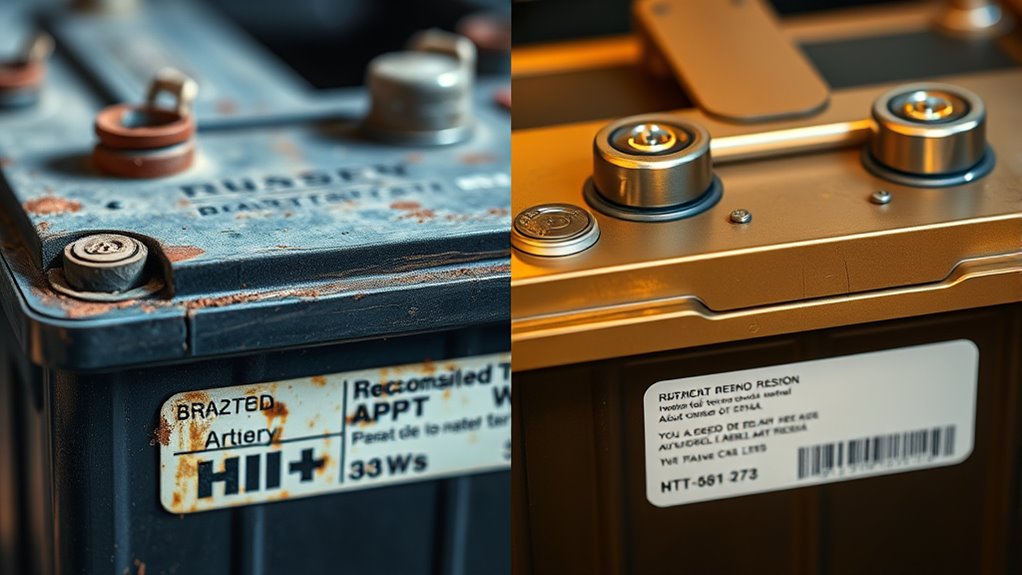

Battery conditioning and reconditioning serve different purposes. Conditioning helps you maintain your battery’s health by applying controlled charging cycles, preventing unnecessary wear. Reconditioning, on the other hand, aims to restore a severely degraded battery’s capacity through more complex procedures like deep cycling or cell balancing. While conditioning keeps your battery performing well over time, reconditioning offers a temporary fix for issues caused by damage or aging. To fully understand which method suits your needs, keep exploring the details.
Key Takeaways
- Conditioning optimizes battery performance through controlled charging cycles, while reconditioning restores capacity by repairing internal damage.
- Conditioning prevents capacity loss and prolongs battery life; reconditioning addresses significant deterioration or damage.
- Conditioning maintains existing battery health; reconditioning involves complex repairs like cell balancing or component replacement.
- Proper conditioning avoids overcharging to prevent wear; reconditioning can temporarily restore capacity but may need repetition.
- Both methods extend battery lifespan and efficiency when applied correctly, with conditioning focusing on prevention and reconditioning on repair.
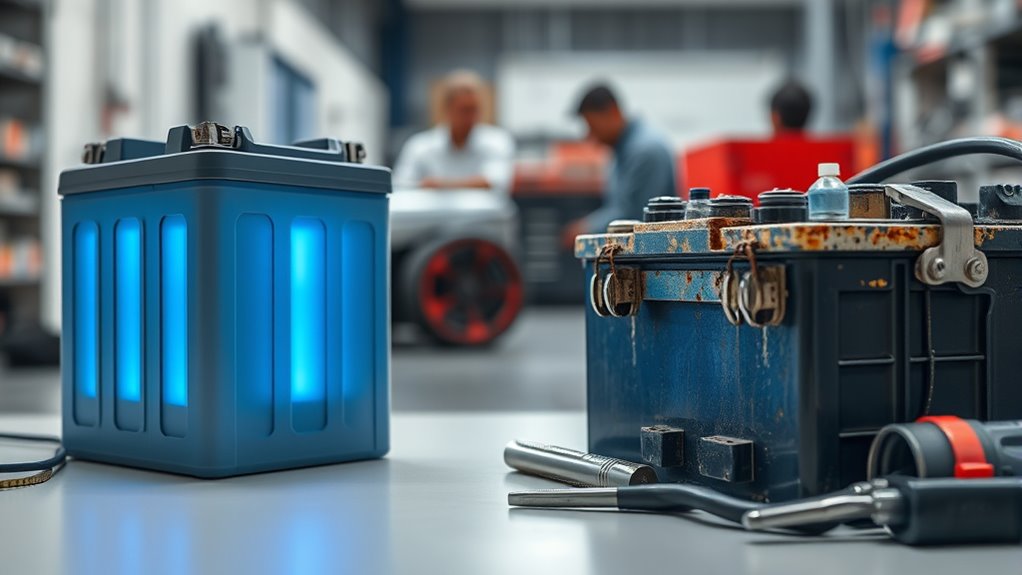
When it comes to extending your battery’s lifespan, understanding the difference between conditioning and reconditioning is essential. Both processes aim to improve your battery’s performance, but they approach this goal differently. Conditioning generally involves optimizing how you charge your battery to prevent premature wear and tear, which can considerably impact its overall lifespan. Reconditioning, on the other hand, is a more involved process that seeks to restore a battery that has already deteriorated beyond simple maintenance. Knowing which method to use and when can save you money and prolong your device’s usability.
Proper charging methods are critical for maintaining battery health and maximizing its lifespan. When conditioning, you focus on how you charge your battery—using controlled charging cycles, avoiding overcharging, and sometimes employing specific charging patterns recommended by the manufacturer. For example, avoiding charging to 100% all the time or letting the battery discharge completely can help reduce stress on the cells. These practices keep the battery working efficiently over time, preventing capacity loss caused by improper charging habits. Conditioning doesn’t fix a battery that’s already damaged but helps keep it healthy longer. Additionally, understanding the role of battery technology can help you make more informed decisions about charging practices.
Proper charging practices extend battery life and prevent damage.
Reconditioning, however, involves more technical steps. It is used when a battery’s capacity has dropped considerably, and regular charging no longer restores performance. This process may include deep cycling, balancing cells, or even replacing internal components. Reconditioning attempts to reverse the damage that has already occurred, such as sulfation in lead-acid batteries or memory effect in Ni-Cd batteries. While it can restore a decent portion of the original capacity, it’s not always a permanent fix. Reconditioning can extend a battery’s life temporarily but may need to be repeated if the battery continues to degrade.
Understanding the differences between conditioning and reconditioning helps you decide the best approach for your situation. If your battery still holds a reasonable charge but needs better management, focusing on proper charging methods in conditioning can help prevent further decline. If the battery performance has drastically deteriorated, reconditioning might be necessary to bring it back to working condition. Both methods, when applied correctly, can contribute to a longer battery lifespan, saving you money and reducing waste.
Frequently Asked Questions
Can Battery Reconditioning Damage the Battery?
Reconditioning, if done improperly, can damage your battery and reduce its lifespan. Using incorrect reconditioning techniques may cause overheating, leaks, or internal damage. To avoid this, you should follow proper methods and guidelines carefully. When done correctly, reconditioning can extend your battery’s life without harm. Always verify you’re using safe and proven techniques, and consider professional help if you’re unsure, to protect your battery’s health.
Is Reconditioning Suitable for All Battery Types?
Picture your batteries as delicate ecosystems, each with its own unique chemistry. Reconditioning techniques can breathe new life into many types, but not all. Lithium-ion, lead-acid, and NiMH batteries respond well, while some, like lithium-polymer, might not benefit or could be damaged. Always consider the specific battery chemistry before attempting reconditioning, ensuring you use the right techniques to avoid harm and extend your battery’s life.
How Long Does Battery Conditioning Typically Take?
Battery conditioning usually takes a few hours, depending on the battery’s type and current state. You’ll typically follow process steps like slow charging, discharging, and then recharging to restore performance. During this process, monitor the charging duration carefully to avoid overcharging. The entire conditioning cycle can range from 2 to 8 hours, with some advanced methods requiring more time for thorough restoration.
Are There Any Safety Risks Involved?
Think of battery work as sailing through rough waters—you need to follow safety protocols to avoid hazards. While there are some risks like electrical shock or chemical exposure, hazard prevention measures greatly reduce these dangers. Always wear protective gear, ensure proper ventilation, and handle batteries carefully. Staying vigilant and adhering to safety protocols keeps you safe, preventing accidents and ensuring smooth sailing through your battery conditioning or reconditioning process.
Will Reconditioned Batteries Hold a Charge Longer?
Reconditioned batteries often hold a charge longer and improve their overall lifespan. By restoring their capacity, you’ll notice better charging efficiency and extended use between charges. Proper reconditioning addresses issues like sulfation or corrosion, helping the battery perform like new. Keep in mind, though, that the longevity varies depending on the battery’s condition and how well you maintain it after reconditioning. Overall, reconditioning can markedly boost your battery’s performance.
Conclusion
Now that you understand the difference, you might think reconditioning sounds too complicated or risky. But with proper knowledge and care, you can extend your battery’s life and save money. Don’t let fear hold you back from giving your batteries a second chance. You’ve got the power to improve performance and reduce waste. Embrace reconditioning—you’ll feel proud knowing you’re making a smarter, more sustainable choice for yourself and the environment.