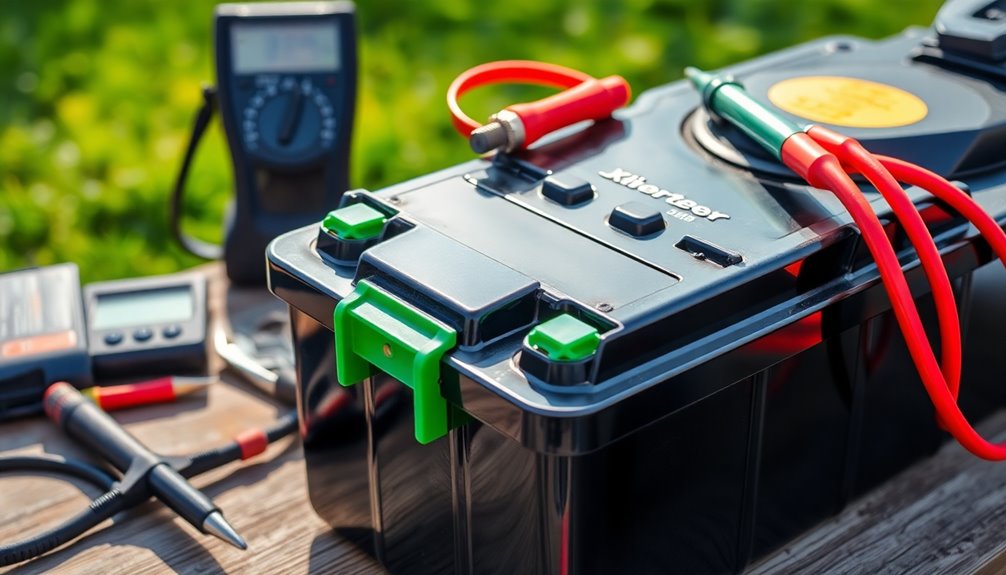
To recondition AGM and gel cell batteries, start by inspecting them for signs of wear, such as swelling or corrosion. Use a compatible charger to slowly bring the batteries to full capacity, monitoring voltage and temperature closely. After charging, perform controlled shallow discharges to recalibrate the cells. Regular maintenance, avoiding deep discharges, and using proper charging techniques can extend their lifespan. Keep exploring these steps to reveal more tips for successful battery recovery.
Key Takeaways
- Inspect AGM and Gel batteries for corrosion, swelling, or leaks before attempting reconditioning.
- Use a compatible reconditioning charger with controlled, slow charging to restore battery capacity safely.
- Monitor voltage and temperature during recharging to prevent overheating and damage.
- Perform a brief, controlled discharge after full charge to recalibrate internal chemistry.
- Follow manufacturer guidelines and avoid deep discharges to extend battery lifespan and performance.

Have you ever wondered if you can restore the life of an old or dead battery? The good news is, with proper techniques, you can often breathe new life into AGM and gel cell batteries. Restoring these batteries involves understanding key aspects like battery maintenance and effective charging techniques, which are essential for extending their lifespan and ensuring reliable performance.
Reviving old batteries is possible through proper maintenance and charging techniques.
When it comes to battery maintenance, the first step is to identify the signs of deterioration, such as reduced capacity or difficulty holding a charge. Regularly inspecting the battery for any corrosion on terminals, leaks, or swelling can help you catch issues early. Cleaning terminals with a mixture of baking soda and water, then ensuring they’re dry before reconnecting, can improve conductivity and prevent further damage. Maintaining proper electrolyte levels, especially in gel and AGM batteries, is critical. Using distilled water to top up, if needed, prevents mineral buildup that can impair performance. Proper maintenance not only prolongs battery life but also reduces the risk of unexpected failures. Additionally, understanding the role of advanced algorithm improvements in predictive diagnostics can help anticipate issues before they become critical.
Charging techniques are equally important in reconditioning AGM and gel cell batteries. You should always use a charger compatible with sealed lead-acid batteries, as these have specific charging requirements. Start with a slow, controlled charge—preferably at a lower current setting—to safely bring the battery back to full capacity. Avoid fast charging, which can generate heat and damage the internal plates, reducing the battery’s lifespan. During charging, monitor the voltage and temperature closely; if the battery gets too hot or the voltage exceeds recommended limits, stop the process. Once the battery reaches a full charge, it’s beneficial to perform a brief, controlled discharge followed by a full recharge. This cycle helps recalibrate the battery’s internal chemistry and can restore some of its lost capacity.
Another key aspect of battery maintenance involves balancing the charge cycles and avoiding deep discharges whenever possible. Shallow, regular charges are better for AGM and gel batteries than letting them run completely down. If you notice the battery isn’t holding a charge well, performing a reconditioning process—such as a controlled overcharge or using specialized reconditioning chargers—may help revive it. Always follow manufacturer instructions closely, as improper charging techniques can cause permanent damage. With patience, attention to detail, and correct maintenance and charging practices, you can often extend the life of your AGM or gel cell battery well beyond its expected lifespan.
Frequently Asked Questions
How Often Should AGM and Gel Batteries Be Reconditioned?
You should recondition AGM and Gel Cell batteries every 6 to 12 months to maintain peak performance. Regular battery maintenance involves checking the voltage and electrolyte levels, while proper charging procedures ensure longevity. Reconditioning helps prevent sulfation and keeps your batteries functioning efficiently. By sticking to this schedule, you extend their lifespan and avoid unexpected failures, guaranteeing your equipment runs smoothly and reliably over time.
Can Reconditioning Extend Battery Lifespan Significantly?
Yes, reconditioning can considerably extend your battery’s lifespan. By restoring electrolyte balance and improving battery capacity, you help prevent premature failure. Reconditioning processes, such as deep cycling and cleaning, renew the electrolyte and reestablish ideal conditions inside the battery. This not only boosts performance but also delays the need for replacement, saving you money and ensuring your AGM or Gel Cell battery continues to serve effectively over a longer period.
Are There Risks Involved in Reconditioning These Batteries?
Yes, reconditioning these batteries can pose serious risks, like a ticking time bomb waiting to explode if you ignore battery safety. You might face chemical hazards from leaked acid or harmful fumes, risking injury or damage. Always handle batteries with care, wear protective gear, and work in well-ventilated areas. If you’re not cautious, you could cause dangerous leaks or even fires, so know the risks before attempting reconditioning.
What Tools or Equipment Are Needed for Reconditioning?
You’ll need basic tools like a multimeter for battery testing, a charger, and possibly a desulfator to help restore capacity. Make certain to follow safety precautions, such as wearing gloves and eye protection, because batteries can be hazardous. Always test the battery thoroughly before starting, and monitor it closely during reconditioning to prevent overcharging or damage. Proper tools and safety measures ensure you do the job effectively and safely.
How to Identify if a Battery Is Beyond Reconditioning?
You might notice battery failure or significant capacity loss, indicating it’s beyond reconditioning. If the battery won’t hold a charge, shows persistent low voltage, or exhibits swelling and leaks, these signs suggest it’s no longer salvageable. Coincidentally, these issues often appear after repeated reconditioning attempts, revealing that the internal damage is too severe. Trust your observations—when these symptoms arise, it’s time to contemplate replacing the battery.
Conclusion
Reconditioning AGM and gel cell batteries is like giving them a new lease on life. When you care for them properly, you’re tending a garden that blossoms anew, rather than letting it wither away. Remember, batteries are like batteries—they need attention and patience to restore their power. With the right techniques, you can turn a tired, dead cell into a reliable source of energy, proving that even worn-out tools can shine bright again with a little effort.