Battery maintenance articles should highlight cabling, because cables play a crucial role in your battery’s performance. Neglecting these connections can lead to increased resistance, forcing your battery to work harder and reducing its lifespan. Corroded or loose terminals can result in poor conductivity, causing issues like dimming lights or slow starts. By paying attention to cabling, you enhance efficiency and avoid costly replacements. Discover more about how cabling impacts your battery’s reliability and longevity.

Get backup power and energy gear delivered free with Prime
- Fast, free delivery on millions of items
- Prime Video, Amazon Music and more included
- Member-only deals all year
Key Takeaways
- Proper cabling ensures efficient electricity flow, directly impacting battery performance and longevity.
- Neglected cables can increase resistance, forcing batteries to work harder and reducing lifespan.
- Corrosion on cables significantly disrupts power delivery, leading to unreliable battery operation.
- Quality cabling enhances durability, preventing maintenance issues and costly replacements over time.
- Regular inspection and maintenance of cables are essential for optimal battery efficiency and reliability.
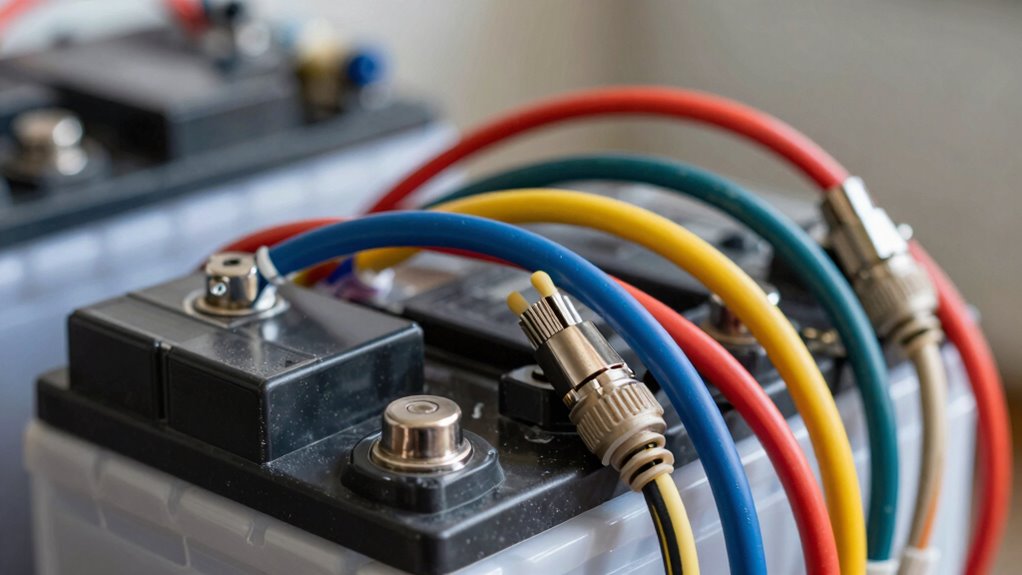
When you neglect battery maintenance, it can lead to costly replacements and inconvenient downtime. You might think that keeping your battery charged is all you need to worry about, but the condition of your cables and terminal connections plays a vital role in performance. Over time, issues like cable corrosion can silently undermine your battery’s efficiency, leaving you stranded when you least expect it.
Many articles on battery maintenance focus primarily on the battery itself, but they often overlook the importance of the cabling system. If you think about it, the battery is just one part of a larger network that includes cables and connections. Poorly maintained cables can lead to increased resistance, which means your battery has to work harder to deliver power. This inefficiency can shorten the battery’s lifespan, making it essential to keep an eye on those cables. Regular inspection and understanding of cabling integrity are crucial components of comprehensive maintenance.
Many overlook the cabling system in battery maintenance; neglected cables increase resistance, forcing your battery to work harder and shortening its lifespan.
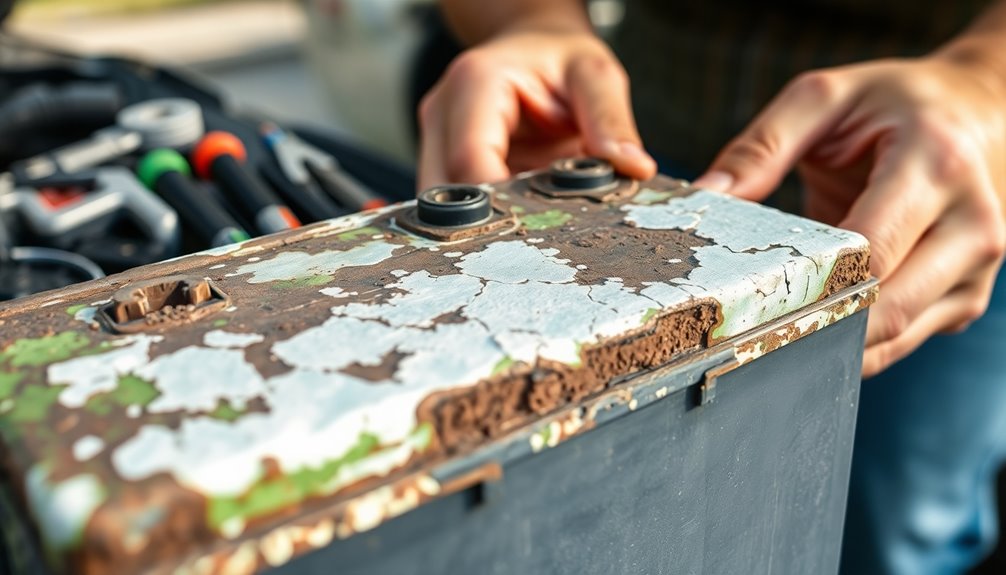
Cable corrosion is a common problem that can cause significant issues. It often forms due to moisture, dirt, or even chemical exposure. When you see that greenish or white powder on your terminals, it’s a clear sign that corrosion is at work. If left unchecked, this buildup can disrupt the flow of electricity, leading to weak or inconsistent power delivery. To avoid this, inspect your cables regularly and clean any corrosion you find. A simple rub with a wire brush or a baking soda solution can work wonders. Additionally, using protective coatings can help prevent future corrosion buildup.
Terminal connections are another area you shouldn’t ignore. Loose or corroded connections can create poor conductivity, resulting in erratic performance. You may experience issues like dimming headlights or a slow-starting engine, which can all stem from bad connections. Tightening these connections and making sure they’re clean can make a significant difference in how your battery performs. Additionally, understanding battery terminal chemistry can help you choose the right cleaning and maintenance techniques to prevent corrosion.
You should also consider the type of cables you’re using. Upgrading to higher-quality cables can improve durability and resistance to corrosion. Investing in good cabling can save you time and money in the long run, as it helps guarantee that your battery operates at peak efficiency.
car battery cable maintenance kit
As an affiliate, we earn on qualifying purchases.
As an affiliate, we earn on qualifying purchases.
Frequently Asked Questions
How Often Should I Inspect Battery Cables for Wear?
You should inspect battery cables for wear at least once a month. Look for signs of cable corrosion, which can weaken connections and affect connection stability. If you notice any fraying or corrosion, it’s important to address it immediately to avoid further issues. Regular checks help guarantee your battery operates efficiently and safely, preventing unexpected failures that could leave you stranded. Keeping an eye on your cables can save you time and hassle later.
What Tools Are Needed for Cable Maintenance?
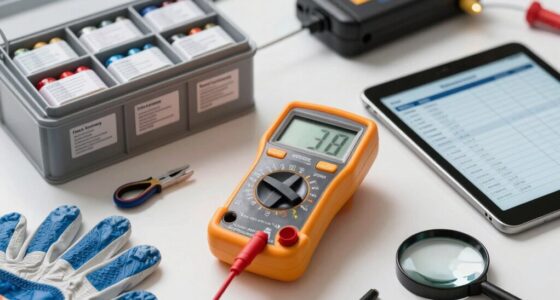
For effective cable maintenance, you’ll need a few essential tools: a wire brush for cable cleaning, a corrosion-resistant spray for corrosion prevention, and a multimeter to check connections. A pair of gloves is also wise to protect your hands. If you’ve got a vintage flair, consider using a battery terminal wrench for a touch of sophistication. Regularly maintaining your cables guarantees longevity, so don’t overlook this crucial aspect of your battery care routine!
Can I Replace Cables Without Professional Help?
Yes, you can replace cables without professional help! Just follow some simple cable replacement tips. Start with a DIY cable inspection to identify any damage. Make sure you’ve got the right tools, like wire strippers and connectors. Always disconnect power before starting, and carefully match colors and connections when installing new cables. If you take your time and follow safety guidelines, you’ll have no problem doing it yourself!
What Signs Indicate Bad Battery Cables?
You can spot bad battery cables by checking for corrosion effects, like white or greenish powder on the connections. If the cable insulation’s cracked or frayed, that’s another warning sign. Loose or rusted cable connections can also cause performance issues, making it hard for your battery to function properly. Regularly inspecting these components guarantees your vehicle runs smoothly and helps prevent unexpected breakdowns. Don’t overlook those cables—they’re vital for your battery’s health!
Does Cable Quality Affect Battery Lifespan Significantly?
Yes, cable quality affects battery lifespan considerably. Poor insulation can lead to moisture and corrosion, causing conductivity issues that drain your battery faster. When you use high-quality cables with proper insulation, you guarantee efficient energy transfer, which helps maintain battery health. Regularly check your cables for wear and tear, and replace them if necessary. By prioritizing cable quality, you can extend your battery’s life and improve overall performance.
Conclusion
In the grand symphony of battery maintenance, cabling serves as the unsung conductor, guiding energy like a maestro orchestrating a harmonious performance. If you neglect this crucial connection, the battery’s potential fades, much like a melody without rhythm. By acknowledging and nurturing the cabling, you empower the entire system to thrive. So, as you care for your batteries, remember: every thread matters in weaving the tapestry of efficiency and longevity. Don’t let the music falter; tune in to the essentials.
Halloween Picks
halloween
As an affiliate, we earn on qualifying purchases.