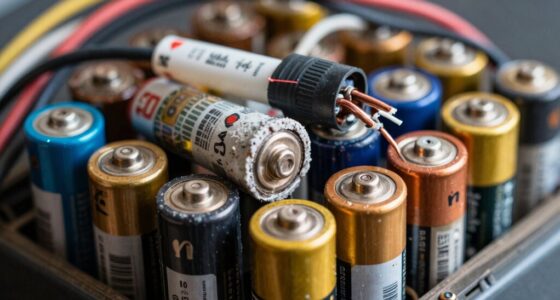
Summer prep is vital for your backup battery systems because high temperatures can reduce their efficiency, lifespan, and reliability during outages caused by storms or hurricanes. Regular maintenance, inspections, and testing help catch issues early and guarantee your batteries are ready when you need them most. Proper cooling and energy management also keep systems functioning smoothly during peak summer demands. Keep going to learn how to protect your backup systems and make sure they’re prepared for any emergency.

Get backup power and energy gear delivered free with Prime
- Fast, free delivery on millions of items
- Prime Video, Amazon Music and more included
- Member-only deals all year
Key Takeaways
- High temperatures can degrade battery performance and reduce lifespan, making summer prep essential for reliability.
- Proper maintenance and inspection prevent failures during peak usage and severe weather events.
- Regular testing ensures backup systems are fully operational when power outages occur.
- Summer energy demands increase, requiring efficient backup systems to handle higher loads.
- Preparing backup batteries in summer ensures energy resilience during thunderstorms and hurricanes.

As summer approaches, it’s vital to make sure your backup battery system is ready to handle potential power outages. The hot months can bring severe weather, like thunderstorms and hurricanes, which often lead to unexpected electrical disruptions. Confirming your system is in top shape now guarantees that your energy storage capabilities are reliable when you need them most. A well-maintained backup battery isn’t just about keeping the lights on; it’s about maintaining power resilience—your ability to continue functioning smoothly despite external grid failures.
During summer, high temperatures can impact your battery’s performance and lifespan. Over time, excessive heat can degrade battery components, reducing their overall efficiency and energy storage capacity. By inspecting your system early, you can identify potential issues like corrosion, loose connections, or signs of wear. Proper maintenance, such as cleaning terminals and ensuring ventilation, helps keep your batteries operating at their best. This proactive approach prevents unexpected failures during critical moments when power is most needed. Remember, your backup system’s effectiveness hinges on its readiness, and summer’s heat is a real threat to its reliability. Additionally, understanding the effects of heat on batteries can help you implement better cooling strategies to extend battery life. Being aware of battery degradation factors can aid in planning for replacements and upgrades in advance. Regularly reviewing battery maintenance practices ensures your system remains resilient throughout the season. Staying informed about battery health monitoring can further enhance your preparedness and prolong the lifespan of your system.
High summer temperatures can degrade battery performance; regular inspections and proper maintenance ensure reliable power when it’s needed most.
Another key aspect of summer prep is testing your backup battery system. Regular testing guarantees that the energy storage remains functional and that your power resilience measures are effective. During these tests, verify that your batteries charge correctly and discharge as expected. If you notice any issues, addressing them now minimizes the risk of failure when outages occur. Additionally, confirm that your inverter and other components are functioning properly, as these are vital for delivering stored energy when grid power goes down. Conducting system diagnostics periodically can help you catch potential problems early and maintain optimal performance. By doing so, you make sure your entire backup setup is ready to step in during an emergency, providing peace of mind throughout the season.
Finally, consider reviewing your overall energy management plan. Summer often coincides with increased energy consumption, especially if you rely on air conditioning or other high-demand appliances. Having a sturdy backup battery system in place not only safeguards your essential devices but also helps you manage your energy more efficiently. By planning ahead, you can maximize your energy storage, reduce reliance on the grid, and strengthen your power resilience. Summer prep isn’t just about fixing what’s broken; it’s about reinforcing your entire energy infrastructure to withstand the season’s challenges. When you take these steps now, you secure a dependable, resilient energy future, no matter what summer storms might bring.
backup battery system maintenance kit
As an affiliate, we earn on qualifying purchases.
As an affiliate, we earn on qualifying purchases.
Frequently Asked Questions
How Often Should Backup Batteries Be Tested During Summer?
You should test your backup batteries monthly during summer to guarantee peak performance. Regular testing helps identify issues like voltage regulation problems early, preventing failures during outages. It’s also a good time to contemplate battery recycling if batteries show signs of wear. Consistent testing keeps your system reliable and ready, especially when temperature fluctuations can impact battery health, ensuring your backup system functions smoothly when you need it most.
What Are Signs of Battery Degradation Before Summer?
You should watch for signs of battery degradation before summer, like reduced battery lifespan or fewer charge cycles. If your battery takes longer to charge, discharges faster, or shows swelling or corrosion, these are red flags. Sudden drops in performance indicate aging. Addressing these issues early helps guarantee your backup system stays reliable, especially when you need it most during peak summer use. Regular inspections can catch problems early.
Can Summer Heat Cause Permanent Damage to Backup Batteries?
Yes, summer heat can cause permanent damage to your backup batteries. High temperatures accelerate battery degradation, reducing their lifespan and heat resistance. Think of your batteries as delicate flowers—expose them to relentless sun, and they wither faster. To protect your investment, guarantee proper cooling and ventilation. This proactive approach helps preserve your batteries’ lifespan and maintains their heat resistance, so they’re ready when you need them most.
Are There Specific Maintenance Routines Recommended for Summer?
Yes, there are specific summer maintenance routines you should follow. You need to regularly check your backup batteries’ temperature monitoring to prevent overheating and guarantee safe operation. Keep your solar charging system optimized by cleaning panels and verifying connections. Additionally, make certain there is proper ventilation around batteries to avoid heat buildup. These steps help maintain battery longevity and performance during hot months, protecting your investment and ensuring reliable backup power when you need it most.
How Does Humidity Affect Backup Battery Performance?
Humidity impact can considerably reduce your backup battery’s performance. High humidity levels cause moisture to accumulate inside the battery, leading to corrosion of the internal components. This corrosion can weaken connections and decrease overall capacity, risking failure when you need it most. To prevent this, guarantee proper ventilation and keep batteries in dry, climate-controlled environments. Regular inspections help spot early signs of corrosion, maintaining your system’s reliability during summer.
Conclusion
As summer approaches, it’s a coincidence that your backup battery system’s readiness becomes more essential just when power outages tend to spike. Staying proactive now means you won’t be caught off guard when storms roll in or heat overwhelms the grid. By prepping your system ahead of time, you’re not only avoiding inconvenience but also ensuring safety and peace of mind. After all, isn’t it better to be prepared than to face the summer surprises unarmed?
Halloween Picks
halloween
As an affiliate, we earn on qualifying purchases.