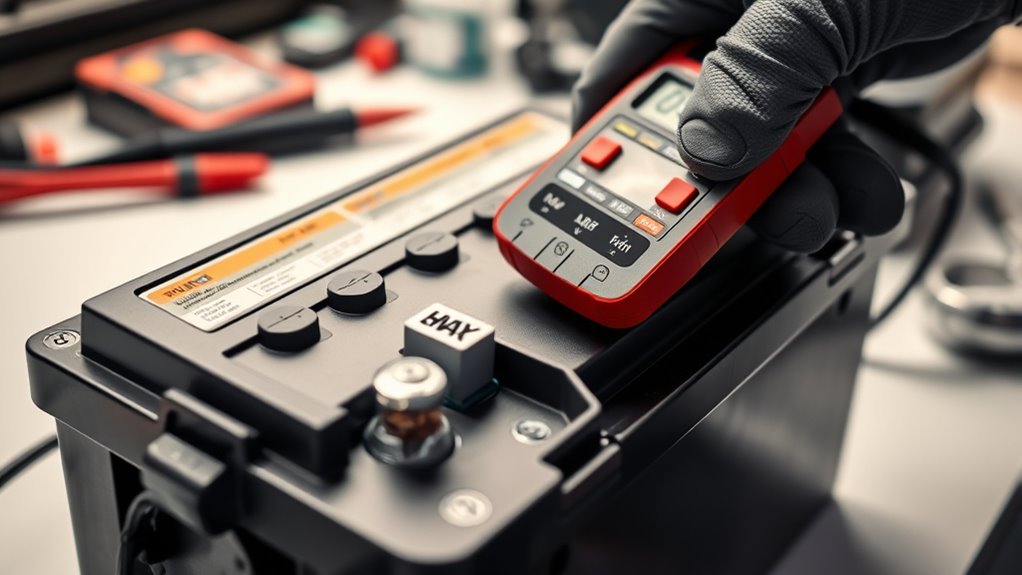

If your battery is still performing well with minor issues, routine maintenance like cleaning terminals and checking fluid levels may be enough to keep it in shape. But if your battery shows significant decline, such as quick discharges or can’t hold a charge, reconditioning can restore its capacity and extend its lifespan. Knowing the right approach depends on your battery’s condition, and understanding the differences can help you decide what’s best—continue onward to learn more.
Key Takeaways
- Use routine maintenance for new or lightly worn batteries to prevent issues and extend lifespan.
- Opt for reconditioning when a battery shows significant performance decline or cannot hold charge.
- Maintenance involves simple tasks like cleaning terminals, while reconditioning includes deep cleaning and cell balancing.
- Reconditioning can restore capacity and delay replacement, offering a cost-effective solution for aging batteries.
- Regular maintenance ensures reliability, whereas reconditioning restores older batteries for continued use.

When it comes to keeping equipment in crucial condition, understanding the difference between reconditioning and maintenance is essential. Your battery is a key component that directly impacts your equipment’s performance and longevity. Knowing whether it needs reconditioning or just routine maintenance can save you money and extend its lifespan. Maintenance involves regular, scheduled actions like cleaning terminals, checking fluid levels, and tightening connections. These tasks help prevent issues before they start, ensuring your battery remains reliable day-to-day. Regular maintenance can also improve cost efficiency by reducing the likelihood of sudden failures that require expensive replacements. It’s a cost-effective way to keep your battery healthy, especially if it’s still relatively new or just showing minor signs of wear. Additionally, understanding the specific technology used in your battery, such as whether it’s a lead-acid or lithium-ion type, can influence the appropriate care approach.
Reconditioning, on the other hand, is a more intensive process aimed at restoring an aging or underperforming battery to near-original condition. If your battery’s performance has declined markedly—perhaps it’s no longer holding a charge or discharges quickly—reconditioning might be the best step. This process involves deep cleaning, balancing cells, replacing worn-out parts, or even adding new electrolyte solutions. Reconditioning can dramatically extend your battery’s lifespan, making it a smart investment that delays the need for a full replacement. It also proves to be highly cost-efficient in the long run because it saves you money compared to buying a new battery. Plus, reconditioning helps maximize the value of your existing equipment by maintaining ideal performance.
Deciding between reconditioning and maintenance depends on your battery’s age, condition, and performance issues. Routine maintenance is best suited for batteries that are relatively new or show minor signs of wear, helping you avoid bigger problems down the line. If your battery is older or has experienced recurring issues despite regular upkeep, reconditioning can breathe new life into it, restoring its capacity and efficiency. Both approaches are essential parts of a complete battery care strategy, but understanding when to apply each can make a noteworthy difference. By properly maintaining your battery, you ensure it lasts longer and performs better, ultimately saving you money. When reconditioning is necessary, it’s a smart, cost-efficient way to extend its service life and keep your equipment operating smoothly without the immediate expense of a new battery. Recognizing the importance of battery technology can further optimize your maintenance and reconditioning efforts.
Frequently Asked Questions
How Can I Tell if My Battery Needs Reconditioning or Maintenance?
You can tell if your battery needs reconditioning or maintenance by checking its battery storage and performing voltage testing. If your battery’s voltage drops markedly below the normal range, it likely needs reconditioning. However, if the voltage is slightly low but stable, regular maintenance like cleaning terminals and ensuring proper charge can help. Monitoring these factors helps you decide whether a deeper reconditioning process or simple upkeep is needed.
Are There Risks Involved With Battery Reconditioning?
Yes, there are risks involved with battery reconditioning. You need to prioritize battery safety because batteries contain chemical hazards that can be dangerous if mishandled. Always wear protective gear, work in a ventilated area, and follow proper procedures to avoid chemical hazards like acid leaks or explosions. If you’re unsure, it’s best to consult a professional, as mishandling can lead to serious injuries or damage.
How Often Should I Perform Maintenance on My Batteries?
You should perform maintenance on your batteries every 3 to 6 months. Check the electrolyte levels regularly and guarantee they’re topped up with distilled water if needed. Make sure to perform proper battery charging by following manufacturer instructions, which helps prevent sulfation and extends battery life. Regular maintenance keeps your battery running smoothly, reduces the risk of unexpected failures, and maximizes its performance over time.
Can Reconditioning Extend My Battery’s Lifespan Significantly?
Yes, reconditioning can substantially extend your battery’s lifespan. By restoring the battery chemistry and optimizing its capacity, reconditioning reduces the wear caused by repeated charging cycles. This process helps prevent premature failure and maintains performance longer. Keep in mind, though, that the effectiveness depends on your battery’s type and condition. Regular reconditioning ensures you get the most out of your battery, saving you money and reducing waste.
What Signs Indicate My Battery Is Beyond Repair?
Your battery’s life is like a ticking clock—once corrosion becomes visible and charge capacity drops drastically, it’s a sign it’s beyond repair. If you notice persistent battery corrosion, frequent failures, or an inability to hold a charge, it’s time to replace it. These warning signs show your battery has worn out its welcome, and trying to repair it might do more harm than good.
Conclusion
Think of your battery like a garden—sometimes it just needs a gentle pruning, a bit of maintenance to keep it blooming. Other times, it’s like a neglected tree that needs reconditioning to restore its strength. Knowing which care your battery needs can breathe new life into it, turning a withered branch into a thriving branch. With the right approach, your battery can shine brightly and serve you well, like a well-tended garden basking in the sun.