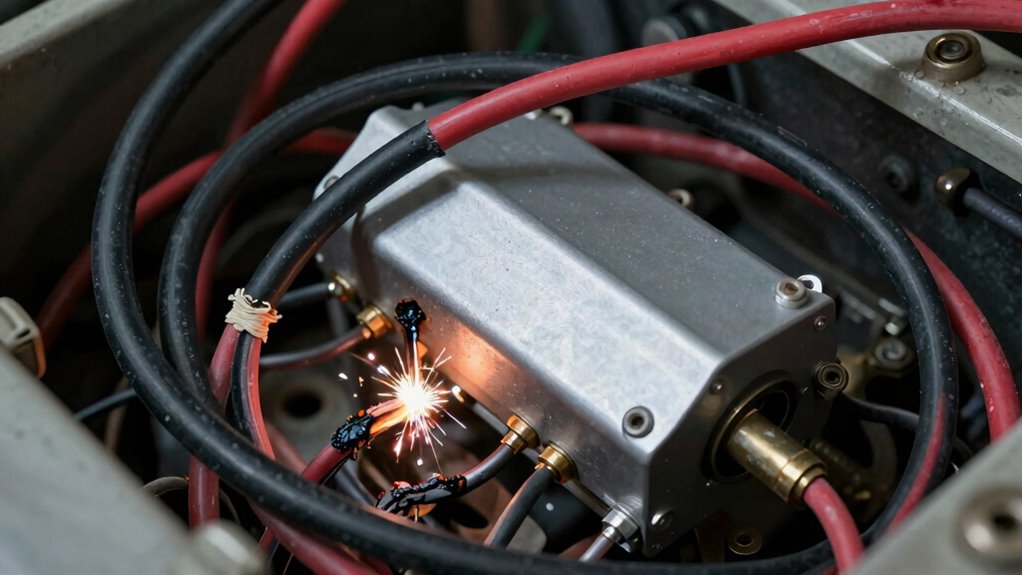

When wiring multiple banks of a marine charger, avoid common mistakes like failing to connect each bank properly or oversizing fuses. Incorrect wiring can cause uneven charge distribution, leading to blown fuses and damaged batteries or equipment. Always follow the manufacturer’s wiring diagram and verify connections before powering up. Proper wiring guarantees safe, reliable operation and longer battery life. Keep these tips in mind, and you’ll discover how to prevent costly fuse blows in your setup.
Key Takeaways
- Incorrectly wiring multiple banks can cause uneven current flow, leading to blown fuses.
- Overloading a single bank beyond its rated capacity increases risk of fuse failure.
- Bypassing proper fuse ratings or safety devices allows excessive current that blows fuses.
- Using mismatched or undersized wiring for multiple banks causes voltage drops and fuse blows.
- Failing to follow manufacturer wiring diagrams can create dangerous shortcuts that blow fuses.

If you’re looking to keep multiple marine devices charged efficiently, multi-bank marine chargers are an essential investment. They allow you to charge several batteries simultaneously, ensuring your boat’s electrical system remains reliable during long trips. However, to get the most out of these chargers, you need to pay close attention to how you wire them. A common mistake that many boaters make is incorrect wiring, which can lead to blown fuses and potentially damage your equipment. Proper wiring not only protects your batteries and charger but also ensures safe operation and ideal battery capacity management.
Proper wiring of marine chargers protects batteries and equipment, ensuring safe, reliable, and efficient power management on your boat.
One of the key considerations when wiring a multi-bank charger is understanding your boat’s battery capacity. Each bank of a charger is designed to handle a specific number of batteries, and overloading it by wiring more batteries than it’s rated for can cause issues. When you connect batteries improperly, it can lead to uneven charging, reduced battery lifespan, or even sudden fuse blows. To avoid this, always check the manufacturer’s specifications for the maximum number of batteries per bank and ensure your wiring configuration aligns with those guidelines. Proper wiring ensures each battery bank receives the correct charge, maintaining your boat’s overall battery health and capacity.
Installation safety is paramount when working with marine electrical systems. If you’re not experienced, it’s best to consult with a professional or follow detailed wiring diagrams provided by the manufacturer. Incorrect wiring can create shorts or overload circuits, which might blow fuses or, worse, cause a fire. Always disconnect the power source before starting wiring work, use appropriately rated wires, and secure all connections tightly to prevent accidental disconnections or corrosion. Proper insulation and routing of wires also enhance safety and longevity of your system. Remember, a single mistake during installation can compromise your boat’s electrical safety and lead to costly repairs down the line. Additionally, understanding your battery capacity is crucial to prevent overloads and ensure optimal performance.
Furthermore, pay attention to fuse ratings and wiring paths. Using the wrong fuse size or wiring in a manner that bypasses safety devices can lead to blown fuses and potential damage to your charger and batteries. Double-check all connections against the wiring diagram, and test your setup carefully before deploying it at sea. Ensuring correct wiring practices not only protects your equipment but also provides peace of mind when you’re out on the water. Ultimately, investing time in proper installation safety and understanding your battery capacity will keep your marine electrical system running smoothly, avoiding frustrating fuse blows and ensuring your batteries stay charged when you need them most.
Frequently Asked Questions
How Do I Identify a Blown Fuse in My Marine Charger?
To identify a blown fuse in your marine charger, start with a visual inspection—look for a broken filament or darkened glass. Then, perform fuse testing with a multimeter set to continuity mode; if it shows no continuity, the fuse is blown. Always turn off power before testing, and replace any faulty fuse with one of the correct rating to avoid further issues.
Can Multiple Banks Be Charged Simultaneously Without Wiring Issues?
Yes, you can charge multiple banks simultaneously without wiring issues if your system’s set up correctly. Think of your battery management like a well-choreographed dance, where each bank knows its move and stays in sync. When connected to shore power, ensure your wiring is precise and balanced, avoiding overloads. Proper wiring practices keep fuses intact, letting your multi-bank charger work harmoniously, delivering power smoothly without sparks or blown fuses.
What Safety Precautions Should I Take When Rewiring Marine Chargers?
When rewiring marine chargers, you should prioritize proper grounding practices to prevent electrical issues. Always verify your grounding connections are secure and follow manufacturer recommendations. Use the correct wire gauge for your system’s current load to avoid overheating or blown fuses. Double-check all connections before powering up, and consider consulting a marine electrician if you’re unsure. These precautions keep your wiring safe and your marine electronics functioning reliably.
Are There Specific Fuse Types Recommended for Marine Chargers?
Think of fuse compatibility like choosing the right key for a lock; use the wrong one, and nothing works. For marine wiring, always select fuses specifically rated for marine chargers, typically blade or glass tube types designed to handle moisture and vibrations. These fuses protect your system from overloads and short circuits, ensuring safe operation. Always match fuse ratings to your charger’s specifications to prevent blown fuses and equipment damage.
How Often Should Marine Charger Wiring Be Inspected for Potential Faults?
You should inspect your marine charger wiring at least once every three to six months. Regular inspections help with battery maintenance and corrosion prevention, catching issues early before they cause damage or safety hazards. Look for loose connections, frayed wires, and corrosion around terminals. Keeping your wiring in good condition ensures *reliable* charger performance, prolongs battery life, and prevents fuse blows caused by wiring faults.
Conclusion
To wrap things up, make certain you double-check your wiring connections when installing a multi-bank marine charger. A simple mistake can blow your fuses and cause unnecessary headaches. Remember, a stitch in time saves nine—taking the extra moment to verify your setup can save you a lot of trouble down the road. Keep your wiring neat and follow the manufacturer’s instructions carefully. That way, you’ll keep your boat powered smoothly and avoid common pitfalls that can turn into costly fixes.