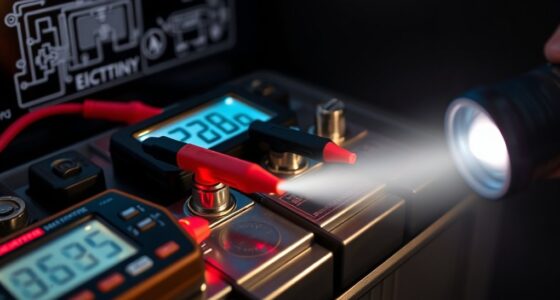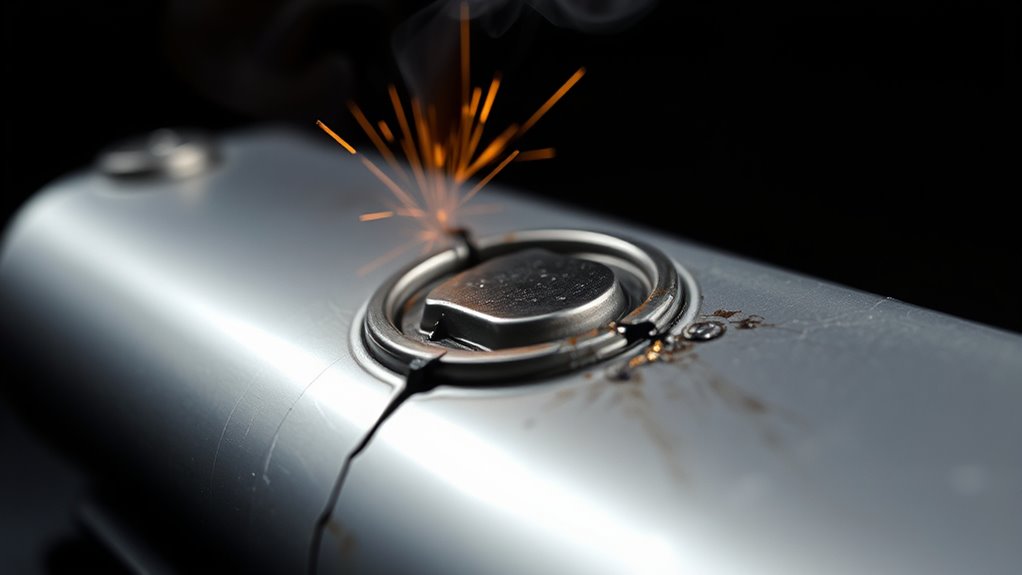

If your lithium-ion battery is discharging quickly, not charging properly, or shutting down unexpectedly, it could be due to aging, manufacturing defects, or thermal issues. Overheating or debris can also cause severe problems like internal shorts or capacity loss. Maintaining good thermal regulation and avoiding damage helps prevent these failures. To get a clearer picture of how to tackle these issues and keep your device safe and reliable, keep exploring these common problems.
Key Takeaways
- Rapid discharge often results from aging, manufacturing defects, or thermal issues that degrade battery chemistry.
- Failure to charge can be caused by degraded cells, faulty circuits, or debris on connectors blocking current flow.
- Unexpected shutdowns may occur due to uneven cell degradation or internal damage from thermal stress.
- Overheating decreases chemical stability, increasing risks of capacity loss, shutdowns, or fires.
- Proper thermal management, regular health checks, and recycling extend battery lifespan and prevent failures.

Lithium-ion batteries have become indispensable for powering our devices, but they come with their own set of problems. One major issue you might face is rapid discharge, where the battery suddenly loses its charge much faster than expected. This can happen due to aging, manufacturing defects, or improper thermal management, which affects how heat is dissipated during operation. When batteries overheat, their chemical stability decreases, leading to faster capacity loss and reduced lifespan. To mitigate this, manufacturers emphasize effective thermal management systems that keep batteries within safe temperature ranges. Proper thermal regulation not only prevents overheating but also enhances overall battery performance and longevity. Additionally, ongoing research into AI-driven diagnostics aims to predict and prevent such failures before they occur, further improving battery safety and reliability.
Another essential problem is failure to charge. You might notice that your device refuses to accept a full charge, or the charging process gets stuck partway through. This can stem from several factors, including degraded battery cells, faulty charging circuits, or dirt and debris on connectors. But a significant contributor is the buildup of old, discarded batteries that aren’t properly recycled. Battery recycling plays an indispensable role here, as it allows the recovery of valuable materials and reduces the environmental impact of battery waste. When batteries aren’t recycled correctly, harmful chemicals can leach into the environment, and the limited raw materials used in lithium-ion production become scarcer. Proper recycling practices can also help identify defective batteries early, preventing potential safety hazards and encouraging the development of more reliable, longer-lasting batteries.
Unexpected shutdowns are perhaps the most aggravating problem. Your device suddenly turns off without warning, often during critical moments. This can occur due to uneven cell degradation, which creates voltage imbalances within the battery pack, or from internal damage caused by repeated thermal stress. When batteries overheat, they can develop internal shorts or other faults, leading to sudden shutdowns or, in worst cases, fires. Maintaining a consistent thermal environment through good thermal management is essential to prevent these hazards. If you notice your device shutting down unexpectedly, it’s wise to check the battery’s health and ensure your device’s cooling system is functioning properly. Regular maintenance, including battery recycling when replacing old units, can help you avoid these surprises and keep your devices running smoothly.
Frequently Asked Questions
Can Lithium-Ion Batteries Be Safely Repaired at Home?
You shouldn’t try DIY fixes on lithium-ion batteries at home because they can be dangerous. Instead, opt for professional repairs to guarantee safety and proper handling. Attempting to repair a battery yourself risks fire, chemical leaks, or further damage. Trust trained technicians who have the right tools and expertise. Protect yourself and your device by avoiding home repairs and relying on professional services for lithium-ion battery issues.
How Do Temperature Changes Affect Battery Performance?
Temperature changes markedly impact your lithium-ion battery’s performance. When it gets too hot or cold, thermal expansion can occur, stressing internal components and reducing efficiency. You should guarantee proper temperature regulation by avoiding extreme environments, especially during charging or discharging. Keeping your device within recommended temperature ranges helps prevent damage, prolongs battery life, and maintains ideal performance. Always store and use your battery in a controlled environment for the best results.
Are There Specific Signs Indicating Imminent Battery Failure?
You can tell your battery might fail soon if you notice signs like battery swelling or frequent sudden shutdowns. Swelling indicates internal damage or gas buildup, while sudden shutdowns happen when the battery can’t deliver power properly. Pay attention to these signs, avoid using the device, and replace the battery promptly to prevent potential hazards or further damage. Early detection helps keep your device safe and functioning properly.
What Are the Latest Advances in Preventing Battery Problems?
A stitch in time saves nine, and recent advances help you stay ahead of battery issues. You can benefit from advanced electrolyte formulations that improve stability and lifespan. Solid state battery technology is also revolutionizing energy storage by offering higher safety and efficiency. These innovations prevent problems like rapid discharge and unexpected shutdowns, giving you a more reliable, longer-lasting power source. Staying updated guarantees you maximize your battery’s performance and longevity.
How Does Battery Age Influence Discharge and Failure Rates?
As your battery ages, degradation and aging effects cause it to discharge faster and increase failure risks. Over time, chemical changes reduce capacity, leading to more rapid emptying and unreliable performance. You might notice shorter usage periods and unexpected shutdowns. To extend your battery’s lifespan, avoid extreme temperatures, limit full discharges, and use proper charging habits, helping to mitigate aging effects and maintain better discharge rates.
Conclusion
If you ignore these lithium-ion battery issues, you could face disaster at any moment—your device could die just when you need it most, or worse, suddenly shut down and leave you stranded! Imagine losing critical data or being stuck in a dangerous situation because of a battery failure you refused to fix. Don’t gamble with your device’s life—stay vigilant, troubleshoot these problems early, and keep your battery running smoothly before it’s too late!