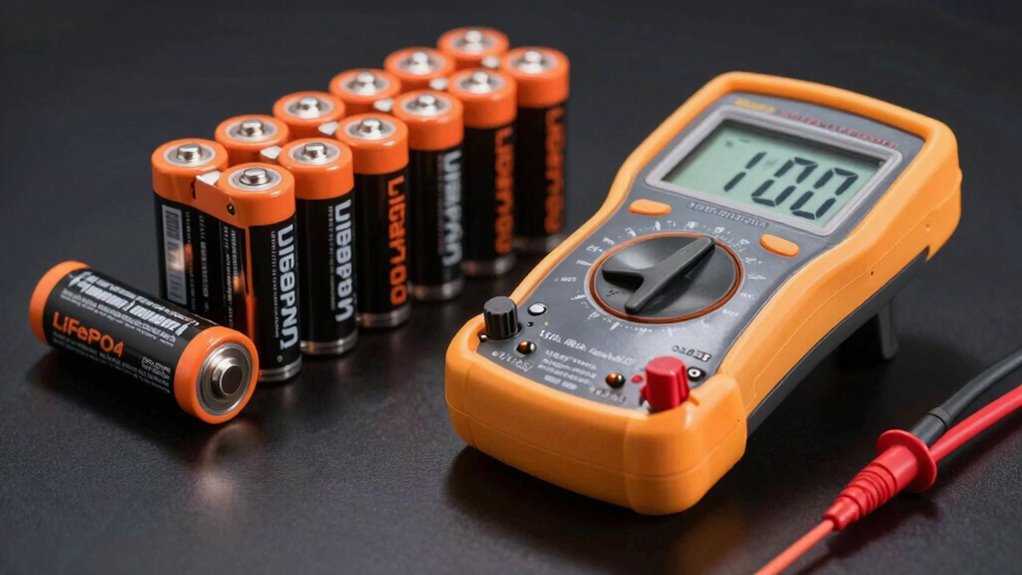

To quickly spot fake ‘deep cycle’ LiFePO4 batteries, start with a visual check for high-quality labels and consistent finishes. Use a multimeter to verify the resting voltage; genuine cells should read around 3.2 to 3.3 volts per cell. Observe charging behavior—true batteries charge smoothly within expected timeframes. Perform a quick capacity test if possible—authentic units maintain rated capacity. If any sign of inconsistency appears, it’s worth investigating further to avoid costly mistakes. If you’re curious about more telltale signs, keep going.
Key Takeaways
- Check physical labels for high-quality printing, clear markings, and consistent finishes to spot counterfeit units.
- Measure resting voltage; genuine LiFePO4 cells should read around 3.2–3.3V per cell.
- Observe charging behavior; authentic batteries charge steadily and reach full voltage predictably within minutes.
- Perform a quick capacity test; real units deliver consistent rated capacity without rapid voltage drops.
- Assess overall quality through visual inspection, voltage, and capacity checks to expose fake or degraded batteries.
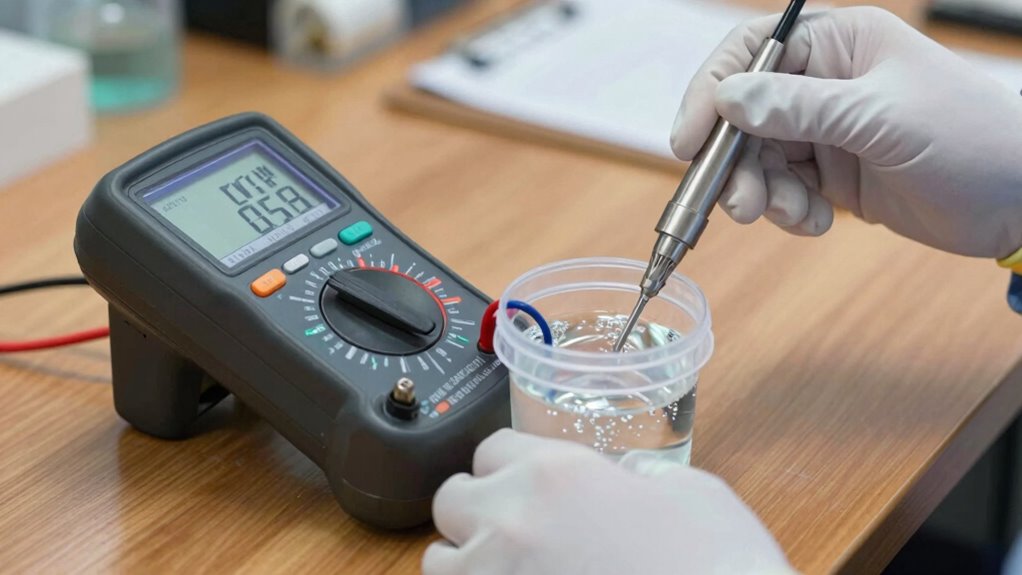
Ever wondered how to quickly verify if your LiFePO4 battery is genuine or fake? With the rise of battery fraud, it’s more important than ever to perform a simple yet effective quality verification before trusting a “deep cycle” label. Fake batteries often claim to deliver long-lasting, high-capacity performance but fall short, risking your equipment and safety. Luckily, a quick 5-minute test can help you spot these fakes and protect your investment.
Verify your LiFePO4 battery quickly—spot fakes and protect your investment in just 5 minutes.
Start by inspecting the physical build. Authentic LiFePO4 batteries typically have high-quality labels, clear markings, and consistent finishes. Counterfeit products often feature sloppy printing, misspellings, or mismatched labels. Feel the weight of the battery; genuine units tend to have a solid, dense feel because they use quality cells and proper materials. If the battery feels unusually light or flimsy, it’s a red flag indicating potential fraud.
Next, conduct a simple voltage test. Use a multimeter to measure the resting voltage of the battery. A genuine LiFePO4 cell should read around 3.2 to 3.3 volts per cell when fully charged. If you’re testing a pack, ensure that the voltage per cell aligns with manufacturer specifications. A markedly lower voltage might mean the battery is degraded or counterfeit. Remember, fake batteries often claim high capacity but don’t deliver consistent voltage levels, which can be a clear sign of battery fraud.
Another quick check involves monitoring the charging behavior. Connect the battery to a charger designed for LiFePO4 chemistry. Observe how it charges: a real deep cycle LiFePO4 should reach its full charge within a predictable timeframe and maintain a stable voltage. Fake batteries often overheat, charge irregularly, or fail to reach the expected voltage, signaling subpar quality and potential safety hazards.
Finally, consider the battery’s capacity through a brief discharge test if you have access to a tester. Genuine batteries will deliver consistent performance, providing the rated capacity without significant voltage drops. Fake units may show inflated capacity claims initially but quickly underperform during actual use. This rapid capacity test is a reliable way to confirm quality verification and weed out counterfeit products.
Performing this 5-minute check gives you a practical way to defend against battery fraud. It’s a quick, straightforward process that can save you from costly replacements or dangerous situations caused by fake LiFePO4 batteries. Trusting your instincts and verifying these key points ensures you’re investing in genuine, safe, and reliable power solutions. Additionally, understanding home theatre projectors and their specifications can help you select the right equipment for your entertainment space, ensuring optimal performance and image quality.
Frequently Asked Questions
Can This Test Identify All Types of Fake Lifepo4 Batteries?
This test helps you identify many fake LiFePO4 batteries by checking their deep cycle claims quickly. However, it doesn’t cover all aspects of battery authenticity, so some fakes might still slip through. Test limitations include not revealing detailed internal issues or long-term performance. Always combine this quick check with more thorough testing or expert evaluation to make certain you’re getting genuine, reliable batteries.
Is the 5-Minute Test Safe for All Battery Brands?
This 5-minute test isn’t safe for all battery brands because battery safety varies, and some may be damaged or produce inaccurate results. You must consider each manufacturer’s guidelines to guarantee test accuracy and avoid risking the battery’s integrity. Always verify if the test is compatible with your specific battery type, and when in doubt, consult the manufacturer or a professional to protect your investment and maintain safety.
What Signs Indicate a Battery Is Genuinely a Deep Cycle Lifepo4?
You can tell a battery is genuinely deep cycle LiFePO4 if it shows strong performance indicators like consistent voltage during discharge and high cycle longevity. Look for signs such as steady capacity over multiple cycles and minimal voltage drops under load. These indicators mean the battery’s designed for deep cycling, providing reliable, long-term use without rapid capacity loss. If these signs are absent, it might not be a true deep cycle LiFePO4.
Are There Tools Required Beyond Basic Testing Equipment?
Think of testing your battery as checking the health of a trusted compass. You’ll need basic testing equipment like a multimeter and a load tester, but for more accuracy, specialized tools like a battery analyzer can aid. Always follow safety precautions—wear gloves, eye protection, and work in a well-ventilated area. These tools and precautions ensure you get reliable results without risking damage or injury.
How Reliable Is This Test Compared to Professional Lab Analysis?
This quick test offers a decent indication of battery chemistry and can help identify fake ‘deep cycle’ LiFePO4 claims, but it’s not as reliable as professional lab analysis. You might catch obvious issues, but subtle differences in test accuracy and chemistry details demand advanced equipment and expertise. For critical applications or precise validation, relying on a certified lab ensures the most accurate results and true understanding of your battery’s condition.
Conclusion
Now that you’ve seen the quick test, imagine holding a genuine LiFePO4 battery, its cool surface steady and unwavering. With just a few minutes, you can spot the fake, like catching a flicker of false promise in its glow. Trust your senses—feel the weight, check the voltage—and see through the deception. In that fleeting moment, you become the guardian of true power, ensuring your energy source stands strong and real, ready to light your way.