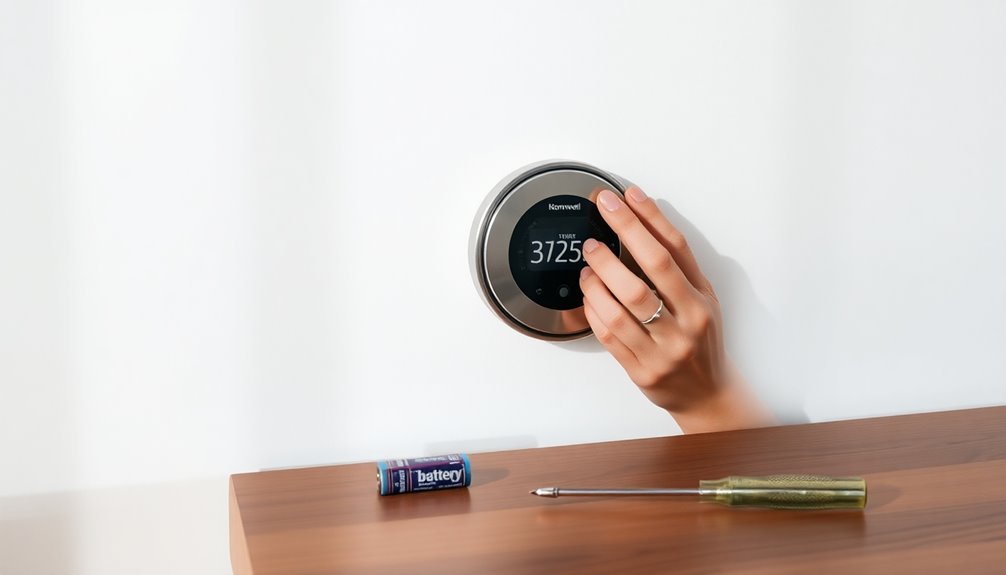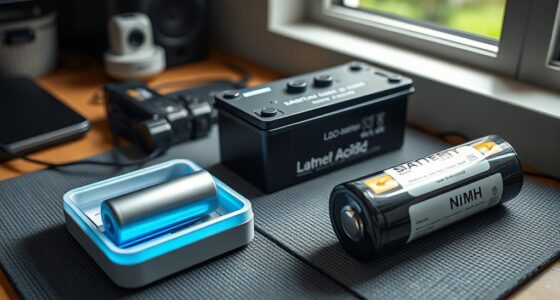
To keep your battery running smoothly, check the fluid levels regularly, especially during extreme weather. Make certain the engine is off and the battery is cool before inspecting. Add only distilled water to bring the levels just above the plates or within marked indicators, and never overfill. Always handle the acid carefully and clean any spills immediately. Staying vigilant about these steps helps extend your battery’s lifespan—continue exploring for more detailed guidance.
Key Takeaways
- Regularly check electrolyte levels when the vehicle is off and the battery is cool.
- Ensure fluid covers plates or falls within the marked range for proper operation.
- Use only distilled water for topping up, avoiding tap water to prevent mineral buildup.
- Wear gloves and goggles, and work in a well-ventilated area to handle sulfuric acid safely.
- Add water slowly, then securely close the cap and clean any spills immediately.
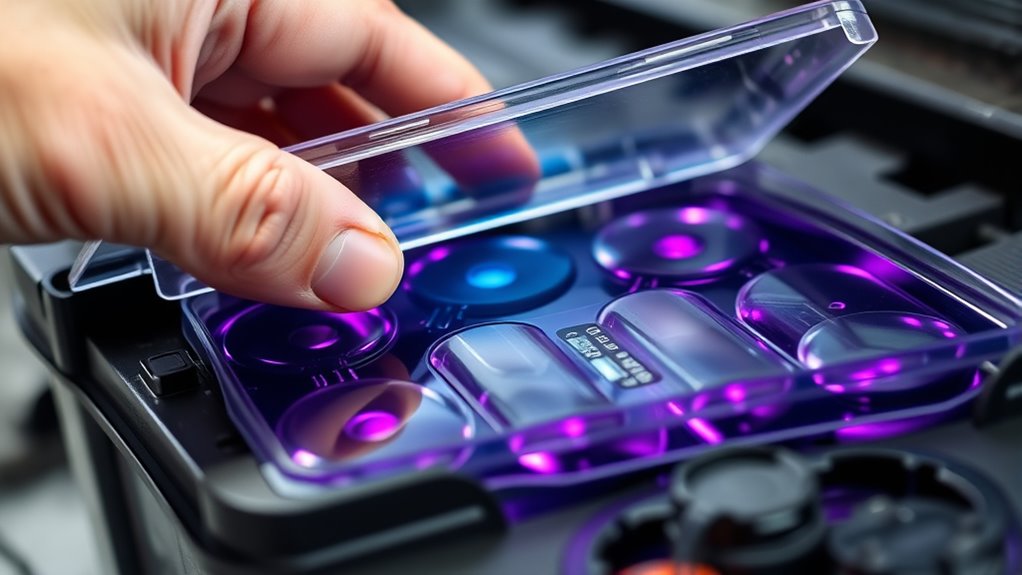
Regularly monitoring your battery’s fluid levels is vital to guaranteeing its best performance and longevity. When you keep an eye on the electrolyte composition inside your battery, you prevent potential issues that could lead to premature failure. The electrolyte, a mixture of sulfuric acid and water, needs to be at proper levels to facilitate chemical reactions that generate power. If the fluid drops below the recommended level, the plates inside the battery can become exposed, which accelerates corrosion and diminishes overall efficiency. Conversely, overfilling can cause spillage and damage, so it’s essential to strike the right balance. To do this effectively, you should check the fluid levels at regular intervals, especially in extreme weather conditions that can affect the electrolyte’s volume. Always make sure the vehicle is off and the battery is cool before opening the caps to avoid any risk of acid splashes or burns. Additionally, maintaining the correct fluid levels helps prevent the buildup of lead sulfate crystals that can impair battery performance over time.
When it comes to topping up your battery, safety should be your top priority. Handling sulfuric acid requires caution because it’s highly corrosive. Wear protective gloves and goggles, and work in a well-ventilated area. Before opening the battery, verify you’re familiar with proper maintenance safety procedures to prevent accidents. When you add distilled water to top off the electrolyte, do so slowly to avoid splashing or overfilling. Remember, only use distilled water—not tap water—since minerals and impurities can interfere with the battery’s chemistry and reduce its lifespan. As you top up, keep an eye on the fluid level, which should be just covering the plates or within the marked range on the battery case. After topping off, securely close the caps and clean any spills immediately to prevent corrosion or damage to nearby components.
Maintaining proper electrolyte levels not only supports ideal battery performance but also extends its service life. By regularly checking and carefully topping up your battery fluid, you ensure the internal components stay protected and operate efficiently. Always prioritize safety during this process, following recommended procedures and handling materials with care. Remember that proper electrolyte composition and diligent maintenance safety practices go hand-in-hand in keeping your battery reliable and long-lasting. When in doubt, don’t hesitate to seek professional advice or assistance to prevent mishaps and ensure your vehicle’s electrical system remains in top condition.
Frequently Asked Questions
Can Overfilling Damage My Battery?
Yes, overfilling your battery can damage it. During battery maintenance, avoid adding too much fluid, as a fluid overfill can cause acid leaks or corrosion. Excess fluid may also lead to reduced battery lifespan and performance issues. Always check the level carefully, filling only to the recommended mark. Properly managing fluid levels helps keep your battery running efficiently and prevents costly repairs.
How Often Should I Check My Battery Fluid Levels?
You should check your battery fluid levels every 1 to 3 months, especially if you use your vehicle often. Studies show that proper battery maintenance can extend battery life by up to 50%. During fluid replacement, guarantee the electrolyte covers the plates, and top up with distilled water as needed. Regular checks prevent overfilling or underfilling, both of which can damage your battery and reduce its efficiency.
What Type of Fluid Should I Use for Topping Up?
For battery maintenance, use distilled water to top up fluid levels. It’s the best fluid type because it’s free of impurities that could damage your battery. Avoid using tap water or any other liquids, as they can cause corrosion and reduce battery life. Always check your battery manufacturer’s recommendations and make sure the fluid is at the correct level. Proper fluid management helps keep your battery running smoothly and extends its lifespan.
Is It Safe to Top up With Distilled Water?
Yes, it’s safe to top up your battery with distilled water. Using distilled water helps prevent battery corrosion caused by mineral deposits and minimizes fluid evaporation. Always confirm the water level covers the plates without overfilling. Regularly checking and maintaining proper fluid levels can extend your battery’s lifespan and keep it running smoothly, while reducing the risk of corrosion and performance issues.
What Are Signs of Low Battery Fluid Other Than Level?
You might notice signs like sluggish engine starts or reduced battery performance, indicating low fluid levels. Electrolyte imbalance can cause the battery to overheat or swell, while corrosion around terminals signals fluid issues. Keep an eye on these signs, and if you see corrosion or suspect electrolyte problems, examine the fluid levels and top up with distilled water if needed. Regular maintenance prevents damage and ensures your battery functions smoothly.
Conclusion
Just like a car needs regular oil checks to run smoothly, your battery relies on proper fluid levels to perform its best. Keep an eye on those levels and top up whenever needed to prevent damage and extend its lifespan. Remember, neglecting this simple task is like ignoring a leaky faucet — it might not seem urgent at first, but it can cause bigger problems down the line. Stay vigilant, and your battery will thank you.