
Boat and RV battery care overlaps more than you might think because both involve similar routines and maintenance practices. You need to regularly inspect terminals for corrosion and keep connections tight for peak performance. Charging techniques are essential, too; using the right charger can prevent damage. Environmental factors, like temperature extremes, also play a big role in battery health. By understanding these shared aspects, you can guarantee better performance for both. There’s plenty more to explore!

Get backup power and energy gear delivered free with Prime
- Fast, free delivery on millions of items
- Prime Video, Amazon Music and more included
- Member-only deals all year
Key Takeaways
- Both boats and RVs require routine battery maintenance to ensure optimal performance and longevity.
- Battery chemistry and lifespan knowledge are crucial for both applications, influencing care practices and replacement planning.
- Environmental factors, like extreme temperatures, affect battery performance similarly in both settings, necessitating proper storage and insulation.
- Charging techniques, such as using smart chargers, are essential for both boats and RVs to prevent damage and extend battery life.
- Regular use of boats and RVs helps maintain battery charge, highlighting the importance of consistent maintenance across both types of vehicles.
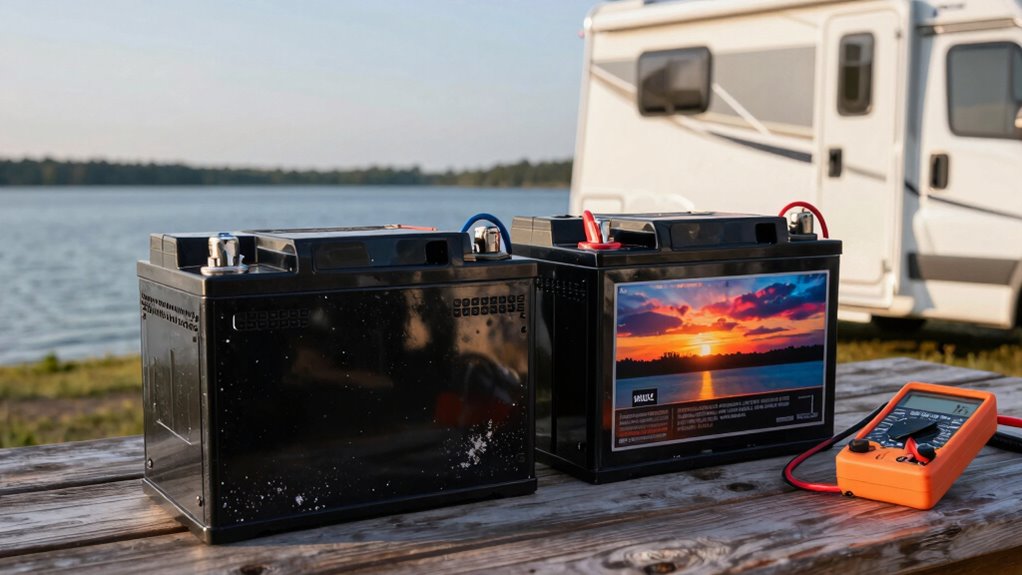
When you’re out on the water or the road, keeping your boat or RV battery in top shape is essential for a smooth trip. It’s easy to think of your boat and RV as entirely separate entities, but their battery care overlaps more than you might assume. Both require consistent attention, and understanding the similarities can save you time and hassle.
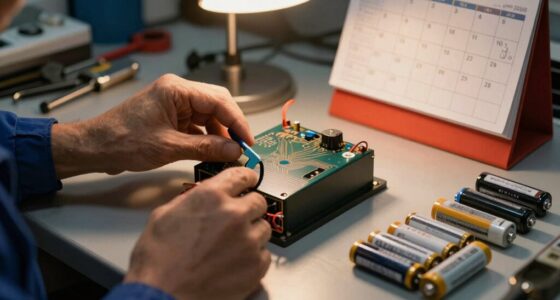
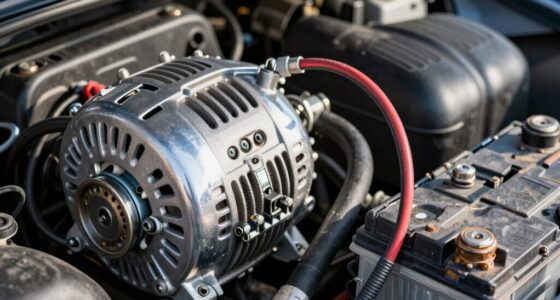
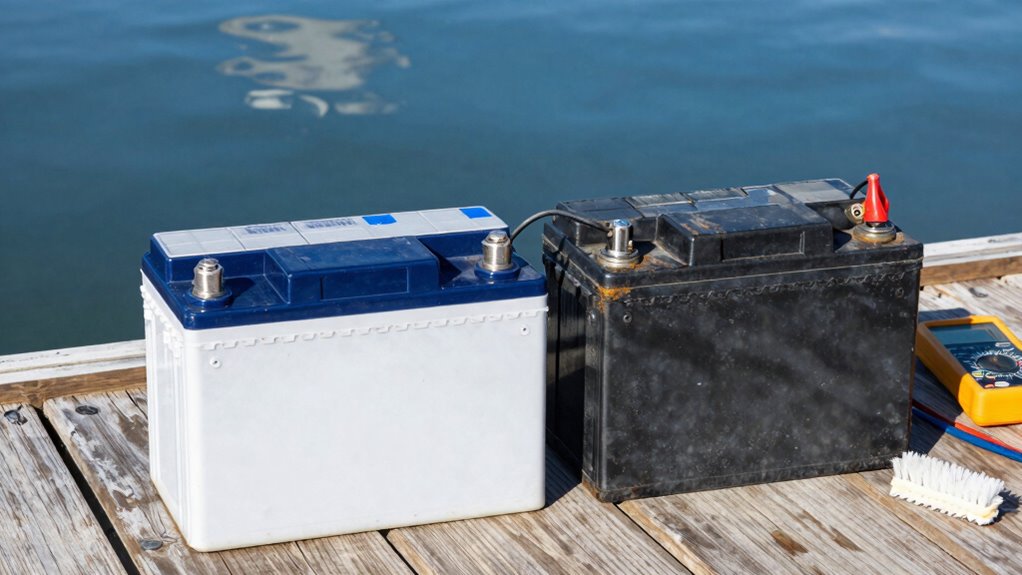
For starters, battery maintenance tips apply equally to both settings. Whether you’re cruising through a lake or traveling across state lines, your battery needs routine checks. Regularly inspect the terminals for corrosion, clean them, and verify they’re tight. A loose connection can lead to poor performance, leaving you stranded. Check the water levels if you’re using lead-acid batteries; low water can lead to irreversible damage. These simple steps make a big difference, whether you’re docked or parked. Maintaining your batteries properly also supports overall energy efficiency, which is especially important when relying on renewable energy sources. Additionally, understanding battery lifespan and how to extend it can help you plan replacements more effectively. Keeping batteries in good condition also involves understanding battery chemistry, which influences how they should be cared for and maintained. Proper storage and seasonal maintenance are also vital, especially for long-term storage, to prevent capacity loss over time.
Battery maintenance is crucial for both boats and RVs; regular checks can prevent poor performance and costly damage.
Charging techniques also show a lot of overlap. Both marine and RV batteries benefit from being charged properly. You’ll want to use a charger designed for your specific battery type to prevent overcharging or damaging it. Smart chargers are a great investment, as they automatically adjust the charging rate and prevent overheating. This guarantees your battery remains healthy and extends its lifespan, regardless of whether it’s powering your boat’s electronics or your RV’s appliances. Additionally, selecting the right charger can help mitigate environmental factors that impact battery performance.
Moreover, the environmental factors affecting your batteries are similar. Extreme temperatures can drastically affect performance. Both marine and RV batteries can suffer in excessive heat or cold, so consider investing in insulation or battery boxes to mitigate these effects. When you’re planning long trips, confirm that your battery is fully charged before you head out, as both environments can drain batteries faster than you’d expect. Proper storage and maintenance during off-season periods are also crucial to prevent capacity loss over time. Being aware of renewable energy options can help you reduce reliance on traditional power sources and enhance energy independence during your travels. Regular use is also important; if your boat or RV sits idle for too long, the battery can lose its charge. Try to take your rig out regularly, even if it’s just for a short trip. If that’s not possible, consider using a battery maintainer to keep it topped off while it’s parked.
marine deep cycle battery charger
As an affiliate, we earn on qualifying purchases.
As an affiliate, we earn on qualifying purchases.
Frequently Asked Questions
Can I Use the Same Charger for Both Boat and RV Batteries?
Yes, you can use the same charger for both boat and RV batteries, as long as they share battery compatibility. Most chargers support various charging methods, like smart charging and trickle charging, which can adapt to different battery types. Just make sure your charger matches the voltage and chemistry of both batteries. This way, you’ll keep your batteries charged efficiently without needing separate chargers for each vehicle.
How Often Should I Check Battery Fluid Levels?
You should check your battery fluid levels every month to guarantee peak performance. Use fluid level indicators to easily gauge whether the levels are adequate. If you notice the fluid is low, top it off with distilled water, but don’t overfill. Regular battery maintenance tips like this help prolong the life of your batteries, whether they’re for your boat or RV. Keeping an eye on fluid levels is key to avoiding potential issues.
What Are Signs of Battery Corrosion in Boats and RVS?
Battery corrosion’s like a sneaky gremlin, creeping up on you! You’ll spot it as a white, crusty substance around the terminals or cables, which signals a need for battery maintenance. If you notice that, it’s time to act. Regularly check for corrosion and clean it off to guarantee your battery’s longevity. Incorporating corrosion prevention measures will keep your boat or RV running smoothly, so you can focus on enjoying your adventures!
Is Winterizing Necessary for Boat and RV Batteries?
Yes, winterizing is necessary for boat and RV batteries. In freezing temperatures, batteries can freeze, causing damage and reducing performance. You should guarantee proper battery maintenance by fully charging your batteries before winter and disconnecting them if possible. Store them in a cool, dry place to protect against extreme cold. Regular checks throughout the winter can help you catch any issues early, guaranteeing your batteries are ready for use when spring arrives.
Can I Mix Different Battery Types in My Boat or RV?
You shouldn’t mix different battery types in your boat or RV. Battery compatibility is essential for best performance and safety. Mixing batteries can lead to uneven charging and reduced lifespan. To maintain your batteries effectively, always check their specifications, and stick to similar types and brands. Regular maintenance tips include cleaning terminals, checking fluid levels, and ensuring secure connections to prevent issues down the line. Keeping them compatible enhances reliability on your adventures.
Conclusion
In the end, whether you’re cruising on water or hitting the open road, neglecting battery care can lead to unexpected failures that ruin your adventures. Imagine being stranded, the sun setting, and your battery’s dead. But don’t let that happen! By understanding the similarities in battery maintenance for both boats and RVs, you can guarantee countless journeys filled with excitement rather than frustration. So, are you ready to take the plunge and safeguard your next trip?
Halloween Picks
halloween
As an affiliate, we earn on qualifying purchases.