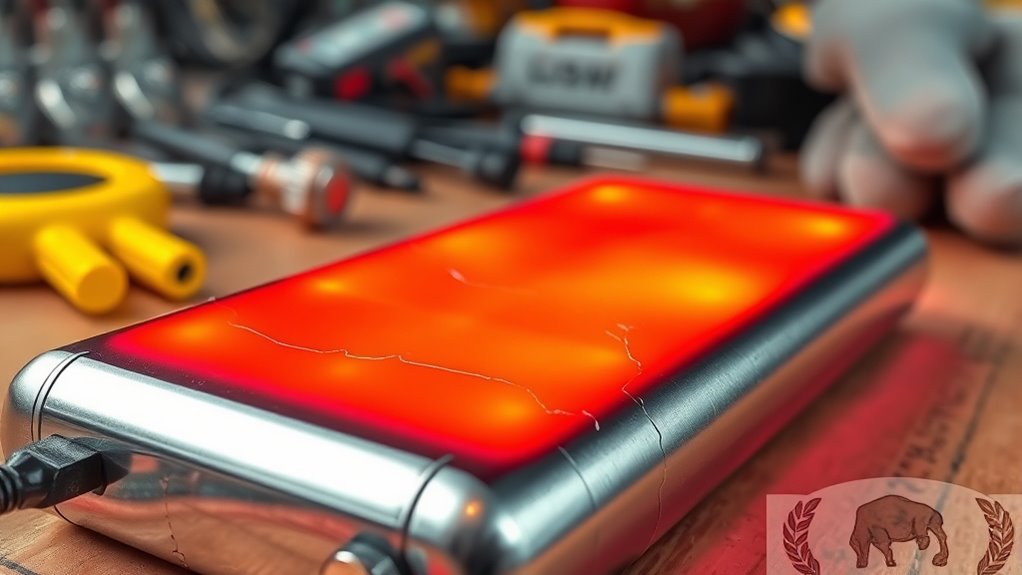

Lithium-ion batteries overheat due to internal defects, aging, or external heat sources like sunlight, which cause excessive temperature rises and can lead to dangerous failures. To prevent this, avoid exposing batteries to high temperatures, use proper charging practices, and inspect for damage regularly. Employ cooling systems if needed and follow manufacturer guidelines carefully. Staying aware of these tips can help you manage battery safety and avoid risks, so keep exploring for more helpful strategies.
Key Takeaways
- Internal defects, aging, or damage increase resistance, causing heat buildup and potential overheating.
- External factors like high ambient temperatures and direct sunlight elevate battery temperature.
- Overcharging and improper charging practices can lead to thermal runaway and excessive heat.
- Effective thermal management, including cooling systems and proper device design, helps prevent overheating.
- Regular inspection, prompt handling of abnormalities, and following manufacturer guidelines reduce overheating risks.
Lithium-ion batteries have become an indispensable part of our daily lives, powering everything from smartphones to electric vehicles. Their convenience and energy density make them the go-to choice for portable power sources. However, one significant concern is overheating, which can lead to safety hazards like fires or explosions. To prevent this, understanding why lithium-ion batteries overheat and how to manage thermal risks is essential.
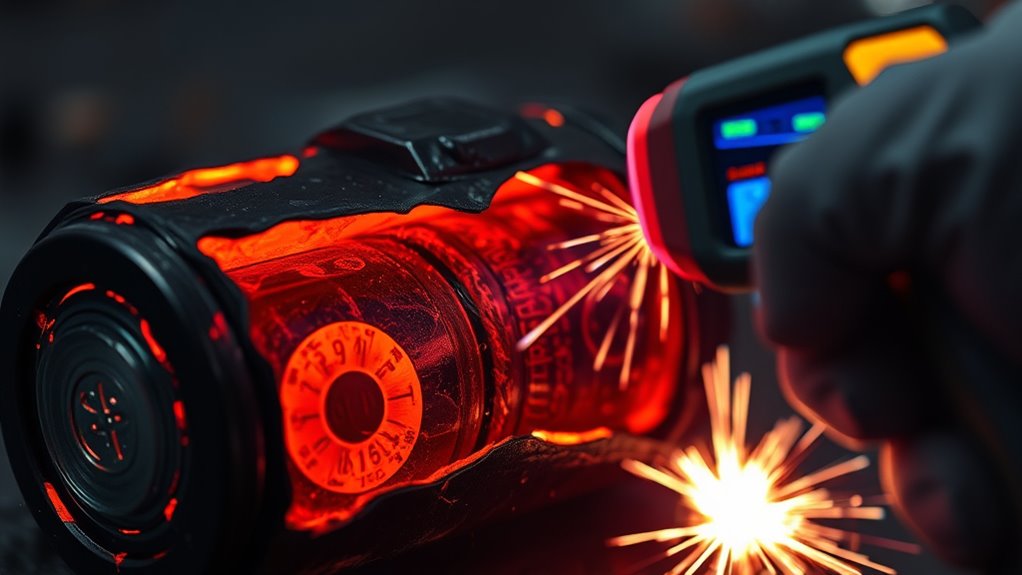
Overheating occurs when the battery’s internal temperature rises beyond safe levels, often caused by internal or external factors. Internal reasons include manufacturing defects, aging, or damage that create internal short circuits, generating excessive heat. External factors, like high ambient temperatures or improper charging practices, can also push the battery’s temperature past safe limits. When overheating happens, the battery’s safety mechanisms may become overwhelmed, leading to thermal runaway—a dangerous chain reaction where heat causes further damage, releasing flammable gases or causing the cell to catch fire. Understanding battery chemistry is crucial in grasping how these failures occur and how to prevent them.
Overheating in lithium-ion batteries can trigger thermal runaway and fires.
Effective thermal management plays a key role in preventing overheating. You should always guarantee your device or vehicle has proper cooling systems, such as built-in fans, heat sinks, or cooling gels. Manufacturers design these systems to regulate temperature during charging or heavy use, but it’s equally important for you to follow best practices. Avoid exposing batteries to direct sunlight or high-temperature environments, as extreme heat can impair their internal chemistry and increase the risk of thermal runaway. When charging, use the recommended chargers and avoid overcharging or leaving devices plugged in for prolonged periods. Overcharging can cause the battery to heat up excessively, stressing the internal components.
Battery safety measures are essential to prevent overheating incidents. Always inspect your batteries regularly for signs of damage or swelling, which indicate overheating issues. If you notice any abnormalities, stop using the battery immediately and seek professional assistance. Keep your devices and batteries in well-ventilated areas, especially during charging, to facilitate heat dissipation. Additionally, employing smart charging technologies that monitor and adjust charging current can help maintain ideal temperature levels and extend battery life.
Frequently Asked Questions
Can Overheating Cause Lithium-Ion Batteries to Catch Fire Spontaneously?
Yes, overheating can cause lithium-ion batteries to catch fire spontaneously. When a battery gets too hot, it can trigger thermal runaway, a chain reaction where heat rapidly increases. This process leads to electrolyte degradation and gas build-up, which can cause the battery to ignite or explode. To prevent this, avoid exposing your batteries to high temperatures and make sure of proper cooling and ventilation during use and charging.
What Are the Signs Indicating a Lithium-Ion Battery Is Overheating?
If your lithium-ion battery is overheating, you’ll notice signs like battery swelling and unusual odors. Swelling occurs as the internal cells produce gases, causing the battery to bulge. An unusual chemical smell indicates possible overheating or damage. You might also feel the device heat up excessively or see reduced battery life. If you observe these signs, stop using the device immediately, as continued use could lead to fire or further damage.
How Does Ambient Temperature Influence Battery Overheating Risks?
Ironically, ambient heat is your battery’s worst enemy. When temperatures soar, your battery’s risk of overheating skyrockets. Higher ambient temperatures weaken cooling methods, making it harder to keep batteries safe. To prevent this, avoid direct sunlight and use cooling methods like fans or air conditioning. Keeping your environment cool helps your battery stay within safe temperature limits, reducing overheating risks and prolonging its lifespan.
Are There Specific Brands More Prone to Overheating Issues?
Some brands are more prone to overheating issues due to lower manufacturing quality and inconsistent brand reliability. You should research and choose reputable brands known for rigorous quality control, as their batteries typically have better thermal management. Avoid lesser-known or budget brands, as they often cut corners, increasing overheating risks. Prioritizing brands with proven safety records helps guarantee your lithium-ion batteries perform safely and efficiently, reducing overheating chances.
What Are the Longevity Impacts of Frequent Overheating on Batteries?
If your battery overheats often, you’ll notice it shortens your device’s cycle life and accelerates battery degradation, much like how a vintage radio’s tubes burn out faster when overheated. Frequent overheating damages internal components, reduces capacity, and leads to faster wear. Over time, this means you’ll need replacements sooner, and your device won’t perform as well. To extend your battery’s longevity, avoid overheating and keep it in ideal temperature ranges.
Conclusion
Think of your lithium-ion battery as a tiny fire waiting to ignite. If you don’t give it proper care—avoiding overcharging, keeping it cool, and using quality chargers—you risk turning that spark into a dangerous blaze. Stay vigilant and treat your battery like a delicate flame; with the right precautions, it’ll keep your devices running smoothly without overheating. Remember, prevention is your best tool to keep that fire safely contained.