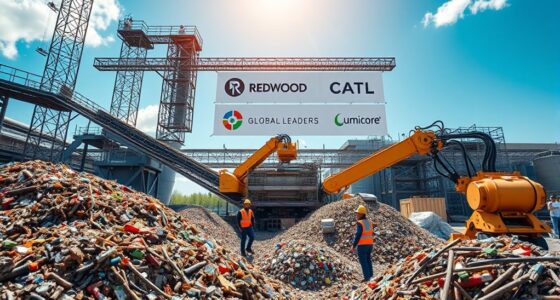

Raw materials like lithium, cobalt, nickel, manganese, and graphite are the crucial building blocks for battery production, and their journey begins with mining. Responsible sourcing and traceability guarantee these materials are extracted ethically and sustainably, reducing environmental impact and improving safety. Recycling technologies are also boosting supply by reusing materials from old batteries. To understand how these raw materials transform from mining sites into the batteries powering your devices, keep exploring this essential process.
Key Takeaways
- Raw materials like lithium, cobalt, nickel, manganese, and graphite are extracted through responsible mining practices to ensure quality and sustainability.
- Supply chain coordination involves sourcing, processing, and verifying origin to meet regulatory and ethical standards.
- Recycling technologies enable reuse of battery materials, reducing reliance on mined resources and supporting circular economy efforts.
- Sustainable sourcing emphasizes transparency, traceability, and ethical extraction to minimize environmental and social impacts.
- Integration of recycling and responsible sourcing practices ensures a sustainable, efficient transition from raw material extraction to battery manufacturing.
Battery production relies heavily on a variety of raw materials, which serve as the essential building blocks for energy storage. These materials include lithium, cobalt, nickel, manganese, and graphite, each playing a critical role in determining a battery’s performance, lifespan, and safety. As someone involved in the industry or simply interested in how batteries are made, you’ll appreciate that sourcing these materials isn’t just about quantity but also quality and sustainability. The importance of sustainable sourcing has never been greater, especially as demand for electric vehicles and renewable energy storage soars. Ensuring that raw materials are obtained responsibly helps reduce environmental impact and addresses ethical concerns related to labor practices. This means that supply chain management must prioritize transparency, traceability, and ethical standards to prevent issues like child labor or environmental degradation.
Effective supply chain management starts right from the extraction process. It involves coordinating multiple stakeholders—mines, processing plants, manufacturers—and making sure each step aligns with sustainability goals. You need to stay updated on where your raw materials originate, verifying that they come from responsible sources. This not only helps in complying with regulations but also enhances your brand’s reputation among eco-conscious consumers. You might work with suppliers who have certifications for ethical mining or implement audits to ensure compliance. Additionally, diversifying sources can mitigate risks associated with geopolitical instability or resource scarcity. For instance, sourcing lithium from regions with strict environmental standards guarantees a more sustainable supply chain.
Furthermore, advancements in recycling technologies are transforming how raw materials are sourced for battery production. Recycling used batteries reduces dependency on mined materials, minimizes environmental impact, and supports a circular economy. As you explore sustainable practices, you’ll find that integrating recycled materials into manufacturing processes is increasingly viable and cost-effective. This shift not only conserves natural resources but also helps stabilize supply chains affected by geopolitical tensions or resource depletion. Incorporating recycling technologies into your supply chain strategies is essential for a more sustainable future.
Frequently Asked Questions
How Are Raw Materials Sourced Sustainably for Battery Manufacturing?
You can guarantee raw materials are sourced sustainably by prioritizing ethical sourcing and demanding supply chain transparency. Opt for suppliers who adhere to responsible mining practices, minimize environmental impact, and respect workers’ rights. By scrutinizing supply chains and supporting certifications like Fair Trade or Responsible Minerals Initiative, you promote sustainability. This approach helps reduce environmental harm, ensures fair labor conditions, and builds a more ethical, transparent battery manufacturing process.
What Are the Environmental Impacts of Raw Material Extraction?
You should know that extracting raw materials for batteries often causes environmental degradation and biodiversity loss. Mining activities can damage ecosystems, pollute water sources, and disturb wildlife habitats. These impacts threaten local biodiversity and can lead to long-term ecological harm. As a consumer or manufacturer, understanding these consequences encourages support for sustainable practices that minimize environmental degradation and protect biodiversity while sourcing raw materials responsibly.
How Do Geopolitical Factors Affect Raw Material Supply Chains?
You’re affected by geopolitical instability and trade restrictions that can disrupt raw material supply chains. When tensions rise or conflicts occur, countries might impose export bans or tariffs, making it harder for you to access essential materials like lithium or cobalt. These disruptions can delay production, increase costs, and force you to seek alternative sources, often at higher prices. Staying aware of global political shifts helps you better manage supply chain risks.
What Innovations Are Improving Raw Material Recycling?
You’re witnessing a revolution in recycling that’s changing everything! Innovations like chemical recycling break down battery materials at the molecular level, allowing you to reuse precious metals endlessly. Urban mining extracts valuable materials from electronic waste, transforming cities into giant resource hubs. These advances dramatically reduce reliance on traditional mining, lower environmental impact, and guarantee a more sustainable future for battery production. Embrace these breakthroughs—they’re reshaping how we recover raw materials!
How Do Raw Material Prices Influence Battery Costs?
You’ll notice that raw material prices directly impact battery costs because price fluctuations can raise or lower expenses. When prices spike due to supply chain disruptions, manufacturing costs increase, making batteries more expensive. Conversely, stable or falling prices help keep costs down. So, unpredictable raw material prices create challenges for battery producers, influencing overall pricing, profit margins, and ultimately, the affordability of electric vehicles and energy storage solutions.
Conclusion
Think of raw materials as the roots of a mighty tree—without them, there’s no growth. Just like a miner who digs deep to find precious metals, your choices in sourcing and sustainability shape the future of battery production. Remember, every battery you use depends on these unseen foundations. By valuing responsible sourcing, you’re helping guarantee that this essential industry can grow strong and green, just like a healthy tree reaching for the sky.