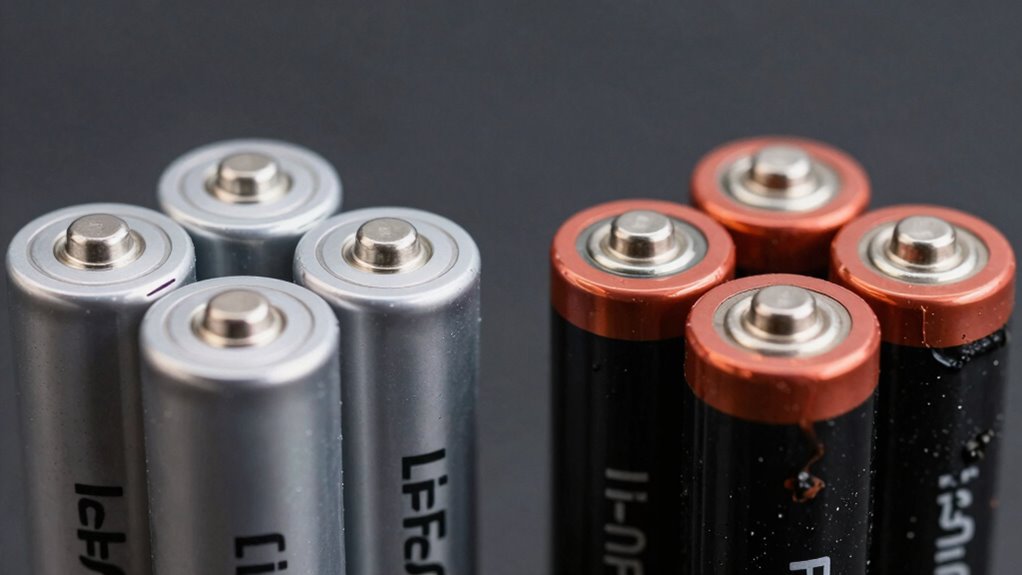
Choosing between top-balancing and bottom-balancing for your LiFePO4 battery affects its performance and cycle life. Top-balancing actively maintains all cells at the maximum voltage, reducing overcharging risks and improving longevity. Bottom-balancing discharges cells to a minimum voltage, simplifying the process but potentially offering less precise cell equality. Your decision impacts safety and capacity over time, so understanding these differences can help you optimize your battery’s lifespan—keep exploring to find out which approach suits your needs best.
Key Takeaways
- Top-balancing maintains cell voltage equality at full charge, reducing overcharge risk and extending cycle life in LiFePO4 batteries.
- Bottom-balancing equalizes cells at the lowest voltage, simplifying setup but offering less precise capacity management over cycles.
- Top-balancing is more effective for high-performance applications needing maximum capacity and longevity.
- Bottom-balancing suits cost-effective, simpler systems with less emphasis on capacity optimization.
- The choice impacts long-term battery health, safety, and performance, making understanding their differences critical.
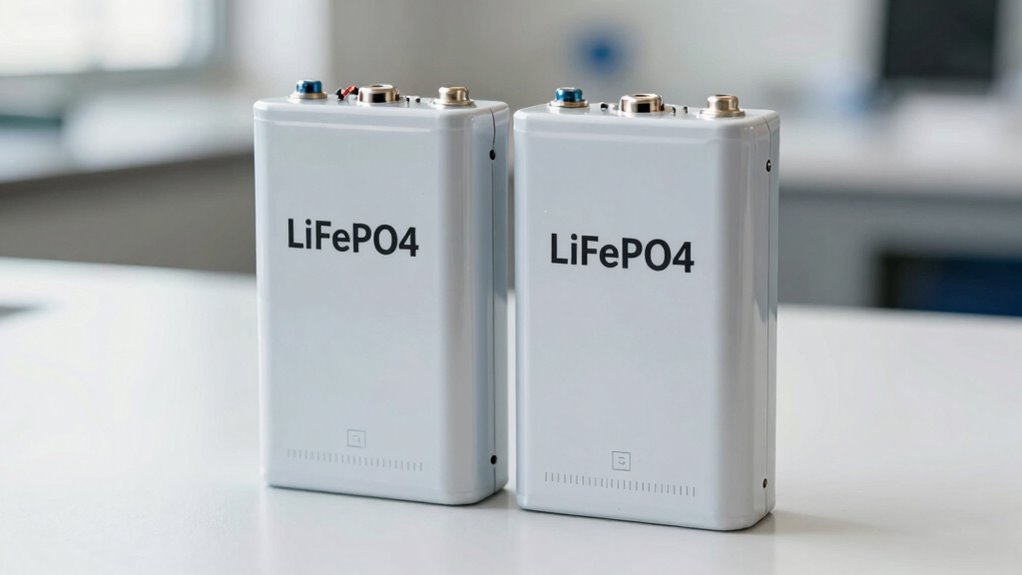
When it comes to balancing batteries, understanding the difference between top-balancing and bottom-balancing is essential for optimizing performance and longevity. Both methods focus on cell equalization, which ensures that each cell in your battery pack maintains a consistent voltage. This process is vital because uneven cell voltages can lead to reduced capacity, shortened cycle life, and potential safety issues. Top-balancing involves bringing all cells up to the highest voltage in the pack, often by actively removing excess charge from the cells that are fullest. Conversely, bottom-balancing starts by discharging all cells to a uniform minimum voltage, then charging them together to a safe, balanced level. The core difference lies in how they manage voltage regulation across the cells.
Balancing batteries involves either top-balancing or bottom-balancing to ensure cell voltage uniformity and extend battery life.
In top-balancing, voltage regulation occurs by actively monitoring each cell’s voltage and bleeding off excess charge from the fullest cells. This process ensures that no cell exceeds a predetermined voltage threshold during charging. As a result, the cells are kept in close voltage alignment at the top end of their capacity. This method is particularly effective in maintaining cell equality over many cycles, especially in lithium iron phosphate (LiFePO4) batteries, where cell imbalance can considerably impact cycle life. Since top-balancing focuses on the upper voltage limit, it minimizes the risk of overcharging individual cells, which is essential for safety and longevity. Additionally, cell imbalance can be mitigated more effectively with top-balancing techniques.
Bottom-balancing, on the other hand, involves setting a minimum voltage level for all cells and then balancing them by discharging the higher-voltage cells to match the lowest one. This approach emphasizes voltage regulation at the lower end of the charge cycle, ensuring that all cells are brought to a safe minimum voltage before charging resumes. Once balanced at this level, the pack is charged up, and the process repeats. By focusing on the bottom, this method prevents cells from discharging too deeply, which can be damaging. It also simplifies the balancing process, often making it more cost-effective. However, it can be less precise at maintaining equal cell voltages during full charge compared to top-balancing.
Both balancing strategies aim to prolong battery life and improve safety, but they do so through different mechanisms of cell equalization and voltage regulation. Top-balancing is generally preferred for high-performance applications where maximizing cycle life and capacity is critical. Bottom-balancing can be suitable for simpler, more cost-conscious setups. Ultimately, your choice depends on your specific needs, but understanding these differences helps you make an informed decision to keep your LiFePO4 batteries healthy and reliable over the long term.
Frequently Asked Questions
How Does Temperature Affect Balancing Methods?
Temperature greatly influences balancing methods, as thermal regulation aids in maintaining ideal battery performance. When ambient conditions are hot or cold, balancing becomes more challenging because temperature affects voltage and current flow within cells. In hot conditions, cells may overheat, risking damage, so active cooling or heating is necessary. Conversely, cold temperatures slow chemical reactions, requiring additional thermal regulation to guarantee effective balancing and prolong cycle life.
Can Balancing Methods Be Combined for Better Performance?
Think of balancing as a symphony conductor, harmonizing different instruments. You can combine hybrid strategies—using both top and bottom balancing—to fine-tune performance and extend cycle life. This approach helps maximize costs by preventing uneven wear. By blending methods, you create a more resilient battery, ensuring longevity and efficiency. It’s like crafting a perfect melody where each note complements the others for optimal performance.
What Are the Long-Term Costs of Each Balancing Approach?
You’ll find that top-balancing generally has higher initial cost implications due to more complex hardware, but it requires less maintenance over time. Bottom-balancing is cheaper upfront and easier to maintain, yet it may lead to reduced cycle life, increasing long-term costs. Consider your budget and maintenance capacity, as each approach impacts total costs differently over the battery’s lifespan.
Are There Specific Lifepo4 Applications Better Suited for One Method?
You’ll find bottom-balancing suits low-maintenance, stationary applications like solar energy storage, where simplicity and longevity matter most, ensuring performance optimization over time. Conversely, top-balancing benefits high-demand, portable applications such as electric vehicles, where precise cell monitoring enhances safety and efficiency. Choosing the right balancing method depends on your application’s specific needs, balancing ease of upkeep with maximizing cycle life and overall performance.
How Do Balancing Techniques Influence Battery Safety and Reliability?
Balancing techniques directly influence battery safety and reliability by ensuring cell uniformity, preventing overcharging or deep discharging that can cause damage. Proper balancing promotes safety enhancements by reducing the risk of thermal runaway and prolongs cycle life. When you maintain balanced cells, you minimize stress on individual cells, making your LiFePO4 battery safer, more dependable, and efficient over time.
Conclusion
Ultimately, whether you choose top-balancing or bottom-balancing, the key is understanding how it impacts your LiFePO4 battery’s lifespan. Sometimes, it feels like the right method just clicks into place, almost like fate guiding your decision. When you realize that balancing can extend your battery’s life and save you money, it’s a coincidence that feels more like a gift. Trust your instincts, and your battery will thank you in the long run.