
You see, global battery trade flows are mainly driven by manufacturing hubs in China, South Korea, and Japan, which dominate exports and control essential raw materials like lithium and cobalt. Logistics, policies, and tariffs also shape how batteries move across borders, while technological advances and regional strategies influence market dynamics. If you want to understand how these factors connect and impact the shifting landscape of battery exports, there’s more to discover below.
Key Takeaways
- China, South Korea, and Japan dominate global battery exports through advanced manufacturing and raw material control.
- Raw material availability, especially lithium, cobalt, and nickel, significantly influences regional export capacities.
- Efficient logistics and transportation infrastructure are critical for maintaining stable international trade flows.
- Trade policies, tariffs, and regional strategies shape export volumes and market competitiveness.
- Technological innovations and emerging battery technologies drive shifts in global trade routes and manufacturing hubs.
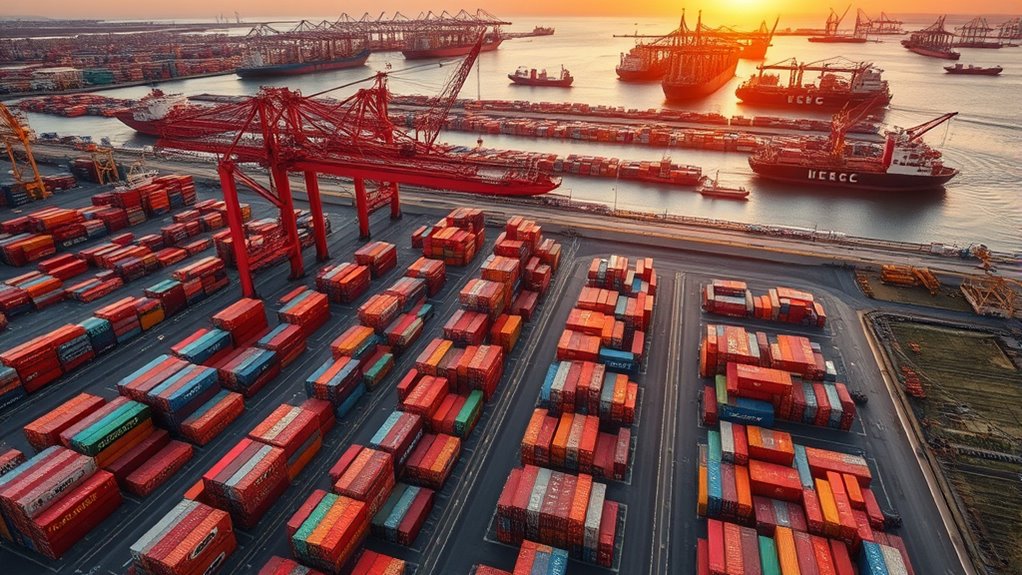
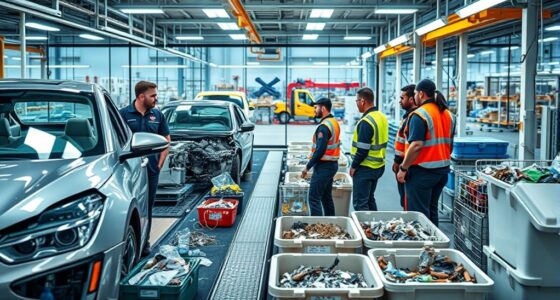
As the demand for batteries continues to surge globally, understanding the patterns of battery exports and trade flows becomes essential. The rapid expansion of the electric vehicle industry, renewable energy storage, and portable electronics drives this heightened demand, making battery manufacturing a key component of the global supply chain. You need to recognize that the movement of batteries across borders isn’t just about product exchange; it reflects complex supply chain logistics, geopolitical considerations, and economic strategies. Countries that dominate battery production, like China, South Korea, and Japan, have built extensive export networks that influence worldwide trade flows. These nations leverage their manufacturing capabilities to meet international demand, often controlling key raw materials, advanced production technologies, and assembly processes.
Global battery exports are driven by manufacturing dominance, raw material control, and complex logistics shaping trade flows.
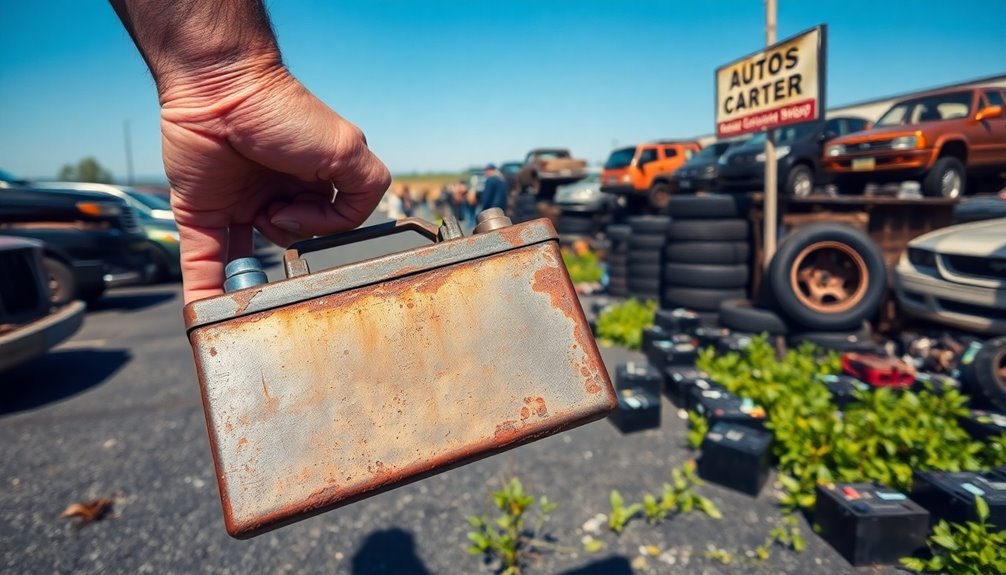
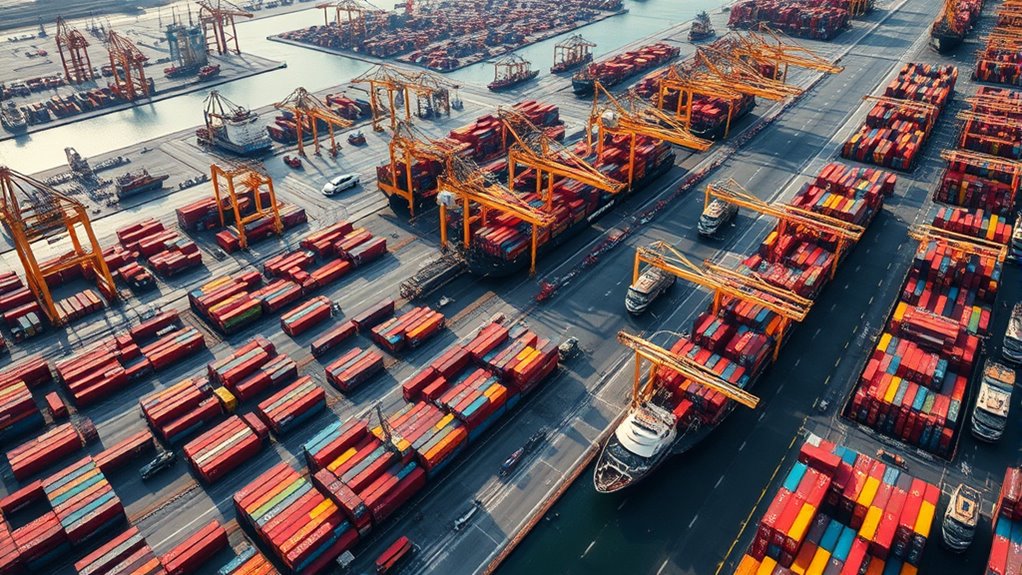
In this landscape, supply chain logistics plays a pivotal role. Efficient management of raw materials, such as lithium, cobalt, and nickel, ensures that battery manufacturing remains uninterrupted. Your understanding of how these materials are sourced, processed, and transported can give you insight into potential bottlenecks and trade disruptions. As batteries are produced on a large scale, managing transportation logistics—shipping routes, customs procedures, and warehousing—becomes critical to maintaining steady export flows. Disruptions in any part of this chain can ripple through global markets, causing fluctuations in supply and price. You should also pay attention to regional trade policies and tariffs that influence export patterns, as countries might implement restrictions or incentives to bolster local battery manufacturing or protect raw material supplies. Additionally, advancements in battery manufacturing processes are reshaping global trade flows by enabling faster, more efficient production methods.
Furthermore, the trade flows are shaped by technological advancements and shifts in manufacturing strategies. As companies innovate in battery design and production, new players emerge, and existing manufacturing hubs adapt. This dynamic landscape affects global trade routes and export volumes. Countries investing in battery manufacturing facilities aim to reduce dependency on imports, diversify their supply chains, and foster domestic industries. These strategic moves influence trade balances and create new export opportunities, especially as the market shifts toward solid-state batteries and other next-generation technologies.
Ultimately, your grasp of battery manufacturing processes and supply chain logistics enables you to understand the broader market dynamics. You see beyond raw export figures to the underlying factors that drive trade flows—raw material access, technological innovation, regional policies, and logistical efficiency. Recognizing these interconnected elements helps you anticipate future trends and navigate the evolving landscape of global battery exports and trade. The complex interplay between production capabilities and logistical networks shapes the entire market, making it essential to stay informed about these patterns for a thorough view of worldwide trade flows.
Frequently Asked Questions
How Do Tariffs Affect Battery Export Prices Globally?
Tariff impacts directly raise battery export prices globally, making your products more expensive in foreign markets. You might need to adjust your pricing strategies to stay competitive and absorb some costs or pass them on to consumers. These tariffs can also create uncertainties, prompting you to explore alternative markets or supply chain adjustments to mitigate price hikes and maintain profitability in international trade.
Which Countries Are Emerging as New Battery Export Hubs?
Think of the global battery market as a rising tide—you’ll see emerging markets like India, Vietnam, and Mexico becoming new export hubs. These nations are actively pursuing trade diversification strategies, positioning themselves to capture a larger slice of the market. Their investments in manufacturing capabilities and supply chain infrastructure signal a shift, making them key players in the future of battery exports and reshaping global trade flows.
What Environmental Policies Influence International Battery Trade?
Environmental policies like strict recycling regulations and efforts to reduce carbon footprint markedly influence international battery trade. You’ll find that countries with strong recycling rules encourage sustainable practices, making their batteries more attractive globally. These policies push exporters to adopt greener methods, which can increase costs but also boost reputation. As a result, trade flows favor nations committed to eco-friendly standards, shaping the future of global battery markets.
How Do Supply Chain Disruptions Impact Battery Export Volumes?
Supply chain disruptions can throw a wrench in your plans, like a sudden storm delaying a ship’s journey. When supply chains falter, your battery export volumes often drop because raw material sourcing becomes unreliable. Strengthening supply chain resilience helps you navigate these turbulent waters, ensuring steady exports even during disruptions. You’ll find that diversifying sources and maintaining inventory buffers are vital strategies to keep your battery trade flowing smoothly.
What Technological Advancements Are Shaping Future Trade Flows?
You see that technological advancements like battery recycling and innovation clusters are shaping future trade flows. Battery recycling improves sustainability and reduces reliance on raw materials, making exports more resilient. Innovation clusters foster collaboration, accelerating new battery technologies and production methods. These developments help countries stay competitive, boost exports, and adapt to changing market demands. By embracing these trends, you can influence how trade flows evolve in the global battery market.
Conclusion
As you navigate the shifting landscape of global battery exports and trade flows, you’ll notice that market dynamics resemble a finely tuned clock—each part influencing the whole. Just like the discovery of electricity transformed industries, current trends signal a pivotal moment in the green revolution. Staying informed and adaptable guarantees you remain ahead of the curve, harnessing these changes to your advantage. Remember, even in a world of modernity, understanding history helps you master the future.