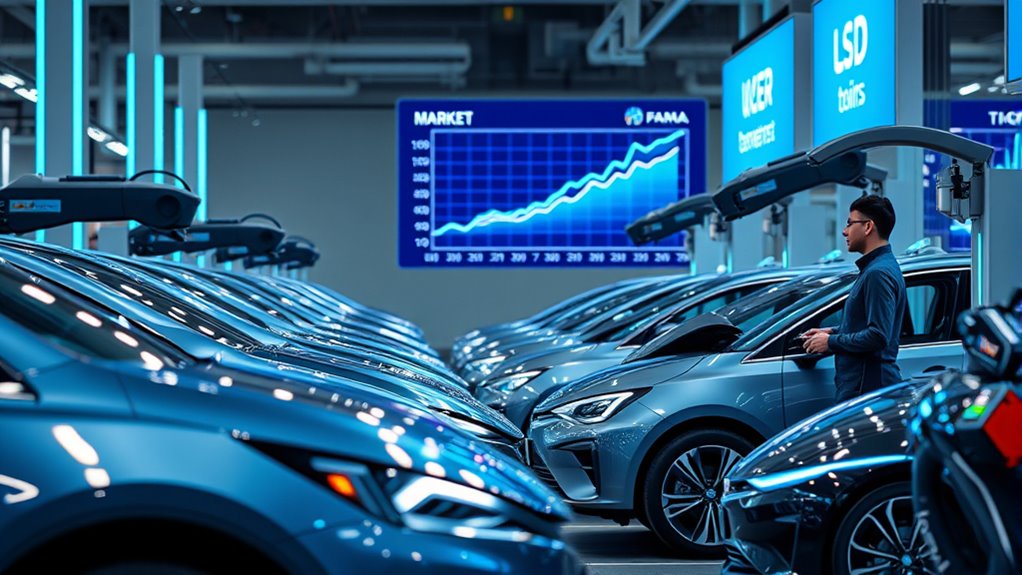

The battery swapping market is growing rapidly, driven by innovations in high-density batteries, faster swapping technology, and expanding infrastructure that makes quick replacements more accessible. Standardized packs and automated stations improve interoperability and user convenience, boosting EV adoption. Competition among automakers and energy firms advances this landscape further. If you want to discover how these factors create new opportunities and shape the future of EV recharging, keep exploring this dynamic industry.
Key Takeaways
- Rapid adoption driven by quick battery replacement reduces wait times and enhances EV convenience.
- Standardized battery formats and interoperability foster competition among automakers and service providers.
- Heavy investment in swapping infrastructure expands accessibility in urban and highway areas.
- Advancements in battery tech, such as higher energy density and longer lifespan, lower costs and improve performance.
- Market growth is supported by ongoing innovation, ecosystem development, and increased consumer adoption of EVs.
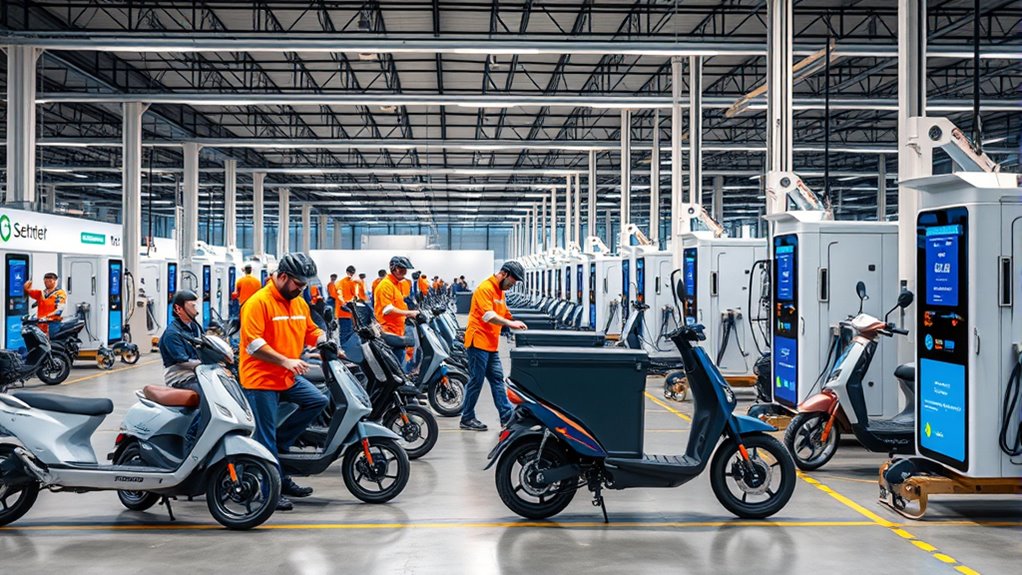
The battery swapping market is gaining momentum as a solution to address the limitations of traditional EV charging. Instead of waiting for lengthy charge times, you can quickly swap out your depleted battery with a fully charged one, saving you time and making electric vehicle use more convenient. This approach hinges heavily on advancements in battery technology and the development of robust charging infrastructure. Battery technology has improved considerably, with batteries now offering higher energy density, longer lifespan, and faster charging capabilities. These innovations make swapping more viable because batteries can be designed for quick replacement without compromising safety or performance. As for charging infrastructure, companies are investing heavily to create networks of swapping stations, especially in urban areas and along major highways. These stations are becoming more widespread, making it easier for you to find a swapping point when needed. The evolution of battery technology is essential here because it guarantees that batteries used for swapping are safe, reliable, and capable of lasting through many charge-discharge cycles. The more durable and efficient batteries become, the more practical swapping becomes, as it reduces costs and enhances user experience. Meanwhile, the expansion of charging infrastructure supports the growth of the swapping market by providing the physical locations necessary for quick exchanges. This infrastructure includes standardized battery packs and automated stations that can handle multiple swaps simultaneously, streamlining the process. The synergy between advanced battery technology and a well-developed charging infrastructure creates a competitive environment where swapping stations can operate efficiently and at scale. You benefit from this by gaining access to more convenient, faster recharging options that eliminate the need for long waits. Additionally, as automakers and energy companies collaborate, you’ll see more standardized battery formats and increased interoperability between different vehicle models and swapping stations. This interoperability reduces barriers and allows you to use swapping stations across various brands and models, making the market even more accessible. The push for innovation in battery technology and infrastructure also drives down costs, making battery swapping a more affordable alternative to traditional charging methods. As the industry matures, expect to see more seamless, user-friendly stations that integrate with your vehicle’s existing systems, enhancing overall EV adoption. The ongoing research and development in battery technology innovation ensure that the batteries used are safer, more efficient, and more adaptable for swapping applications. In brief, the progress in battery technology and the strategic expansion of charging infrastructure are key drivers propelling the battery swapping market forward. These developments not only improve convenience and reduce wait times but also create a more flexible, scalable ecosystem for electric vehicle users like you. As technology continues to evolve, you’ll find swapping stations becoming more widespread, reliable, and integrated into everyday travel, ultimately transforming how you recharge your EV.
Frequently Asked Questions
What Are the Main Challenges Faced by Battery Swapping Infrastructure?
You face main challenges like standardization issues, which make it hard to create compatible battery swapping stations across different brands and models. Infrastructure costs also pose a significant barrier, as setting up and maintaining these stations require substantial investment. These obstacles can slow down adoption and expansion, making it essential for industry stakeholders to work towards common standards and find ways to reduce infrastructure expenses for a smoother progression to battery swapping.
How Does Government Policy Influence the Battery Swapping Market?
Government policies greatly influence the battery swapping market by providing regulatory incentives and policy incentives that encourage adoption. When you see supportive regulations, subsidies, or streamlined approval processes, it becomes easier to build infrastructure and expand services. These incentives reduce costs and risks, motivating you to invest in battery swapping solutions. Conversely, the absence of clear policies can slow growth, making it essential for governments to actively promote and support this innovative industry.
What Are the Environmental Impacts of Battery Swapping Technology?
You might think battery swapping is eco-friendly, but it has environmental impacts too. It can reduce waste through recycling initiatives, as batteries are reused and properly disposed of. Plus, using renewable energy to power swapping stations minimizes carbon emissions. However, manufacturing batteries and managing their life cycles still pose environmental challenges. By prioritizing recycling and renewable energy, you can help make battery swapping a more sustainable solution for transportation.
How Do Battery Swapping Stations Ensure Safety and Reliability?
Imagine a gentle reassurance each time you visit a station; that’s how safety and reliability are maintained. You benefit from rigorous battery safety protocols, including advanced monitoring and quality checks. Stations ensure reliability through regular maintenance, state-of-the-art technology, and trained staff. These measures create a secure environment, giving you peace of mind and confidence in every swap, knowing your safety is the top priority.
What Innovations Are Expected to Shape the Future of Battery Swapping?
You can expect innovations like smart grid integration and autonomous vehicles to shape the future of battery swapping. Smart grids will optimize energy distribution, making swaps more efficient and sustainable. Autonomous vehicles will enable automated, quick battery exchanges without human intervention, enhancing convenience. These advancements will improve safety, reliability, and scalability, ultimately transforming how you power and operate electric vehicles, making the process faster, smarter, and more seamless.
Conclusion
As the battery swapping market accelerates like a rocket on a clear night, you’re right at the heart of a revolution in energy. With growth drivers fueling your journey and fierce competition sharpening your edge, the road ahead is bright and full of promise. Embrace this evolving landscape, where innovation blooms like a garden in spring, and you’re poised to ride the wave of change. The future’s yours—grab it and power ahead with confidence!